4 PUB. NO. FASTRAXCLE APRIL 2014
FASTRAX
®
CL
CHAPTER 1 - SUGGESTED MOUNTING METHODS
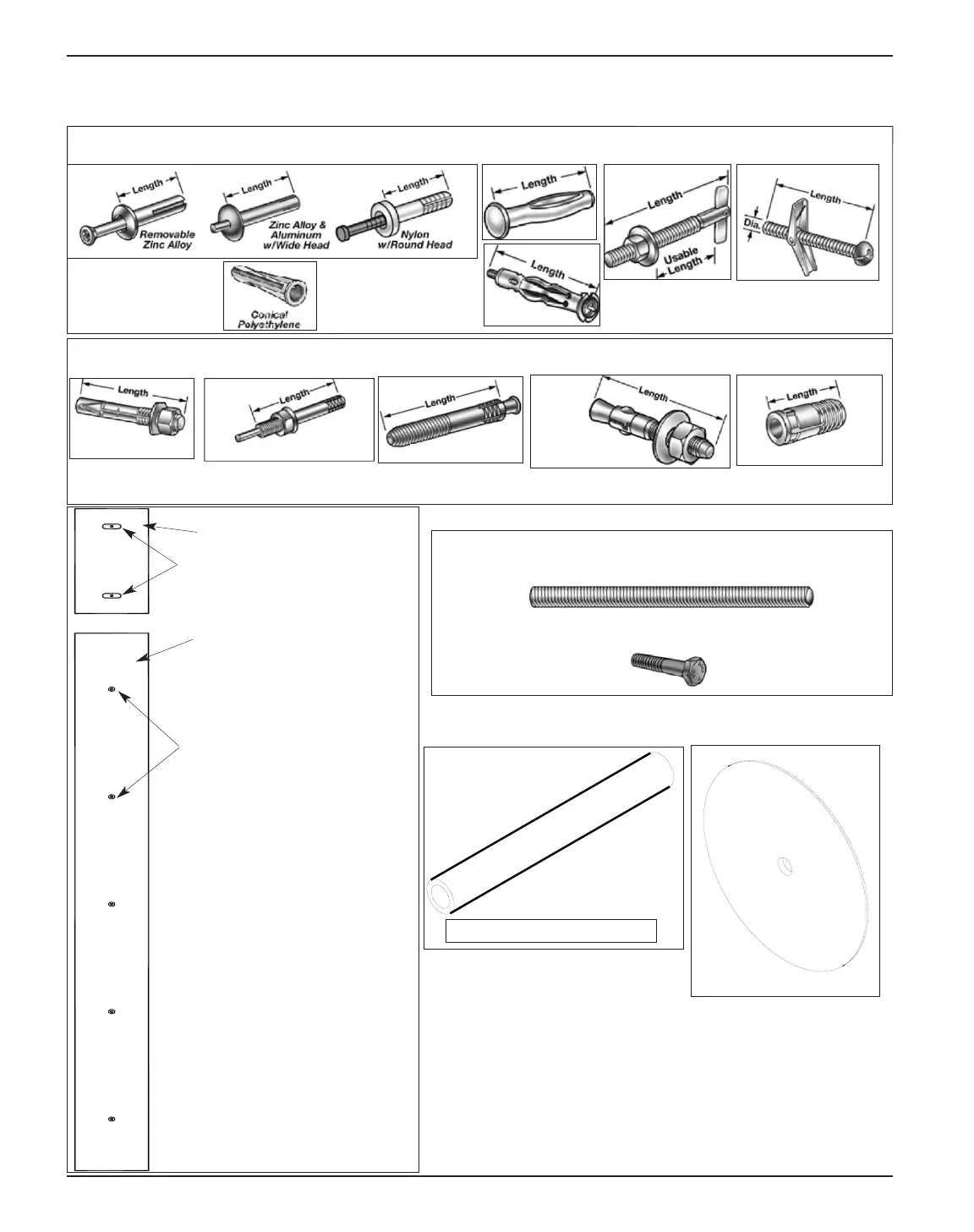
Acceptable Anchor Types
These anchor types provide the necessary strength for secure attachment of the unit to the building wall.
Note: Length of anchor should be long enough to engage concrete structure by a minimum of 2”. Length should be
increased to allow anchor to extend through any brick or aggregate fascia on exterior into concrete structure a min. of 2”.
Unacceptable Anchor Types
These anchor types are not strong enough for this application and do not provide the ability to tightly secure the unit to the building wall.
Acceptable Fasteners
Threaded rod can be used and cut to length in the field to suit the
application.
Hex head bolts can be used, but length must be determined ahead of time
to ensure fasteners will work with application.
Sleeve Anchor
Wedge Anchor
Hammer Anchor
Expansion Anchor
Stud Anchor
Wall Sleeve - 3/8” ID Ø
1/8” x 6” Ø Back Plate
Suggested Mounting Methods For Walls
3/8” [10] Minimum fastener
1/4” [6] Minimum fasteners
required on lower track
with thru-bolts a minimum
of every 4’ [1219]
TYPICAL FASTENER SPACING
Should the wall be constructed of wood,
masonry block or insulation.
Typically sideframes on doors are
required to be thru-bolted a minimum of
every 4’ [1219] with lag screws filling in
the remaining holes. Should a door fail to
open when a vehicle is approaching the
non-mounted side and impact the door,
the fastening method must hold to
prevent the door from coming off the wall.
This is the responsibility of the installer.
Header
Sideframe


 To Next Page