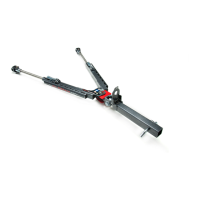
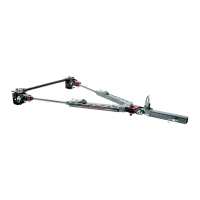
Receiver extensions cause the towing system to swing much higher
and lower than towing systems without extensions. This enlarged
arc of motion creates excessive strain on the tow bar, brackets and
frame, which can cause the towing system to fail, causing property
damage, personal injury or even death.
Disconnecting the tow bar
1. Disconnecting the tow bar is essentially the reverse of connecting it.
Before you begin, always…
• …try to park on level ground, with the towed vehicle in line with the
motorhome; and
• …turn the towed vehicle's steering wheel until the front wheels are in
line with the motorhome.
This will eliminate most of the tension between the vehicles, allowing
for an easier disconnect.
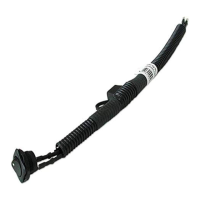
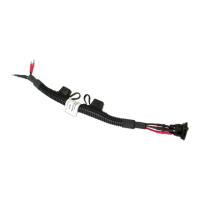
2. Disconnect the electrical wiring harness, safety cables and any other
towing system accessories.
3. Press down on the Autowlok buttons to release the locking mecha-
nisms.
(Usually, one of the Autowlok buttons will require more pressure to
release. This is the arm that has the majority of the tension between the
two vehicles.)
Note: if the Autowlok button(s) will not release, turn the towed vehicle's
steering wheel as far as it can go to the left or right, then in the other
direction. Then straighten out the steering wheel until the front wheels are
in line with the motorhome.
Never use a hammer or mallet to disconnect the Autowlok buttons.
This will drive the plastic buttons down the shaft, preventing the lock
from releasing.
4. Put the towed vehicle in gear (park), set the emergency brake, and
chock one of the wheels.
Always put the towed vehicle in gear (park), set the emergency brake
and chock one of the wheels after releasing the Autowlok buttons,
and before removing the base pins. Failure to do so may result in a
‘runaway’ vehicle or may crush you between the towed vehicle and
the motorhome, causing property damage, personal injury or even
death.
5. Remove the base pins and store the tow bar on the motorhome by
reversing the connection procedure (under “Connecting the tow bar”).
ROADMASTER recommends replacing at least one of the linch pins with
a padlock (part number 301, 302 or 308) to prevent accidental release or
theft.
If you choose to store the tow bar on the back of the motorhome —
the bushings at the end of the tow bar arms can be warped by heat
from the exhaust. If the bushings are warped, the tow bar arms will
not slide easily, or they may not slide at all — it may be difficult to
connect or disconnect the tow bar, or you may be unable to connect
or disconnect it, until the bushings are replaced.
The tow bar can be stored on the motorhome with the arms rotated
to the left or the right. To avoid the possibility of damage to the bush-
ings, rotate the arms away from the engine exhaust.
Connecting the tow bar
continued from page two
same manner.
7. Attach the safety cables and plug in the electrical wiring cord, according
to the supplier’s instructions.
Before towing the vehicle, be sure the steering is unlocked, the trans-
mission is in the proper setting, and the emergency brake is released.
Remove the wheel chock.
Check the manufacturer’s specifications, the owner’s manual, or talk
to the installer for the proper towing procedures or requirement(s) for the
vehicle to be towed.
Do not tow the vehicle until the tow bar is attached with all pins or
padlocks. Unless the tow bar is secured to both vehicles with all ap-
propriate pins or padlocks, the vehicle will detach, which may cause
property damage, personal injury or even death.
When you drive away, steer briefly to the left and then to the right, to
extend, self-center and lock the tow bar.
Always stop at this time. Check the tow bar to ensure that both arms are
locked before assuming highway speed. Additionally, check the other com-
ponents of your towing system, to ensure that they are fully engaged.
Both tow bar arms must be locked before towing. If they are not,
the momentum of the towed vehicle will apply excessive force to the
tow bar arms and other components of the towing system, which
may cause the towing system to fail, resulting in property damage,
personal injury or even death.
The tow bar arms will not automatically lock if the Autowlok but-
tons are missing or damaged. While the arms can be locked manually
without the buttons, it creates the potential for tow system damage
and separation of the towed vehicle, should you forget to do so. For
this reason, replace missing or damaged Autowlok buttons immed-
iately.
Failure to follow these instructions may cause property damage,
personal injury or even death.
Do not tow a vehicle using tow bar mounting brackets, safety cables
or a hitch receiver rated less than the actual weight of the towed
vehicle.
If the brackets, safety cables, hitch receiver or any supplementary
towing equipment is not rated at the weight of the towed vehicle and
all its contents, it may fail during towing, causing property damage,
personal injury or even death.
If the motorhome hitch receiver has an extension, do not tow if the
tow bar is more than three inches out of level.
3
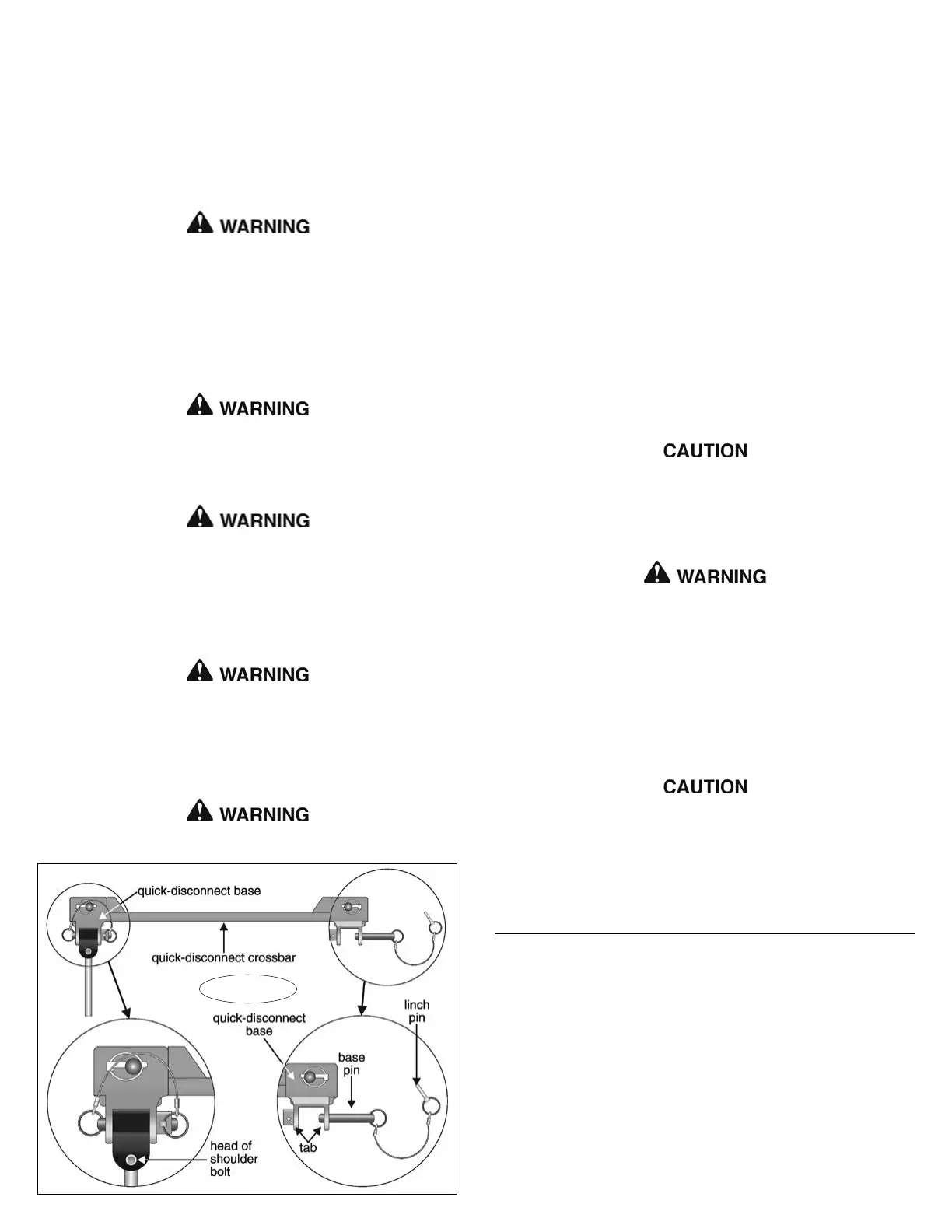
Figure 3
How to use safety cables
Safety cables are an integral part of your towing system. They are a
secondary safety device, required by law in many states. This section,
and the section titled “Proper installation of safety cables,” will acquaint
you with how to use them properly.
• The safety cables must connect the towing vehicle to the towed vehicle,
frame to frame.
• The safety cables must be rated at 6,000 pounds weight capacity per
pair, or higher. This is the maximum weight capacity of the tow bar — the
towed vehicle and all its contents cannot exceed 6,000 pounds.
• Pull the safety cables so that all the slack is at the motorhome. Make
sure there is enough slack in the cables at the motorhome to allow
for sharp turns — if there is not enough slack, the towing system will
be severely damaged when the motorhome turns a sharp corner.
continued on page four


 To Next Page
 Loading...