This document is a user manual for the ROBAM CXW-260-A676 Range Hood, providing comprehensive instructions for its installation, operation, and maintenance. The manual emphasizes safety precautions throughout, highlighting potential hazards and necessary steps to ensure safe usage and prevent damage or injury.
Function Description
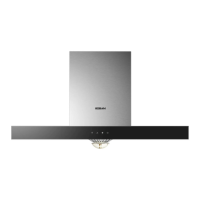
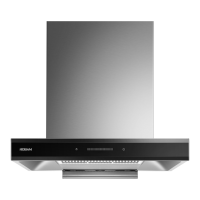
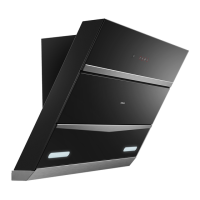
The ROBAM CXW-260-A676 Range Hood is designed for household use to exhaust cooking fumes and maintain a clean kitchen environment. It features a powerful motor and an efficient airflow system to effectively remove smoke, grease, and odors from the cooking area. The range hood is equipped with lighting to illuminate the hob, enhancing visibility during cooking. It also includes an oil cup to collect waste oil, which needs regular cleaning. The device is intended to be connected to an external flue system to discharge air outside, ensuring proper ventilation.
Usage Features
The range hood offers multiple operational modes controlled via a touch-sensitive panel or hand wave induction.
Control Panel and Hand Wave Induction:
The control panel features several buttons for different functions:
- Lighting: A dedicated button to turn the lights on or off, providing illumination for the cooking area. Each press is accompanied by a buzzer sound.
- Low Speed: Activates the impeller at a low speed for general cooking tasks, suitable for simmering or light cooking.
- Turbo/High Power: This button initiates the "fry function" with a flashing icon. If no further operation occurs, it automatically switches to "strong" mode after 3 minutes, indicated by a continuously lit icon. This mode is designed for intensive cooking that produces a lot of smoke, such as frying.
- Power: This button puts the product in standby mode, ready for operation. When the "Power" icon is lit, pressing it can directly turn off the light if only the light is on. If the fan is working, pressing the "Power" button will make its icon flash, and the hood will enter a delayed working state, closing all functions after 1 minute. Pressing "Turbo/High," "Low," or "Lighting" buttons during the delayed state will exit it. Pressing "Power" again when its icon flashes will turn off all functions.
- Hand Wave Induction: In either high or low speed states, if an object moves within a certain distance of the infrared probe, the hood automatically activates the frying function. When the hood is off, pressing "Turbo/High" and "Low" buttons simultaneously for 3 seconds can toggle the infrared sensor function on or off. Users who do not prefer this function are advised to turn it off.
General Usage Recommendations:
- It is recommended to turn on the range hood before cooking to effectively capture fumes from the start.
- The range hood should always be plugged in before use.
- Ensure adequate ventilation in the room, especially when the range hood is used concurrently with gas or other fuel-burning appliances, to prevent the accumulation of combustion byproducts.
- The oil cup should be regularly checked and cleaned when the oil level reaches 2/3 or near the tick mark to maintain efficiency and prevent overflow. Waste oil should not be consumed.
- Avoid flambéing directly under the range hood, as this can damage the unit and cause accidents.
- Do not touch the bulb when it is on or shortly after use, as it may be hot and cause scalds.
- If the range hood is installed in a well-sealed building, ensure there is an air inlet or an open door to provide good ventilation.
- The maximum working temperature for the range hood should not exceed 40°C.
Maintenance Features
Regular cleaning and maintenance are crucial for the range hood's efficiency, longevity, and hygiene.
General Maintenance Guidelines:
- Regular Cleaning: The hood should be cleaned and maintained regularly, depending on the surrounding environment, to ensure its cleanliness, efficiency, and extended service life. It is recommended to clean the outer surface of the range hood after each cooking session.
- Protective Screening: The protective screening should be cleaned regularly to ensure smooth discharge of fumes. Care should be taken to avoid damage during cleaning.
- Detergent Use: Use a neutral detergent for cleaning instead of strong detergents. After cleaning, dry the surfaces with a soft cloth. For models with mechanical switches, avoid getting detergent on the control keys.
- Preventing Stains and Scratches: Do not allow stains to remain on the hood's surface for too long. Avoid using cleaning balls, brushes, or other rough objects that could scratch the body surface.
- Protective Gear: Always wear protective gloves when cleaning or maintaining the hood to prevent injuries from sharp edges.
- Oil Cup Cleaning: Regularly check and clean the oil cup. To do this, hold the oil cup with both hands, pull it out, and pour out the waste oil.
- Long-Term Shutdown: If the range hood will be shut down for a long period, unplug it. Do not pull the power cord forcefully.
- Fire Risk: There is a fire risk if cleaning is not carried out in accordance with the instructions provided in the manual.
- Professional Maintenance: For any abnormal operation or damage, contact professional maintenance personnel. Do not attempt to change interior circuits or perform unauthorized repairs.
Component Removal for Maintenance (Professional Recommended):
The manual provides instructions for the removal of specific components for repair or replacement, though it emphasizes that these procedures should ideally be performed by professionals.
- Lamp Removal: To remove the lamp, first remove the top cover plate by unscrewing its screws. Then, unscrew the two screws on the light itself and pull it out.
- Switch Removal: After removing the top cover plate, remove the upper glass assembly by unscrewing its screws. Then, unscrew the small cover plate and remove the switch assembly.
- Filter Removal: To remove the filter, start the hood to open the smoke guide, then unplug the power supply. Hold the two handle holes on the filter, apply slight outward pressure to release it from the slot, lift it, and pull it outward for cleaning.
- Hole Range Hood Removal (Impeller, Air Duct): This involves removing the filter, unscrewing retaining ring screws, closing the smoke guide plate (by plugging in and unplugging power), unscrewing rear panel screws, removing the rear panel, spinning down air duct outlet screws to remove the air duct, clockwise spinning down the cap to remove the impeller vertically, and then following steps for lamp and switch removal. When reinstalling the impeller, apply some lubricant to its shaft hole. The manual notes that the range hood body generally does not need to be removed, and such removal should be done by professional maintenance staff.
Safety During Maintenance:
- Always unplug the range hood before installing, disassembling, or maintaining it to avoid electric shock.
- Wear protective gloves during operations to prevent injuries from sharp metal edges.
- If the supply cord is damaged, it must be replaced by the manufacturer, its service agent, or similarly qualified persons to avoid hazards. Do not restructure, stretch, knot, squeeze, or place heavy objects on the power cord.

 Need help?
 General


 To Next Page