11
%Charge SpecicGravity*(SG)
100 1.255 – 1.275
75 1.215 – 1.235
50 1.180 - 1.200
25 1.155 - 1.165
0 1.110 - 1.130
Table 3 – Specic Gravity vs State of Charge
*PLEASE NOTE: Specific Gravity is dependent on the electrolyte temperature. These
values are for a temperature of 27°C (80°F). To adjust, add/subtract 0.003 for every
5°C (10°F) increase/decrease.
BULK CHARGE
The first part of the charging process is the bulk charge. This is when the maximum
amount of current flows into the battery bank until a desired voltage is reached. The
recommended maximum current is 15% of the AH capacity of the battery bank based
on the 6 hour rate. A lower current can be used, but this will prolong the charging time.
Bulk charge voltage set points are outlined in Table 2.
ABSORPTION CHARGE
Arguably, the most important part of the charge cycle is the absorption charge. Since
the bulk charge only recharges the battery bank to an 80% level, the absorption charge
completes the charging cycle. Most chargers on the market have a timer that allows the
user to adjust the duration for the required time to return the battery to full charge. In
order to set the correct time, a simple calculation is required. With the help of the 20 AH
capacity, you can figure out the remaining charge required for the battery bank.
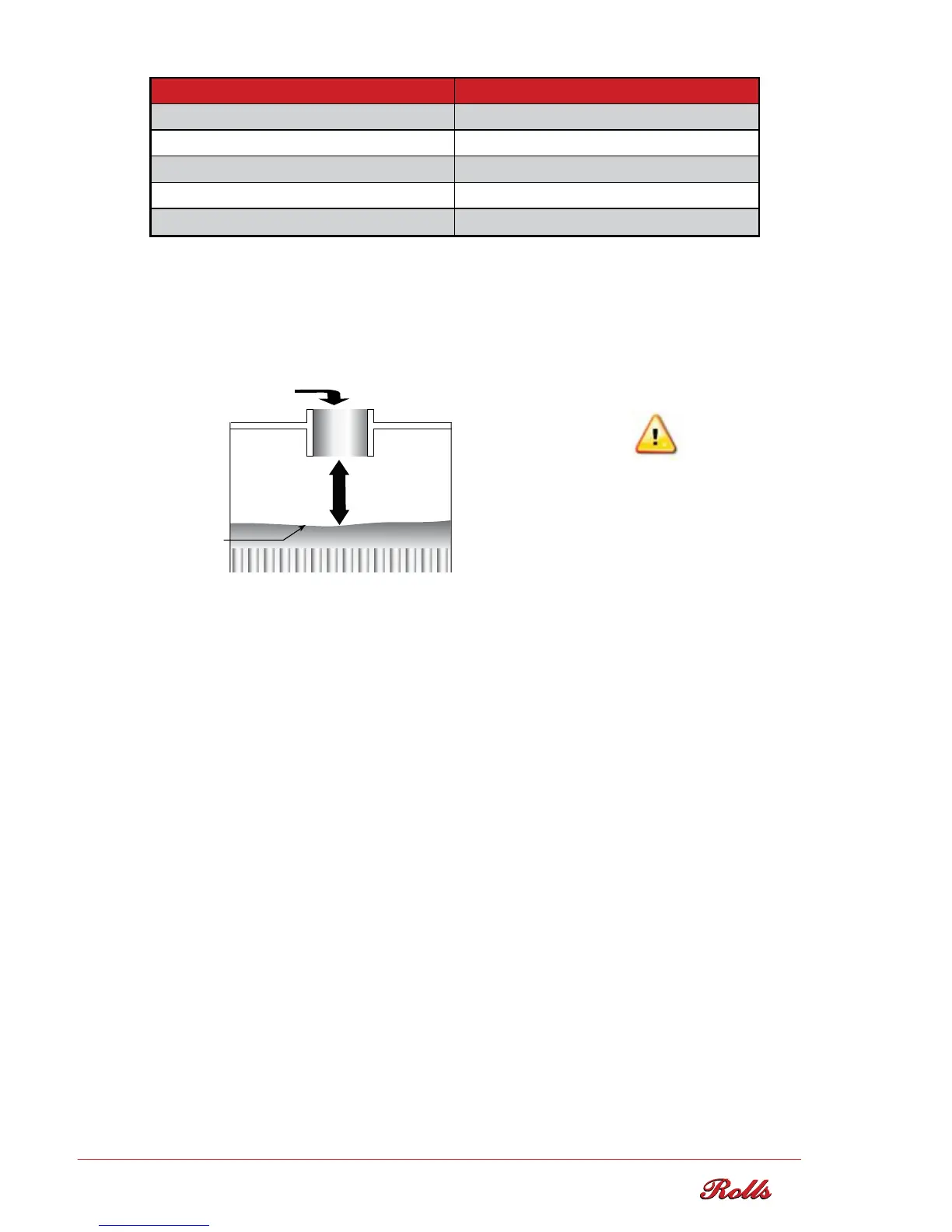
Figure 7 – Electrolyte level
Caution: Do not add water
or electrolyte to cells before
initial charging unless plates
are exposed. If so, add
distilled water until plates are
submerged. Please contact
Rolls Technical Support if you
have any questions or concerns.


 To Next Page