14
TEMPERATURE PROBE
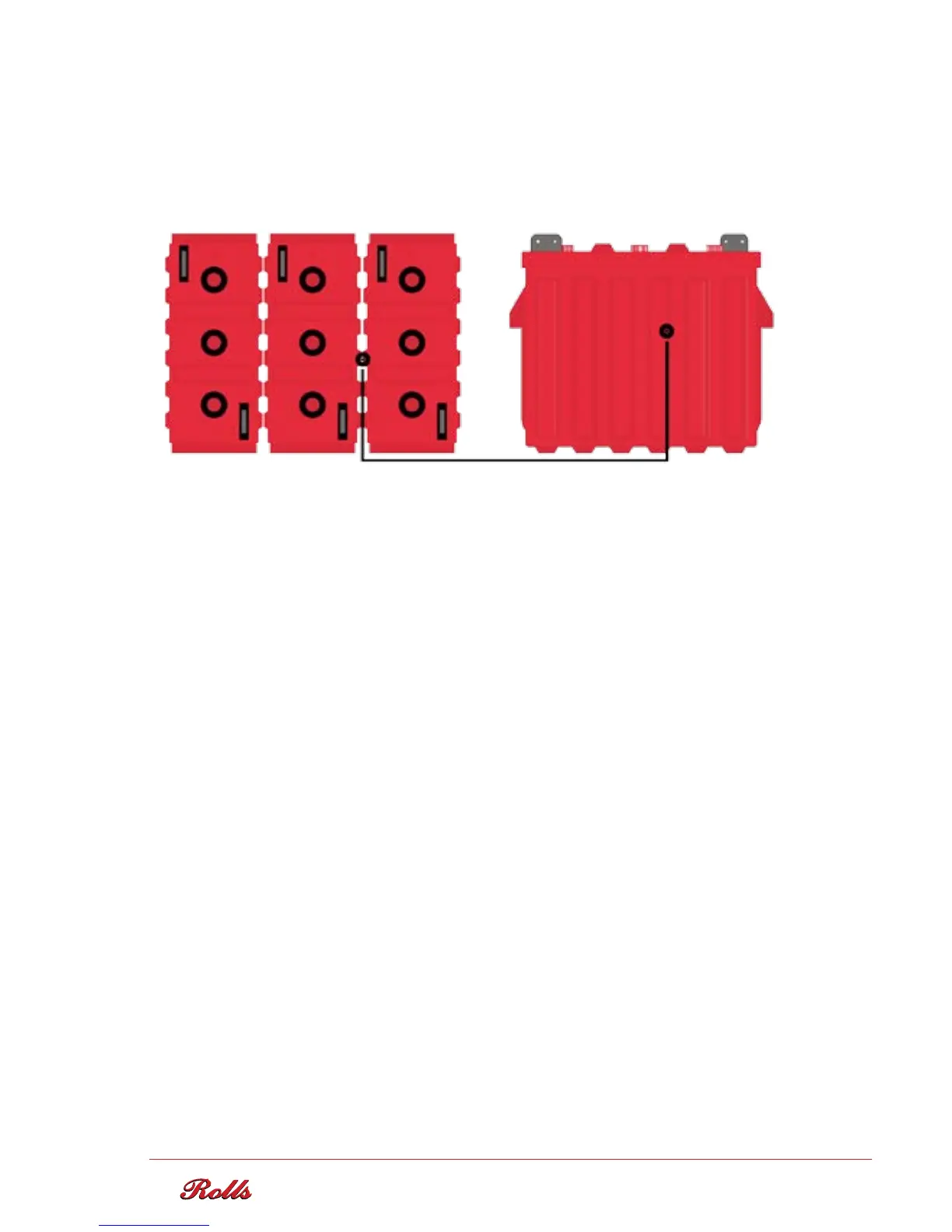
For additional data and safety, many people choose to install temperature probes inside
the battery banks. Regardless of the size of the battery bank, the probe should be
installed on the side of one battery, below the liquid level on a battery placed in the
center of the bank. The main factor to look for is maximum temperature. The battery
bank should not exceed an operating temperature of 50ºC.
Figure 8 – Side of the battery, middle of the bank and below the liquid level
CLEANING
Batteries should be kept clean at all times. If stored in a dirty area, regular
cleaning should be performed. Before doing so, assure that all the vent caps are tightly
fastened. Using a solution of water and baking soda (100g per litre), gently wipe the
battery and terminals with a damp sponge, then rinse with water.
PULSE CHARGING
Pulse charging has shown that the banks do not get as sulfated as one with the traditional
3-step charging, but will not eliminate the need for controlled, preventive equalization.
The benefit of pulse charging is that the bank will need less overcharge and hence less
maintenance.
BATTERY ADDITIVES
Most battery additives are mainly a form of a common preservative, EDTA.
These additives help to increase the solubility of the sulfate in the electrolyte
(common salt effect). Some additives contain cadmium sulfate, which could
cause disposal problems in the future. These additives are not beneficial and
are not recommended.
SToRAgE pRoCEdURE
Keep the batteries clean and always store in a cool, dry area. Where acid is
stored or handled, good ventilation is necessary. Keep the bungs on the containers at
all times.


 To Next Page