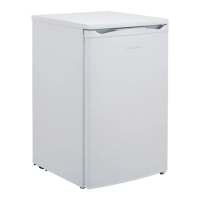
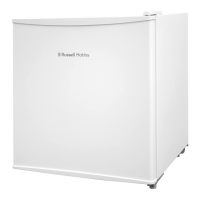
This document is an instruction manual for a Russell Hobbs Table Top Freezer, model number RHTTFZ1 (B).
Function Description
The Russell Hobbs Table Top Freezer is designed for domestic use to store frozen foods. It operates as a standalone freezer unit, maintaining temperatures between -18°C and -25°C to preserve food effectively. The appliance uses natural refrigerant gas R600a (Isobutene) as part of its cooling system, which is environmentally friendly. The temperature is controlled by a thermostat knob located on the door frame, allowing users to regulate the internal temperature.
Important Technical Specifications
- Model Number: RHTTFZ1 (B)
- Rated Voltage: 220V – 240V ~ 50Hz
- Capacity: 32L
- External Dimensions (HxWxD): 492mm x 472mm x 450mm
- Refrigerant Gas: R600a (Isobutene)
- Standard Operating Temperature: -18°C to -25°C (Freezer compartment)
- Power Connection: Must be plugged into an earthed socket. Non-re-wireable plug, requires a 13 Amp fuse (BS1363) conforming to BS1362 and BSI or ASTA approved if changed.
Usage Features
- Temperature Control: The appliance features a temperature control knob on the door frame. "MIN" is the warmest setting, and "MAX" is the coldest. For normal conditions, the control should be set to "NORMAL".
- Initial Setup: After transportation, the appliance must stand upright for a minimum of 3 hours before being plugged in to allow the coolant to settle. Before first use, the interior should be cleaned with a bicarbonate of soda solution and warm water. After plugging in and setting the thermostat to "NORMAL", the door should remain closed for at least 4 hours to allow the appliance to reach its standard operating temperature.
- Door Reversal: The door can be reversed to open from either the left or right side, providing flexibility for placement. This process involves tilting the freezer backward (no more than 45 degrees), removing and re-attaching hinge components and the adjustable foot to the opposite side. After door reversal, the appliance must be upright for a minimum of 3 hours before turning it on.
- Freezer Storage Advice:
- Store fresh food in airtight boxes or suitable bags/foil.
- Avoid direct contact between frozen food and food to be frozen.
- Place pre-frozen food in the freezer as quickly as possible after purchase.
- Process fresh vegetables and fruits appropriately to prevent frost damage.
- Always follow storage guidelines on food packaging.
- Suggested maximum storage times at -18°C (4-star freezer rating):
- Fresh meat & poultry: up to 12 months
- Cooked meat: up to 2 months
- Fresh fish: up to 6 months
- Fruit & vegetables: up to 12 months
- Bread & cakes: up to 6 months
- Power Failure: In case of a power failure, keep the door closed. If the freezer temperature rises, do not refreeze food without checking its condition. Specific advice is given for different food types (e.g., ice cream should be discarded, bread and cakes can be refrozen).
- Energy Saving Advice:
- Avoid installing near heat sources (cooker, dishwasher, radiator).
- Locate in a cool, well-ventilated room with clear air vents.
- Minimize door opening frequency and duration.
- Ensure door seals are clean and undamaged.
- Do not overload the appliance.
- Allow hot food to cool down before placing it in the freezer.
Maintenance Features
- Internal Cleaning:
- Disconnect from power supply before cleaning.
- Clean periodically with a solution of bicarbonate of soda (5ml to 0.5 litre of water) and lukewarm water.
- Clean accessories separately with soap and water; do not use a dishwasher.
- Do not use abrasive products, detergents, or soaps.
- Rinse with clean water and dry carefully.
- Reconnect plug with dry hands after cleaning.
- External Cleaning:
- Wash with warm soapy water; do NOT use abrasive products.
- Exercise caution due to sharp edges on the underside.
- Dust the rear of the appliance and the compressor once or twice a year with a brush or vacuum cleaner to prevent dust accumulation, which can affect performance and increase energy consumption.
- When Not in Use: For long periods of disuse, disconnect from electricity, empty all food, clean the inside, and leave the door open to prevent odour build-up.
- Defrosting:
- Defrost twice a year or when frost layer is approximately 7 mm (1/4") thick.
- 6 hours before defrosting, set thermostat to "MAX" to ensure food is at the lowest temperature.
- Remove frozen foods, wrap in newspaper, and store in a cool place.
- Place layers of paper or towels underneath and next to the freezer door.
- Switch off the appliance and pull out the mains plug.
- Remove drawers/baskets and leave the door open.
- Containers of warm (not hot) water can be placed inside to speed up defrosting.
- WARNING: Never use hairdryers, electrical heaters, or sharp metal tools for defrosting, as this can damage the appliance or cause electric shock.
- After ice has melted, clean and dry the interior.
- Switch the appliance on and replace frozen food.
Troubleshooting
The manual provides a troubleshooting guide for common issues such as:
- Freezer not working: Check power, plug, fuse, voltage, and socket.
- Temperature not cold enough: Check food load, thermostat setting, direct sunlight exposure, ambient temperature, and frequency of door opening.
- Temperature too cold: Adjust thermostat to a lower setting.
- Wet inner/outer surfaces: Caused by condensation; dry carefully.
- Excess ice/frost: Check if door was left open, and if door gasket is clean and undamaged.
- Smell/odour: Check food packaging and for spillages on shelves/racks/drawers.
- Doors not closing properly: Check for obstructions, correct placement of compartments/shelves, warped/torn door seal, and if the appliance is level.
- Unusual noises: Explains normal bubbling/gurgling (coolant fluid) and water flowing sounds (defrosting). Compressor noise is also normal when operating.

 Need help?
 General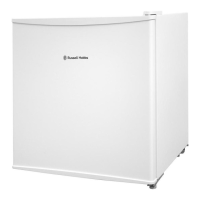


 To Next Page
