20 21
Adjusting boat trim
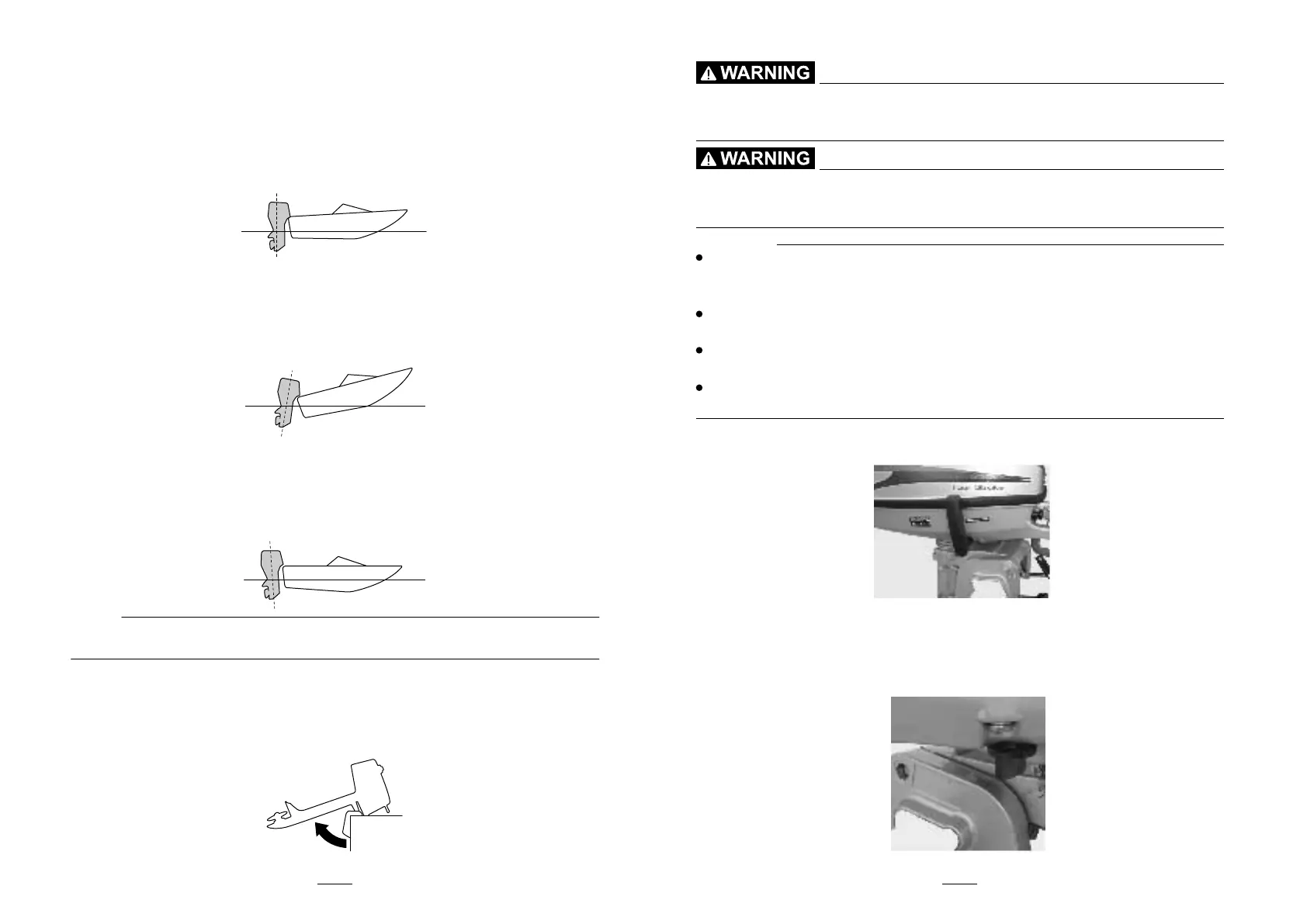
When the boat is on plane, a bow-up attitude results in less drag, greater
stability and efficiency. This is generally when the keel line of the boat is up
about 3 to 5 degres. With the bow up, the boat may have a greater tende-
ncy to steer to one side or the other. Compensate for this as you steer. The
trim tab can also be adjusted to help offset this effect. When the bow of the
boat is down, it is easier to accelerate from a standing start onto plane.
Bow Up
Too much trim-out puts the bow of the boat too high in the water. Performan-
ce and economy are decreased because the hull of the boat is pushing the
water and there is more air drag. Excessive trim-out can also cause the pr-
opeller to ventilate, which reduces performance further, and the boat may
"porpoise" (hop in the water), which could throw the operator and passenge-
rs overboard.
Bow Down
Too much trim-in causes the boat to "plow" through the water, decreasing
fuel
economy and making it hard to increase speed. Operating with excessive
trim-
in at higher speeds also makes the boat unstable. Resistance at the bow is
greatly increased, heightening the danger of "bow steering" and making
operation difficult and dangerous.
NOTE:
Depending on the type of boat, the outboard motor trim angle may have little
effect on the trim of the boat when operating.
Tilting up and down
If the engine will be stopped for some time or if the boat is moored in
shallows,
the outboard motor should be tilted up to protect the propeller and casing fr-
om damage by collision with obstructions, and also to reduce salt corrosion.
Be sure all people are clear of the outboard motor when tilting up and
down, also be careful not to pinch any body parts between the drive u-
nit and engine bracket.
Leaking fuel is a fire hazard. Tighten the air vent screw and place the fuel
cock in the closed position if the outboard motor will be tilted for more
than a few minutes. Otherwise fuel may leak.
CAUTION:
Before tilting the outboard motor, follow the procedure under
"Stopping
engine" in this chapter. Never tilt the outboard motor while the engine
is running. Sever damage from overheating can result.
Do not tilt up the engine by pushing the tiller handle because this could
break the handle.
Keep the power unilt higher than the propeller at all times. Otherwise water
could run into the cylinder and cause damage.
The outboard motor cannot be tilted when in reverse or when the outboard
motor is turned 180℃ (facing the rear).
Procedure for tilting up (manual tilt models)
1. Place the gear shift lever in neutral (if equipped) and face the outboard motor forward.
2. On full-pivot system models, tighten the steering friction adjuster by turning
it clockwise to prevent the motor from turning freely.
3. Tighten the air vent screw. On models equipped with a fuel joint, disconnect
the fuel line from the outboard motor.
4. Close the fuel cock.



 To Next Page