2 3
Attach the engine stop switch lanyard to a secure place on your clothing, or
your arm or leg while operating. If you accidetally leave the helm, the lanyard
will pull from the switch, stopping the engine.
Know the marine laws and regulations where you will be boating-and obey them.
Stay informed about the weather. Check weather forecasts before boating.
Avoid boating in hazardous weather.
Tell someone where you are going: leave a Float Plan with a responsible
person. Be sure to cancel the Float Plan when you return.
Use common sense and good judgment when boating. Know your abilities,
and be sure you understand how your boat handles under the different
boating conditions you may encounter. Operate within your limits, and the
limits of your boat. Always operate at safe speeds, and keep a careful watch
for obstacles and other traffic.
Always watch carefully for swimmers during the engine operation.
Stay away from swimming areas.
When a swimmer is in the water near you shift into neutral and shut off the engine.
Important labels
Warning labels
Label
Be sure shift control is in neutral before starting engine. (except 2HP)
Do not touch or remove electrical parts when starting or during
operation.
Keep hands, hair, and other rotating parts while engine is running.
Lable
LEAKING FUEL COULD CAUSE A FIRE.
Before tilting up the engine or laying it on its side:
Turn the fuel cock to the "closed" position.
Tighten the air-vent screw on the fuel tank cap.
Caution labels
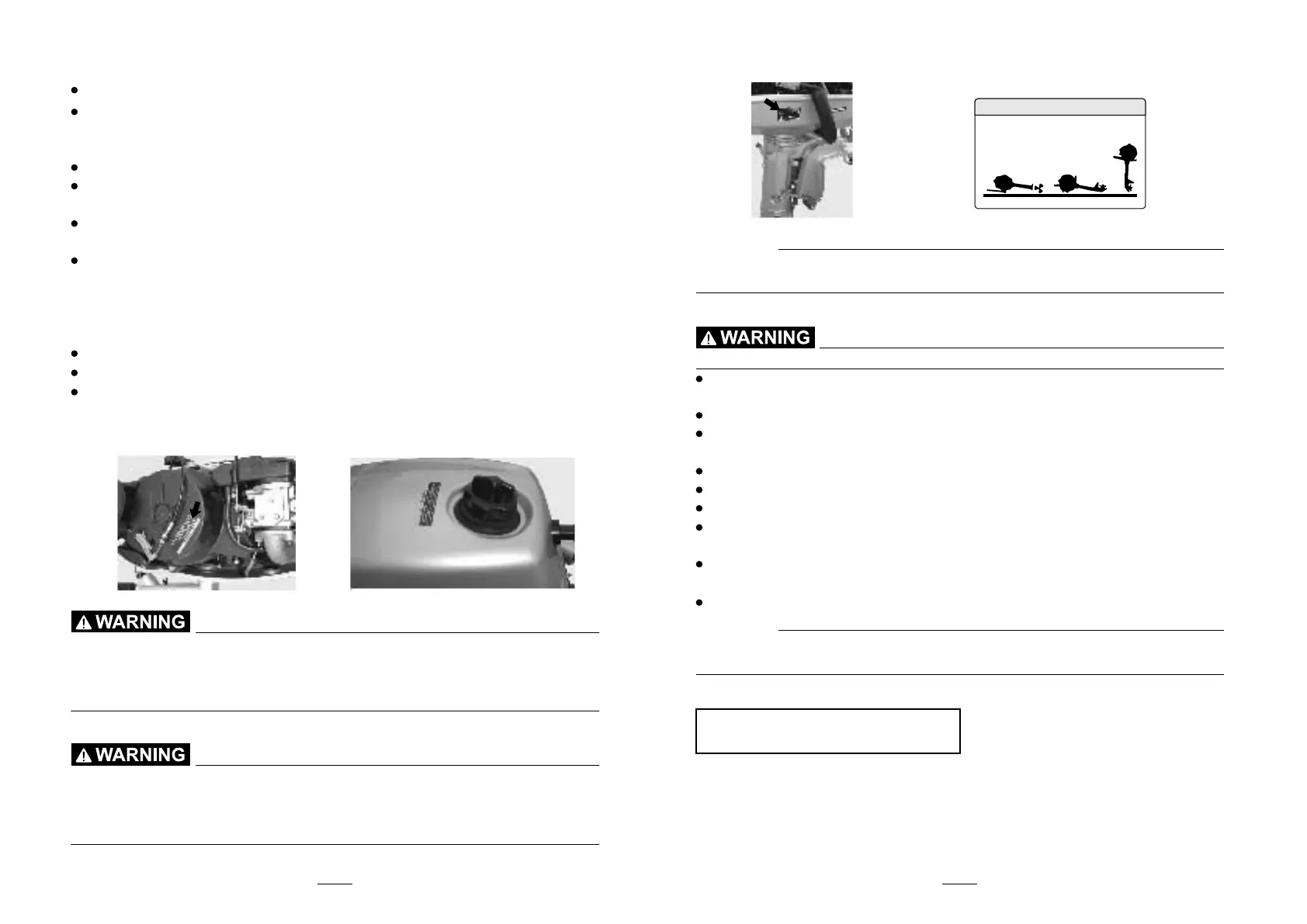
Lable
CAUTION:
Store the engine only as shown. Otherwise, engine damage could result
from Leaking oil.
Fueling instructions
GASOLINE AND ITS VAPORS ARE HIGHLY FLAMMABLE AND EXPLOSIVE!
Do not smoke when refueling, and keep away from sparks, flames, or
other sources of ignition.
Stop engine before refueling.
Refuel in a well-ventilated area. Refuel portable fuel tanks off the
boat.
Take care not to spill gasoline. If gasoline spills, wipe it up immediately with dry rags.
Do not overfillt the fuel tank.
Tighten the filler cap securely after refueling.
If you should swallow some gasoline inhale a lot of gasoline vapor, or
get gasoline in your eyes, get immediate medical attention.
If any gasoline spills onto your skin, immediately wash with soap and
water. Change clothing if gasoline spills on it.
Touch the fuel nozzle to the filler opening or funnel to help prevent electrostatic sparks.
CAUTION:
Use only new clean gasoline which has been stored in clean containers
and is not contaminated with water or foreign matter.
Gasoline
If knocking or pinging occurs, use a different brand of gasoline or premium
unleaded fuel. If unleaded gasoline is not available, then premium gasoline
can be used. If leaded gasoline is usually used, engine valves and related
parts should be inspected after every 300 hours of operation.
Recommended gasoline:
Regular unleaded gasoline
cockpit and cabin areas well ventilated. Avoid blocking exhaust outlets.
Check throttle, shift, and steering for porper operation before starting the engine.
CAUTION
Store the engine only as shown.
Otherwise, engine damage could
result from leaking oil.



 To Next Page