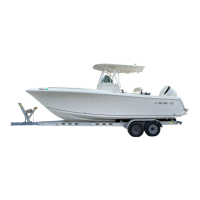
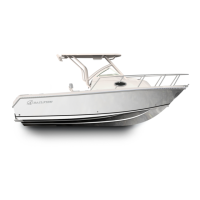
SAILFISH 276 DC | ALUMINUM COSMETIC CORROSION (PITTING)
The information provided is designed
to give you a thorough understanding
of the factors that can impact the ap-
pearance of your anodized aluminum.
By using this information, we hope to
help you enhance the beauty and value
of our products.
What Causes It?
Corrosion is a natural phenomenon
that affects metals by either a
chemical or electrochemical reaction.
The rate at which aluminum corrodes
depends greatly on the environmental
conditions and the amount of pre-
ventative maintenance performed.
Our goal is to slow down or stop this
natural phenomenon we call pitting (or
corrosion).
Anodized Aluminum
The aluminum on your boat has been
anodized. This creates a very hard
protective seal on the surface of
the aluminum to protect it as much
as possible from pitting. When the
anodized coating is broken and raw
aluminum is exposed, corrosion will
take place. Damage from other abra-
sive impacts can break the anodized
coating.
Chemical Attack
Corrosive chemicals containing high
concentrations of acids or alkalis
will remove the anodized coating.
Solutions containing chlorine, salts,
or ammonia are all harmful to the
anodized aluminum on your boat.
Many common household cleaners
contain chemicals that will remove the
anodizing and cause pitting.
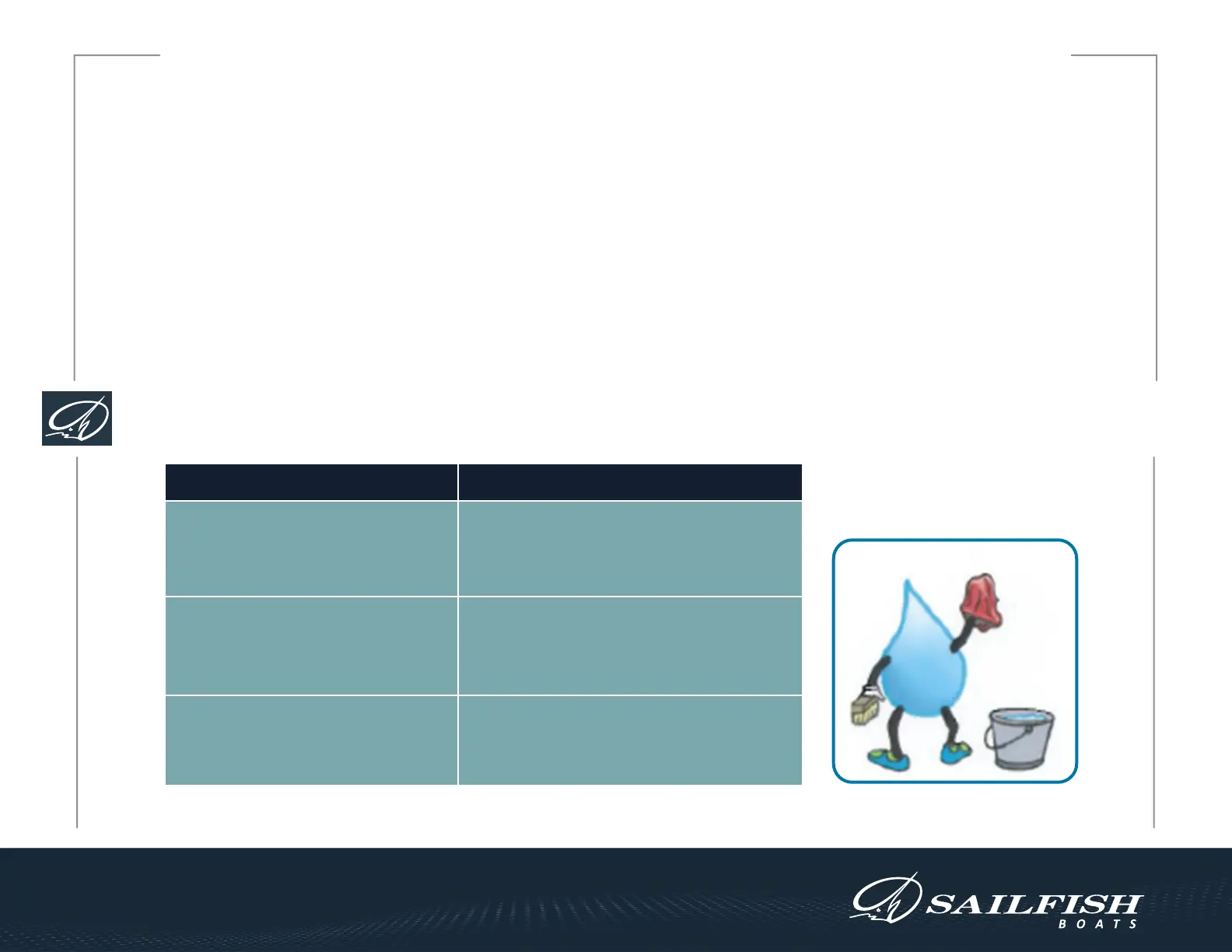
AVOIDABLE UNAVOIDABLE
Strong acidic solutions found in
cleaners, paint remover, degreasers,
etc.
Airborne pollution. Airborne particles from
local sources: vehicles, incinerators, paper
mills, chemical plants, power plants, etc.
Concentrated alkaline based solu-
tions. Many concentrated soaps fall
into this category.
Harsh chemicals from work performed at
local shipyards and dry docks.
Chlorine, sulfurs, solvents and am-
monia based products.
Be aware of local sources that can expose
your new boat to corrosive chemicals.
57



 To Next Page