Changing the Oil
1.
Drain all oil and refill with clean oil every 12 months. If pump is used in dirty
environments, change the oil more often.
2. Remove vent/fill cap or plugfrom reservoir.
3. Tilt pump to drain out old oil.
4. Fill reservoir only to level mark shown on pump.
5. Replace the vent/fill cap or plug.
6. Dispose of used oil properly.
TROUBLESHOOTING
GUIDE The following information is intended as an aid in determining if a problem exists. For
repair service, contact the Authorized SAM Service Center in your area.
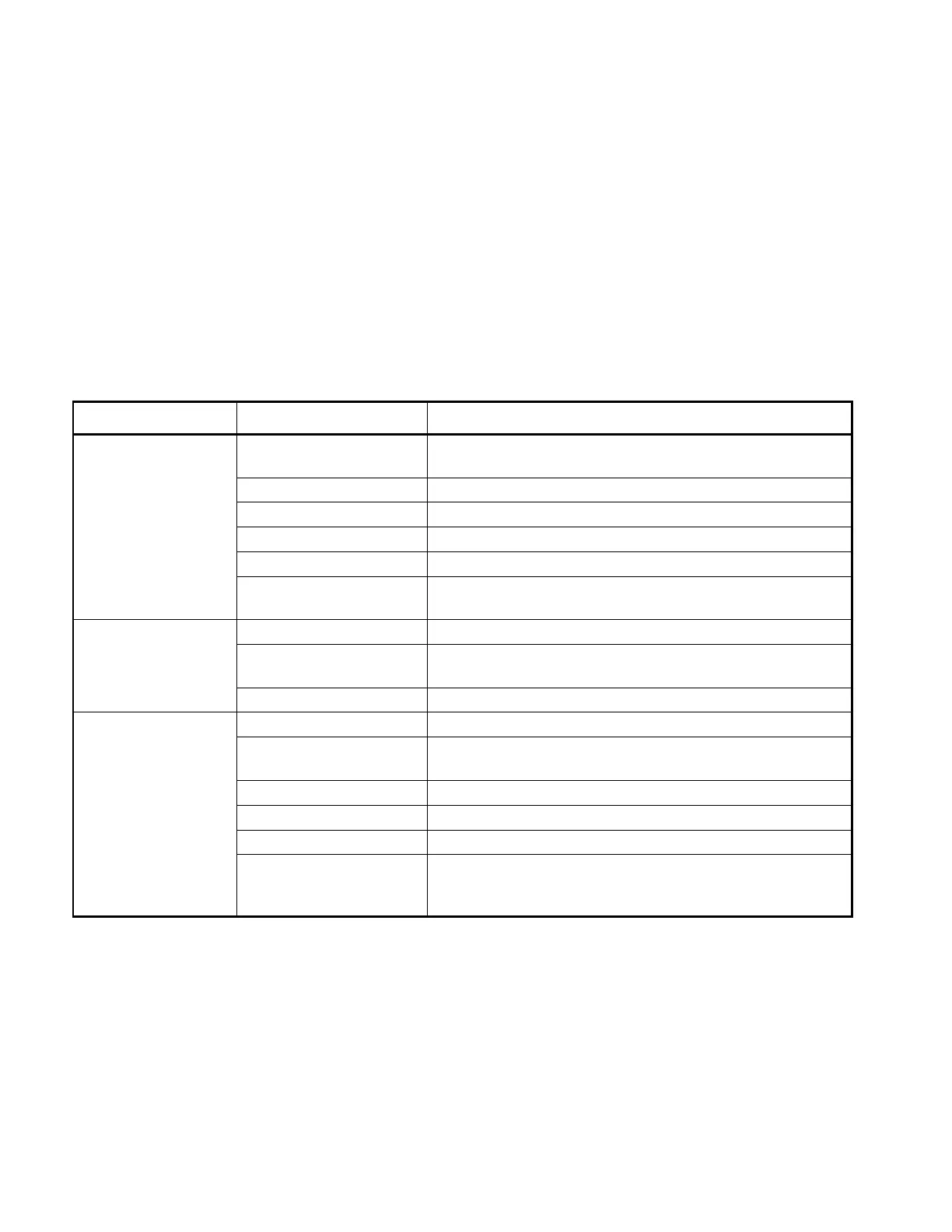
Problem Possible Cause Solution
Cylinder does not
advance, advances
slowly, or advances in
spurts.
Oil level in pump reservoir
is low.
Add oil according to the Maintenance instructions.
Release valve open. Close the release valve.
Loose hydraulic coupler. Check that all couplers are fully tightened.
Load is too heavy. Do not attempt to lift more than rated tonnage.
Air trapped in system. Remove air according to the instructions.
Cylinder plunger binding. Check for damage to cylinder.
Have cylinder serviced by a qualified hydraulic technician.
Cylinder advances, but
does not hold pressure.
Leaking connection. Check that all connections are tight and leak free.
Leaking seals. Locate leak(s) and have equipment serviced by
a qualified hydraulic technician.
Internal leakage in pump. Have pump serviced by a qualified hydraulic technician.
Cylinder does not
retract, retracts part
way, or retracts more
slowly than normal.
Release valve closed. Open release valve.
Pump reservoir is
over-filled.
Drain oil level to full mark.
See instructions for adding oil.
Loose hydraulic coupler. Check that all couplers are fully tightened.
Air trapped in system. Remove air according to the instructions.
Hose I.D. too narrow. Use larger diameter hydraulic hose.
Cylinder retraction spring
broken or other cylinder
damage.
Have cylinder serviced by a qualified hydraulic technician.
6



 To Next Page