Operating
the
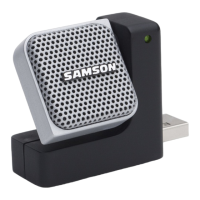
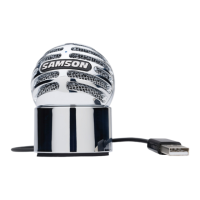
Go Mic
Polar Patterns
The most
important
characteristic
of
any microphone
is
its directionality or "pick-up
pattern': There are three basic categories
of
pick
up
patterns; omni, bidirectional (or
figure
8)
and unidirectional. Omni mics pick
up
sound from all directions, bidirectional
mics pick
up
the sound directly in
front
and back
of
the microphone while rejecting
the sound on the left and
right
sides, and unidirectional (cardioid) mics pick
up
the
sound in
front
of
the microphone. While bidirectional microphones are very useful for
a variety
of
applications, a majority
of"miking"
situations in recording require cardioid
or omni microphones. The cardioid pick
up
pattern allows for better separation
of
instruments in
the
studio and more control over feedback in live sound reinforcement.
When positioned correctly, the cardioid pick-up pattern allows you
to
pick
up
more
of
the sound you
want
and
less
of
the sound you
don't
want.
If
you need
to
pick
up
sound
from all around, for example when recording a meeting around a conference table,
the Omni pattern
is
ideal. When the
Go
Mic
is
set
to
Omni pattern
it
will pick
up
sound
in a 360-degree pattern. This can also be used
to
pick
up
the ambient room sound for
natural reverb when recording acoustic instruments.
Microphone Placement
In
order
to
maximize the sound quality, you must pay careful attention
to
the
placement
of
your
Go
Mic and
how
it
is
positioned for the instrument
or
vocalist
that
you are miking. All microphones, especially cardioid microphones, exhibit a
phenomenon known
as
"proximity effect:' Very simply put, proximity effect
is
a
resulting change in the frequency response
of
a microphone based on the position
of
the mic capsule relative
to
the sound source.
In
general,
as
the
microphone moves
closer
to
the sound source, the
bass
response increases.You can also make subtle
changes
to
the frequency response by making
minor
adjustment
to
the position.
Specifically, when you
point
a cardioid mic directly at the sound source (on axis) you
16



 To Next Page