This document serves as a user manual for Samsung Duct Type Series air conditioners, specifically covering Slim duct, MA duct, and HSP duct models. The manual provides essential information for operating, maintaining, and troubleshooting the air conditioner, ensuring optimal performance and user safety.
Function Description
The Samsung Duct Type Series air conditioner is designed to provide both cooling and heating functionalities, making it a year-round climate control solution. It operates as a "Heat pump" system, which is highlighted as a cost-efficient method for heating, being up to 300% more efficient than electrical heating. The duct type design allows for flexible installation in various room shapes, accommodating specific airflow requirements. Users can configure the air intake from either the bottom or rear of the unit, adding to its installation versatility. The air conditioner aims to offer a comfortable indoor environment, combating hot summer days with cooling and providing warmth during colder periods.
Important Technical Specifications
The manual lists specific model series:
- Slim duct: AMFNLD
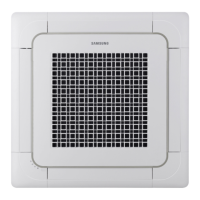
- Slim duct: AM022/028/036FNMD***
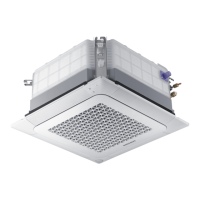
- MA duct: AMFNMD
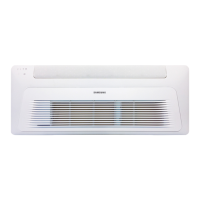
- HSP duct: AMFNHD
While detailed technical specifications like power consumption, cooling/heating capacity, or dimensions are not explicitly provided in the excerpt, the manual does outline operational temperature and humidity ranges for efficient use:
- Cooling: Indoor temperature 18~32°C, Outdoor temperature -5~48°C, Indoor humidity 80% or less. Operating outside these ranges may lead to condensation on the indoor unit, potentially causing water blow-off or drops on the floor.
- Heating: Indoor temperature 27°C or less, Outdoor temperature -20~24°C. Operating outside these ranges may trigger internal protection mechanisms, causing the air conditioner to stop. The standardized temperature for heating is 7°C, and heating capacity may be reduced if outdoor temperatures drop to 0°C or below.
- Drying: Indoor temperature 18~32°C, Outdoor temperature -5~48°C. Similar to cooling, operating outside these ranges may result in condensation.
The air conditioner incorporates a protective mechanism that delays operation for 3 minutes after being turned on or plugged in, or after a power failure, to protect the compressor of the outdoor unit from overloading.
Usage Features
The manual offers several tips for effective use:
- Cooling: Avoid drastically lowering the temperature, as it wastes energy without significantly faster cooling. If the outdoor temperature is much higher than the selected indoor temperature, it may take time to reach the desired coolness.
- Heating: The heating capacity may decrease in extremely low outdoor temperatures. Combining the air conditioner with an additional heating appliance is recommended if heating is insufficient.
- Frost & De-ice: During Heat mode, frost may form on the unit. The air conditioner will automatically enter De-ice mode for about 10 minutes, during which it stops heating. Steam from the outdoor unit during De-ice mode is normal and safe. No user intervention is required.
- Fan Operation: The fan may not operate for the first 3-5 minutes during heating to prevent cold blasts while the unit warms up.
- Power Failure: In case of a power failure, the unit stops immediately and will resume operation automatically when power returns, after the 3-minute compressor protection delay.
- Protection Mechanism: A 3-minute delay in cool/warm air output occurs after the air conditioner is turned on or plugged in, to protect the outdoor unit's compressor.
Maintenance Features
Regular cleaning and maintenance are crucial for optimal performance and user safety.
- Air Filter Cleaning: The washable foam-based air filter should be cleaned periodically (ideally every two weeks) to capture large particles. It can be cleaned with a vacuum cleaner or soft brush, or rinsed with running water if heavily soiled, then dried in a ventilated area. If odors develop after drying in a confined or humid area, re-clean and dry in a ventilated area. After cleaning, the Filter Reset button on the remote control should be pressed for 2 seconds to reset the filter schedule.
- General Cleaning: Do not spray water directly onto the appliance or use benzene, thinner, or alcohol for cleaning, as this can cause discoloration, deformation, damage, electric shock, or fire. Always unplug the air conditioner and wait for the fan to stop before cleaning or maintenance.
- Outdoor Unit Heat Exchanger: Exercise caution when cleaning the outdoor unit's heat exchanger due to sharp edges; wear thick cotton gloves to avoid injury.
- Internal Cleaning: Do not attempt to clean the inside of the air conditioner yourself; contact a service center for internal cleaning.
- Long-Term Storage: If the air conditioner will not be used for an extended period, operate it in Fan mode for 3-4 hours to thoroughly dry internal components and prevent moisture-related damage or odors. Disconnect the power plug afterward. Before reusing, run it in Fan mode again for 3-4 hours.
- Periodical Checks: A chart outlines recommended maintenance frequencies:
- Monthly: Clean the air filter, clean the condensate drain pan.
- Every 4 months: Thoroughly clean the indoor unit's heat exchanger, clean the condensate drain pipe, replace remote control batteries.
- Once a year: Clean the outdoor unit's heat exchanger (inside and outside), clean electric components with air jets, verify all electric components are firmly tightened, clean the fan, verify fan assembly is firmly tightened, clean the outdoor unit's condensate drain pan.
- Qualified Personnel: All maintenance operations, especially those related to electrical components and detailed checks, must be performed by qualified personnel. Refer to the Installation Manual for more detailed information.

 Need help?
 General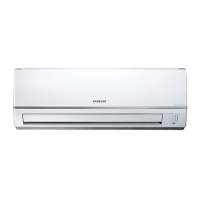



 To Next Page