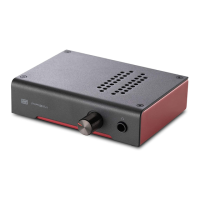
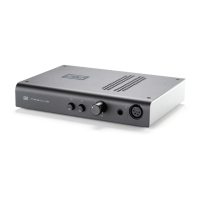
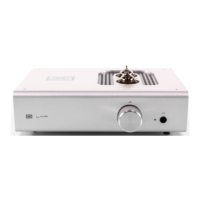
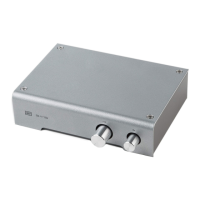
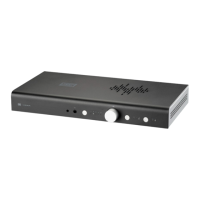
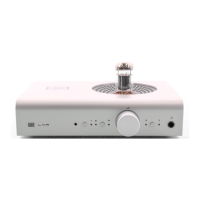
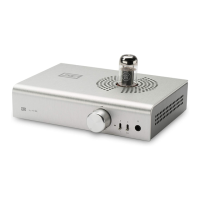
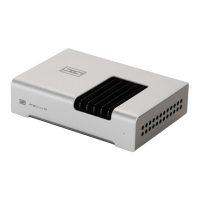
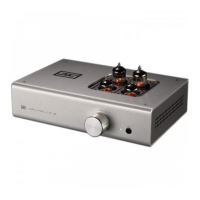
The Schiit Mjolnir 3 is a Class A, dual mono, choke input, balanced headphone amplifier and preamplifier. It's designed for serious audio enthusiasts who appreciate a robust, high-performance device, even if it comes with certain quirks. The Mjolnir 3 is a substantial piece of equipment, not small or lightweight, and it operates at a high temperature, making it less suitable for every desk or user. Its design emphasizes a fully discrete signal path, including the power supply, and it eschews microprocessors in favor of solid, mechanical switches, contributing to its unique character and sound profile.
Function Description
The Mjolnir 3 serves as both a high-fidelity headphone amplifier and a preamplifier, capable of driving a wide range of headphones and feeding powered monitors or external speaker amplifiers. Its dual mono design ensures excellent channel separation, while the Class A operation is known for its pure, uncolored sound reproduction. The choke input design further contributes to a clean and stable power supply, which is crucial for high-performance audio.
The device offers both balanced (XLR) and single-ended (RCA) inputs, providing flexibility for connecting various audio sources. A key feature is its ability to convert single-ended inputs to balanced internally through a differential input stage, ensuring that the signal benefits from the balanced architecture throughout the amplifier. For outputs, it provides both balanced (4-pin XLR) and single-ended (1/4" TRS) headphone jacks, as well as balanced (XLR) and single-ended (RCA) preamp outputs. The balanced headphone output is particularly recommended as it delivers up to four times the power of the single-ended output and offers a lower noise floor, making it ideal for demanding headphones.
As a preamplifier, the Mjolnir 3 can control the volume for powered monitors or external speaker amplifiers, making it a versatile centerpiece for a desktop audio setup. The preamp outputs can be enabled or disabled independently of the headphone outputs, which is convenient for users who switch between headphones and speakers.
Usage Features
Operating the Mjolnir 3 involves several intuitive controls on the front and rear panels.
Front Panel Controls:
- Input Select: A toggle switch allows users to choose between balanced XLR inputs (up position) and single-ended RCA inputs (down position). This straightforward control simplifies source selection.
- Preamp Enable: Another toggle switch activates (up position) or deactivates (down position) the preamp outputs. This is useful for scenarios where both headphones and powered monitors/speaker amps are used, allowing users to easily switch between output modes without disconnecting cables.
- Volume: A large, tactile knob controls the output volume. This traditional analog control provides precise and smooth volume adjustments, a preference for many audiophiles over digital or touchscreen interfaces.
- Gain: A toggle switch for selecting high or low gain. This feature allows the user to match the amplifier's output level to the sensitivity of their headphones, ensuring optimal performance and preventing excessive volume at lower settings. Importantly, changing the gain does not affect the overall feedback of the amplifier, which is controlled by a separate switch.
- Mode: This toggle switch selects between push-pull Class A (up position) and single-ended Class A (down position) operation. Single-ended Class A is often considered the purest form of Class A, while push-pull Class A provides up to four times the power output. Users can choose the mode based on their headphones' power requirements and their sonic preferences. It's noted that the noise floor may be higher in push-pull Class A mode, making it better suited for less sensitive headphones. A small glitch may occur when switching modes from the SE outputs; unplugging headphones before switching is recommended to avoid this.
- Feedback: A toggle switch to turn overall feedback on (up position) or off (down position). When feedback is off, the Mjolnir 3 operates as a no-overall-feedback amplifier. Engaging feedback lowers output impedance and distortion, which can be beneficial for hard-to-drive headphones. The choice between feedback on or off is left to the user's preference, as there are no "demerits" for either.
- Power LED: A simple indicator light that illuminates when the Mjolnir 3 is powered on and turns off when the device is off.
Rear Panel Connections:
- Balanced Input (XLR): Connects to audio components with balanced outputs using XLR cables. The Mjolnir 3 maintains the balanced signal path without conversion.
- Single-Ended Input (RCA): Connects to single-ended audio sources using RCA cables. The Mjolnir 3's differential input stage automatically converts these signals to balanced internally.
- Balanced Preamp Output (XLR): Connects to powered monitors or external speaker amplifiers with balanced inputs using XLR cables.
- Single-Ended Preamp Output (RCA): Connects to powered monitors or external speaker amplifiers without balanced inputs using RCA cables.
- Power Switch: A simple toggle switch to turn the device on (up) or off (down).
- AC Input: The standard IEC inlet for connecting the supplied AC power cord.
Headphone Outputs:
- SE Headphone Output (1/4" TRS): For headphones terminated with a 1/4" TRS plug. The manual advises against using IEMs (in-ear monitors) with this product due to its high power and potential noise floor for very sensitive devices. It also notes potential issues with headphones using TRRS adapters (e.g., those with microphones).
- Balanced Headphone Output (4-pin XLR): For balanced-terminated headphones using a 4-pin XLR connector. This output is highly recommended for its increased power (up to 4x SE output) and lower noise floor.
Important Usage Considerations:
- Heat: The Mjolnir 3 runs very hot due to its Class A operation. Adequate ventilation is crucial, and in warm environments, a fan might be necessary to keep the device cool. This characteristic is part of its "real Class A" design and is a trade-off for its sonic performance.
- Turn-on Delay: After powering on, the Mjolnir 3 has a normal 15-20 second delay before outputting sound. This allows the device to reach safe operating levels.
- Noise Floor: For very sensitive headphones, the noise floor might be noticeable. Using the balanced outputs, low gain, single-ended Class A mode, and no feedback can help minimize this. IEMs are not recommended.
- Ground Loops: If a significant hum is present, a ground loop might be the cause. Using a ground loop isolator or a device like the EbTech HumX is suggested.
- Mode Switching Pop: When switching modes from the SE outputs, a small pop may occur. This is normal for the radical mode change implemented without a microprocessor. Unplugging headphones before switching modes can prevent this.
- Simultaneous Outputs: Generally, both balanced and single-ended outputs can be used simultaneously. However, if connected products short the input when turned off, distortion may occur.
Maintenance Features
The Mjolnir 3 is designed for reliability and minimal user maintenance, with most servicing handled by qualified personnel.
- Cleaning: The device should only be cleaned with a dry cloth. Avoid using water or other liquids near the device.
- Ventilation: Ensure adequate ventilation around the unit. Do not block any ventilation openings or place the device near heat sources, as it generates significant heat during operation.
- Power Cord: Use only the supplied power cord or a suitable replacement. Route cords away from traffic areas to prevent pinching. Unplug the cord if the apparatus is unused for a long period.
- Servicing: The Mjolnir 3 is not user-serviceable. There are no user-serviceable parts inside. All servicing should be referred to qualified service personnel, especially if the device has been damaged (e.g., cord/plug damage, liquid spills, objects falling into the device, exposure to rain/moisture, or abnormal operation).
- Electrical Safety: To prevent electric shock, do not use the plug with an extension cord, receptacle, or outlet unless the blades can be fully inserted. Do not expose the device to rain or moisture.
The Mjolnir 3 is a specialized product for those who value its specific sonic characteristics and are willing to accommodate its operational requirements, such as its heat output and size. It represents a commitment to a particular design philosophy that prioritizes audio purity over convenience or universal appeal.

 Need help?
 General

 To Next Page