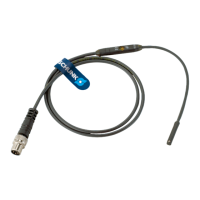
The SCHUNK MMS 22-IOL is a magnetic switch with an IO-Link interface, designed for use in various industrial applications. This device serves as a sensor for detecting the position of components, particularly in automated systems involving robots and production machines. Its primary function is to provide reliable position sensing through magnetic detection, offering a robust solution for automation tasks.
Function Description
The MMS 22-IOL magnetic switch operates by sensing magnetic fields, which allows it to detect the presence or absence of magnetic components. This capability is crucial for position monitoring in grippers, clamping devices, and other automated modules. The integrated IO-Link interface enhances its functionality by enabling intelligent communication with higher-level control systems. This allows for advanced parameterization, diagnostics, and process data exchange, making it a smart sensor within an IO-Link network.
The sensor can operate in two main modes: IO-Link mode and SIO mode (Standard IO-mode). In IO-Link mode, the sensor utilizes the full capabilities of the IO-Link communication protocol, allowing for detailed configuration, monitoring, and data acquisition. This includes recording positions on SCHUNK products, which can be taught-in using a teach-in tool or via the software in IO-Link mode. The teach-in process involves moving a magnetic teach-in tool (MT) to the desired position, then initiating the teach-in command. The sensor provides visual feedback through LED flashes during this process, indicating status such as teaching in progress, teaching finished, or errors.
In SIO mode, the sensor functions as a standard switching point, providing basic ON/OFF detection without the advanced communication features of IO-Link. This mode is suitable for applications where simple position detection is sufficient and complex data exchange is not required. The sensor can be adjusted mechanically in SIO mode, but the IO-Link master is not required, and additional teaching is not necessary. The switching position can be set by physically placing the module in the desired position and then pulling the sensor back until it switches, or by tightening the set-screw to clamp the sensor in position.
The device is designed to be integrated into various SCHUNK products, and its modular-specific assembly instructions are generally applicable. It is important to follow the specified tightening torques for mechanical connections to prevent damage.
Important Technical Specifications
- Designation: MMS 22-IOL
- Ambient temperature: Min. +5 °C, Max. +55 °C
- Nominal voltage: Min. 18 VDC, Max. 30 VDC
- IP rating: 67
- Communication interface: IO-Link
- Specification: V1.1
- Transmission rate: COM 2
- Port: Class A
- Cable length: 0.3 m
- Connector: M8 / M12 (depending on the variant)
- Type of switching: PNP
- Switching function: Closer
- Signal assignment (M8/M12 connector):
- Pin 1: L+ (+24 V)
- Pin 2: I/Q (not assigned)
- Pin 3: L- (GND)
- Pin 4: C/Q (Switching signal DI (SIO) or IO-Link (SDCI))
The device complies with relevant harmonization legislation, including the Electromagnetic Compatibility (EMC) Directive 2014/30/EU and UKCA Electromagnetic Compatibility Regulations 2016. It also adheres to the RoHS Directive, REACH Regulation, and Substances of Very High Concern (SVHC) requirements, ensuring environmental compliance.
Usage Features
The MMS 22-IOL offers several features that enhance its usability in industrial environments:
- IO-Link Connectivity: Provides advanced diagnostic capabilities, parameterization, and process data exchange, enabling intelligent integration into automation systems. This allows for remote configuration and monitoring, reducing the need for manual adjustments.
- Teach-in Functionality: Simplifies the setup process by allowing users to "teach" the sensor the desired switching positions. This can be done using a magnetic teach-in tool or through software in IO-Link mode, providing flexibility in configuration.
- Visual Feedback: LEDs on the sensor provide clear indications of its status, including power, teach-in progress, and error conditions. This visual feedback aids in commissioning and troubleshooting.
- Robust Design: With an IP67 rating, the sensor is protected against dust and water ingress, making it suitable for harsh industrial environments.
- Flexible Mounting: The design allows for easy integration into SCHUNK products, ensuring compatibility and straightforward installation.
- Dual Operating Modes: The ability to switch between IO-Link and SIO modes provides versatility, allowing the sensor to be used in both advanced smart sensor applications and simpler switching tasks.
Maintenance Features
Maintenance for the MMS 22-IOL primarily involves ensuring proper installation and addressing potential issues through troubleshooting.
- Mechanical Connection: It is crucial to observe the maximum tightening torque for mechanical connections to prevent damage to the product. Over-tightening or under-tightening can lead to malfunctions or premature wear.
- Electrical Connection: Ensure that the bending radius of the cable is not less than the minimum specified to prevent damage to the cable. Proper wiring according to the connection diagram is essential for reliable operation.
- Troubleshooting: The manual provides a detailed troubleshooting guide for common issues:
- Sensor is operating, but not as desired: This can be caused by external magnetic or soft magnetic materials, magnetized workpieces, or magnetic components/tools. Corrective actions include increasing the distance between the sensor and sources of interference, using finger attachments made of aluminum, or using V4A screws.
- Sensor is influenced by a different sensor: Increase the distance between the sensors to at least 5 mm.
- Sensor is affected by deposits of magnetic chips: Regularly clean the immediate environment of the sensor.
- Sensor is affected by the directly adjacent module: Increase the distance to the adjacent module to at least 10 mm.
- LED does not flash (at 1Hz – 90% duty cycle) in IO-Link mode: Check the voltage supply and apply voltage if necessary. If the sensor cable is broken, replace it. If the IO-Link connection is disconnected, establish the connection via software.
- LED flashes at 10Hz and [5] Teach Error is displayed under Sensor Command Reply: This indicates a poor magnetic field or the sensor is mounted at an incorrect position. Corrective action involves mounting the sensor in the correct position as per the gripper's Assembly and Operating Manual.
- Sensor not operating in SIO mode: Check if the sensor cable is broken. Check the voltage at the sensor (between 18 – 30 VDC). Check if the LED lights up at the position to be sensed and that the sensor is operating. If the LED does not light up or the sensor is not operating, contact SCHUNK Service.
For software-related issues or updates, the IODD (IO-Link Device Description) file required for operation can be downloaded from schunk.com or ioddfinder.io-link.com. This ensures that the sensor's software is up-to-date and compatible with the IO-Link master. Regular checks of the ambient conditions, such as temperature, are also important to ensure the sensor operates within its specified limits.

 Need help?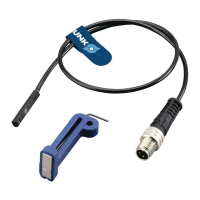

 To Next Page
 General