Operation
Operation Manual -
All SP Rock Valve Models84
revDate
it is possible to stop pumping altogether by adjusting
this valve. That means that when the differential
cylinders are stopped at the end of the stroke and the
rock valve is moving, the pumps return to maximum
output until the rock valve cylinder has completed its
travel. This interruption of the stroke limiter signal is
known as ‘fast switch’. It is recommended that all
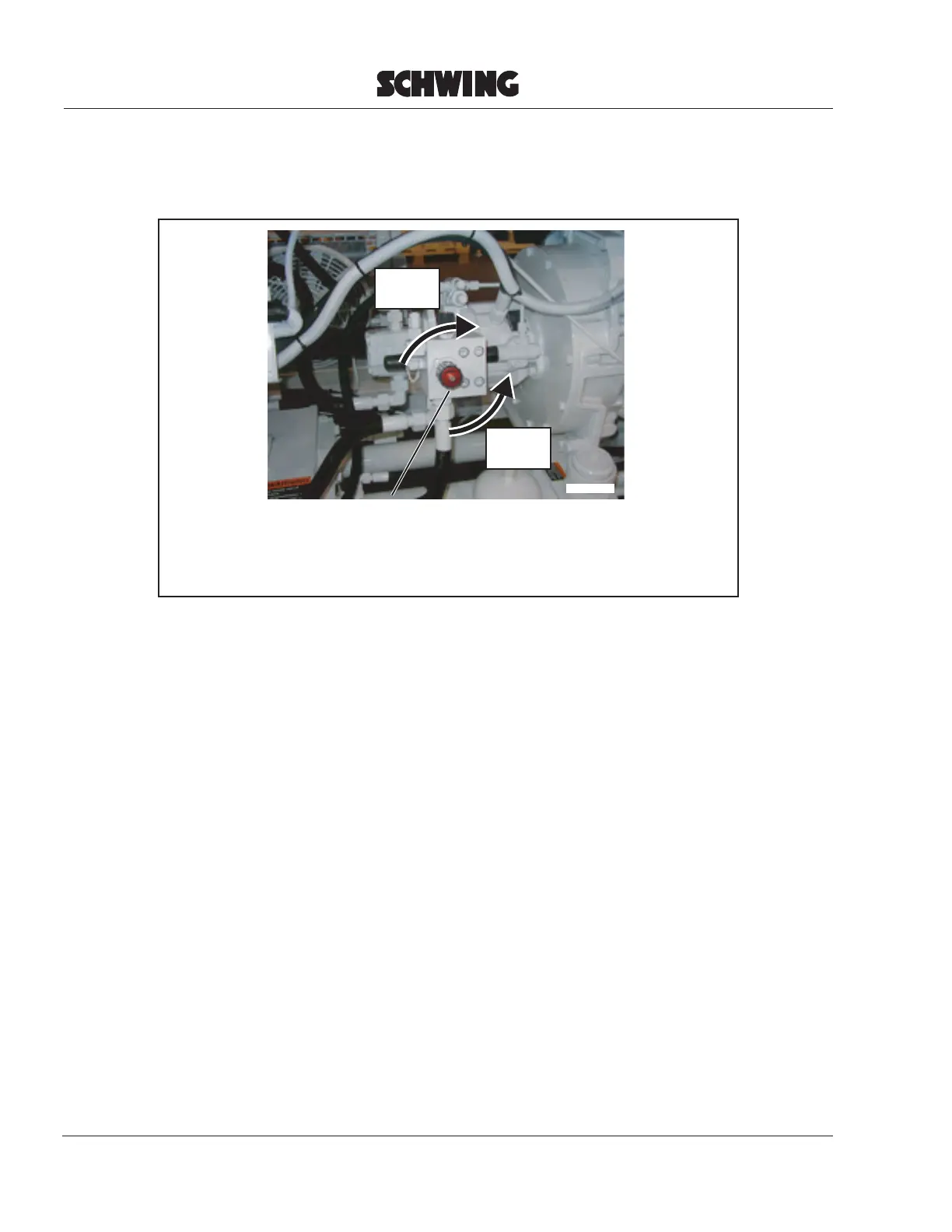
output control be done by the stroke limiter and not the
engine throttle (Figure 30).
To control the speed of the unit by the engine throttle,
simply speed up or slow down the engine. This has the
effect of turning the hydraulic pumps slower, which
results in less hydraulic fluid output. This method of
speed control is primarily used when you want to limit
ALL of the hydraulic circuits...agitator, concrete pump,
etc. It has the disadvantage of lowering the horsepower
output of the engine. It is possible to kill the engine
with the hydraulics of the unit, if you lower the RPM
too much.
Try to match your pumping speed to the needs of the
placement crew and with the supply of concrete. It
doesn’t do any good to bury the crew with concrete,
then wait for half an hour for the next truckload of
concrete to arrive.
Pump the job
If you are not able to see the point of discharge from
where you must operate the unit, be sure your spotter is
in position before starting the pump.
Once you get the start signal, put the pump in forward,
and alert the ready mix driver to start dumping.
Concrete must always cover the openings of the
material cylinders or you will suck air into the material
cylinders. If this happens, there will be a sudden
expulsion of concrete on the next stroke as the now
compressed air escapes. This could be dangerous, so be
sure that the ready mix driver understands the situation.
If you have taken air in to the material cylinders, you
can cushion the expulsion by stopping the concrete
pump and filling the hopper with concrete before the
next stroke. The mass of the concrete will prevent the
compressed air from pushing anything out of the
hopper. Once the hopper is full, it is safe to resume
pumping. Even with the hopper full of concrete, some
compressed air will be introduced into the delivery
pipeline. When it reaches the discharge point, the air
will cause a sudden expulsion of concrete. If the hose
person is walking a wall or column, or is otherwise in a
precarious position when this expulsion happens, it
could cause an accident. Best is to avoid ever sucking
air into the material cylinders, but if it does happen,
YOU MUST WARN THE HOSE PERSON.
NOTE!
Keep an eye on the oil temperature during
the pour. If it gets over 80˚ C (176˚F) you
must be sure the oil cooler fan is running. If
that isn’t enough to keep the oil below 80˚,
refill the waterbox with fresh water and run
water over the oil tank to help with cooling.
If that doesn’t work, shut the pump down
and find the source of the overheating.
volumeknob.eps
Volume control knob
(stroke limiter)
Less
strokes
More
strokes
Figure 30
Showing adjustment of the manual stroke limiter



 To Next Page