Need help?
Do you have a question about the SCOTT AIR-PAK 75 and is the answer not in the manual?
Crucial safety warnings and precautions for using the SCBA, emphasizing proper use, training, and potential hazards.
Overview of the SCBA's purpose, intended use, and the necessity of proper training before operation.
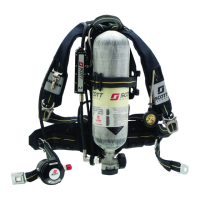
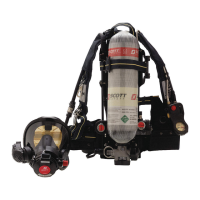
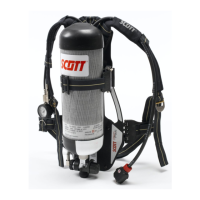
Detailed description of the key parts and assemblies that make up the SCOTT AIR-PAK SCBA system.
Information on identifying and differentiating between various SCOTT AIR-PAK SCBA models based on pressure ratings.
Details on NIOSH and NFPA certifications, including compliance requirements and component compatibility.
Factors influencing the duration of air supply and how end-of-service alarms function.
Guidelines and precautions to maintain the intrinsic safety of the respirator, especially concerning batteries.
Information on optional components that can be added to the SCBA and their operational impact.
Steps for selecting the correct facepiece size and ensuring a proper seal for optimal protection.
Detailed instructions on performing quantitative fit tests to verify facepiece seal effectiveness.
Important safety cautions, operational limitations, and general usage guidelines for the SCBA.
Specific cautions and limitations for using the SCBA in Chemical, Biological, Radiological, and Nuclear environments.
Critical user instructions and specific limitations that apply to the operation of the respirator.
Procedures for visually inspecting the breathing air cylinder and its valve assembly for damage or defects.
Step-by-step guide for examining the facepiece assembly for wear, damage, or component integrity.
Checks for damage to the breathing regulator, including purge valve, quick disconnects, and heads-up display.
Procedures for testing the functionality of alarms, pressure gauges, and air flow systems.
Initial steps for preparing and donning the SCBA, including checking cylinder pressure and adjusting straps.
Step-by-step instructions for properly donning the AV-3000 HT facepiece, ensuring a secure seal.
Common donning issues and how to perform a negative pressure leak test to ensure a proper seal.
Procedures for verifying the operation of end-of-service alarms and performing a facepiece seal check.
Steps for properly doffing the facepiece and terminating respirator use, including valve closure.
Guidelines for safely resuming use of the respirator after it has been temporarily removed.
Instructions for wearing the respirator in a 'standby' mode, ready for immediate use.
Procedures for using the Rapid Intervention Crew/Company Universal Air Connection for emergency air replenishment.
Specific precautions and procedures for operating the respirator in temperatures at or below freezing.
Steps to follow in case of suspected malfunctions or loss of air supply during use.
Guidelines for using cylinders with different pressure ratings and their compatibility with SCBA models.
Steps for replacing the cylinder on the AIR-PAK 75 SCBA backframe, focusing on the retention system.
Steps for replacing the cylinder on the WIREFRAME SCBA backframe, detailing the retention mechanism.
Instructions for sanitizing and disinfecting the facepiece, including recommended cleaners and methods.
Procedures for cleaning the breathing regulator assembly, including inspection and drying.
Recommendations for storing the respirator and its components to maintain integrity and prevent damage.
Guidelines regarding labels on the SCBA and the implications of applying unauthorized markings.
Information on advanced maintenance procedures and training available for authorized personnel.
Recommendations for periodic testing by authorized centers and criteria for respirator retirement.
Instructions for replacing batteries in the Heads-Up Display console, including safety precautions.
Procedure for replacing batteries in the PAK-ALERT distress alarm, ensuring proper function and safety.
 General
| Brand | SCOTT |
|---|---|
| Model | AIR-PAK 75 |
| Category | Diving Instrument |
| Language | English |


 To Next Page