38 39
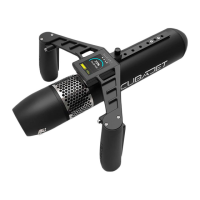
Mind the water intake
Never stick body parts, clothing or other objects into
the water intake (grille) of the SCUBAJET or even bring
themclosetoit.Donotwearlooseorowingclothing
or equipment that could be drawn into the water
intake (grille) due to the caused suction.
Particular care should be exercised when using the
SCUBAJET by someone with long hair or near anybody
with long hair. Users with long hair should tie it up or
wear a swimming cap when using the SCUBAJET. The
suction of the water intake may draw in loose body
parts.
Always check that no stones, rope, dirt or sand gets
into the SCUBAJET and clean up those parts which are
within easy reach regularly if necessary.
Never stick body parts, clothing or other objects into
the nozzle on the back of the SCUBAJET.
Do not point the water jet towards your own or
somebody else’s face.
Be aware of your surroundings
Always inspect the swimming area to ensure it is free
of hazards or obstacles such as boats and swimmers
before using the SCUBAJET.
Be aware of appropriate water levels, tidal changes,
dangerous currents, weather changes and strong
oshorewinds.Alwaysscoutunfamiliarwater.
Be careful not to hit other items when diving with the
SCUBAJET. Make sure to stay away from boats, bridges,
rocks or any items which could hurt you.
Handle SCUBAJET with care
Ensuresucientbatterychargeremainsforreturntoshoreorsurface.
Never open the battery casing (do not loosen the 3 screws on the bottom of the
battery). Protect the battery from mechanical damage. If the battery casing is
damaged:
F
Donotusethebatteryanymoreanddonotchargeit.Thereisariskofre.
F
If electrolytes leak from the damaged battery, avoid skin contact and
breathing in the gases. If you come into contact with the electrolytes leaking
fromthebattery(e.g.ontheskinoreyes),rinsetheaectedareathoroughly
with clear water. Contact a doctor immediately.
F
Contact SCUBAJET for appropriate disposal advice of the damaged battery.
Only charge the battery at environmental temperatures between 0°C (32°F) and
45°C (113°F).
Please note that since 2009 lithium batteries with a capacity of >100 wh
(per unit) may no longer be carried as luggage in passenger planes.
Thebatteryofyour
SCUBAJEThasbeendeclared
ahazardousitem.Shipping
companies must use original
packaging to transport the
product. Private transport is
notaectedbythisrule.When
undertaking private transport,
ensure that the battery casing is
not damaged.


 To Next Page