19
PROGRAMMING THE CPi-2
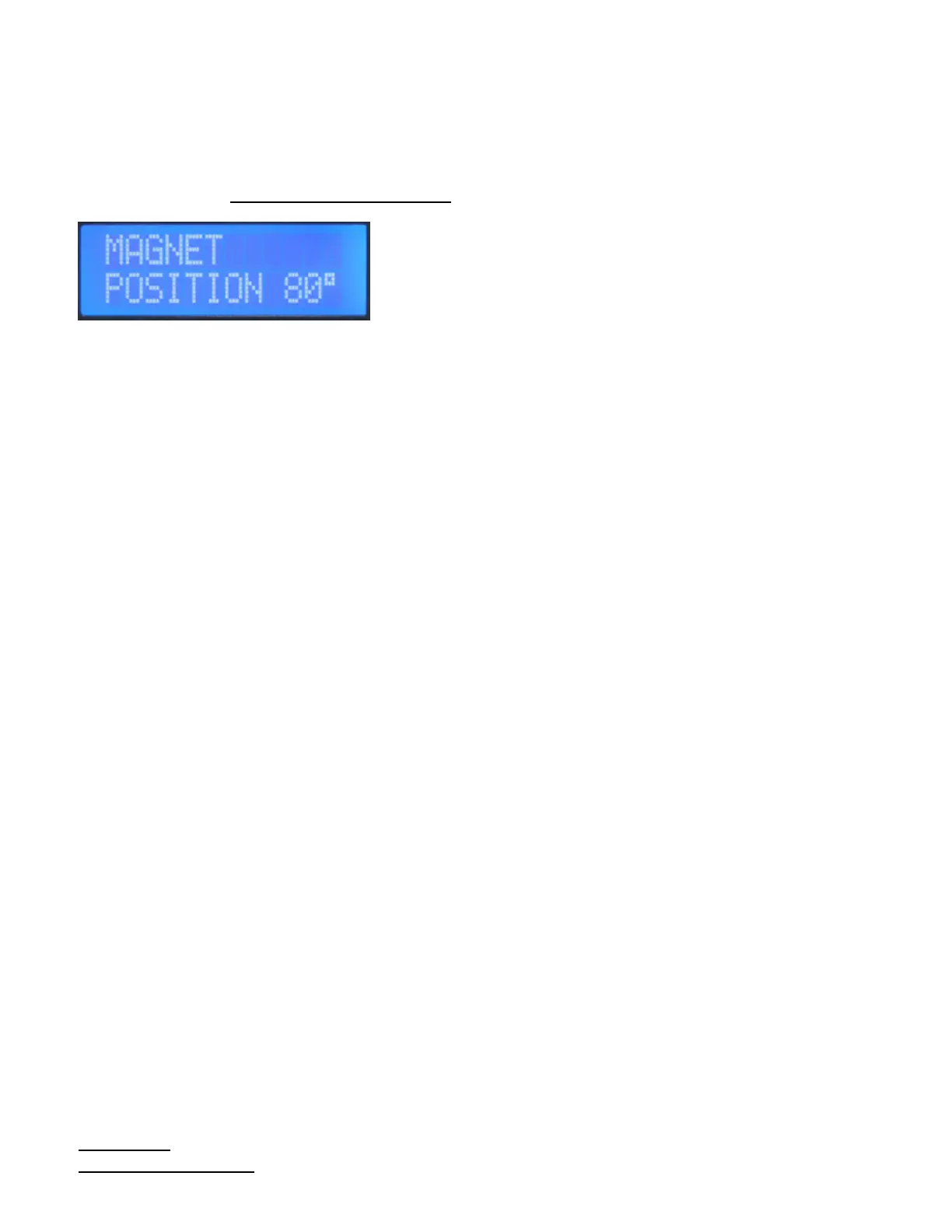
MAGNET POSITION, THE MOST IMPORTANT SETTING!
Initial Setup - VERY IMPORTANT
This is how timing is calibrated. This step requires a timing light. The
best timing light to use, is one that does not have a delay knob. Delay
lights may not work properly with multi-spark ignitions or with multi-
coil/waste spark ignitions. If you only have a delay type light set the
delay to 0. The crank pulley and timing cover must have timing marks
on them. The timing light inductive pickup clamp can also be
connected onto the ground wire of the coil pack unit if clipping to the spark plug wires does not work well. Magnet
Position is adjustable from 50 to 110. If you find you need to exceed the limits of magnet position, then this means
the magnets are mounted in the wrong locations and will need to be redone.
For Lycoming engines with dual board CPi-2s, set Magnet Position on the Primary ECU (green Hall cable) to 97, set
Magnet Position on backup ECU (red Hall cable) to 88. On single board CPi-2s, set Magnet position to 92. On
other engine types, consult the supplemental manual for specific settings for Magnet position, as this will allow the
ignition timing to be fairly accurate on the first startup. On engines other than Lycoming, you still should connect a
timing light to verify the timing is correct though to be safe as mistakes could be made during the magnet mounting
process.
For custom installations where the installer has fabricated their own Hall mount hardware, then following procedures
here are very important because ignition timing could be far from target and engine damage could occur if Magnet
Position calibration procedures are not executed.
To be even more careful it may be best to disable fueling to the engine and crank the engine while watching a timing
light to see if the timing is approximately correct. Somewhere between 15 degrees BTDC to 0 degrees or even if its
after 0 degrees is acceptable. If you see timing more than 15 degrees BTDC then you can increase the Magnet
Position number and this will move the timing closer to Top dead center which is safer for the engine.
This step should be performed as soon as the engine is fired up and idling. Ignition timing is meaningless
without first setting the MAGNET POSITION parameter properly.
STEP 1. Set RPM Ignition values from 500 thru 1500 RPM’s all to 10 degrees. If you have no 10 degree mark on
your prop hub and no pointer you may have to make these.
STEP 2. Make sure that all IGN RET-ADV/LOAD values below 30 inches are 0.
STEP 3. Start the engine and keep it running below 1500 rpm.
STEP 4. Connect a timing light.
STEP 5. Change the MAGNET POSITION value until the timing light reads 10 degrees BTDC.
Now some people may have difficulty and say, “But I don’t have a 10 degree mark, how do I line up the timing?”
One way is instead to program RPM ignition numbers to zero instead of 10. Then adjust Magnet Position until the
timing light is flashing at TDC. Some engines may need the throttle opened a bit more with zero degrees of timing.
Once the MAGNET POSITION is set, it does not have to be changed again- it is only to tell the ECU what the
"distance" between the #1 MAGNET and Hall sensor is. Once the above 5 steps are completed, you can program
any of the ignition values.
For the slotted type sensor, MAGNET POSITION may need to be adjusted if the Hall sensor is removed for engine
repairs, so after it is installed again, then the above procedure should be completed, so the ignition timing is the
same as before.
Important!
On Dual board CPi2 units you will have to do this for the Backup unit also, and the


 To Next Page
 Loading...