EasyManua.ls Logo

Sealey VS820 - User Manual

Sealey VS820
2 pages
Print Icon
To Next Page IconTo Next Page
Loading...
BRAKE AND CLUTCH BLEEDING SYSTEM
MODEL NO: VS820.V4
Thank you for purchasing a Sealey product. Manufactured to a high standard, this product will, if used according to these
instructions, and properly maintained, give you years of trouble free performance.
IMPORTANT: PLEASE READ THESE INSTRUCTIONS CAREFULLY. NOTE THE SAFE OPERATIONAL REQUIREMENTS, WARNINGS & CAUTIONS. USE
THE PRODUCT CORRECTLY AND WITH CARE FOR THE PURPOSE FOR WHICH IT IS INTENDED. FAILURE TO DO SO MAY CAUSE DAMAGE AND/OR
PERSONAL INJURY AND WILL INVALIDATE THE WARRANTY. KEEP THESE INSTRUCTIONS SAFE FOR FUTURE USE.
1. SAFETY
WARNING! Familiarise yourself with the application and limitations, as well as any potential hazards, of this product. Ensure that Health
and Safety, local authority and general workshop practice regulations are adhered to when using.
8 DO NOT use pressure reservoir, or its ancillaries if damaged.
8 DO NOT use the pressure reservoir to perform a task for which it is not designed.
8 DO NOT allow untrained persons to use the pressure vessel.
8 DO NOT use when tired or under the influence of drugs, alcohol or intoxicating medication.
9 Use approved parts and approved spare parts only.
9 Maintain in a good and clean condition for the best and safest performance.
9 Ensure that the ignition key of the vehicle being worked on is removed, to prevent inadvertent engine cranking.
9 If the vehicle to be worked on is raised, ensure that it is adequately supported with axle stands or ramps and wheel chocks.
9 Wear approved eye protection. A full range of personal safety equipment is available from your Sealey stockist .
9 Wear suitable clothing to avoid snagging. DO NOT wear jewellery and tie back long hair.
9 Keep children and unauthorised persons away from the work area.
9 Keep work area clean and tidy and free from unrelated materials.
9 Ensure the work area has adequate lighting.
1.1. BRAKE FLUID SAFETY
9 Always read and comply with the warnings on the brake fluid container.
9 Wear eye protection and keep skin contact to a minimum. If brake fluid enters eyes rinse with plenty of water and seek medical
advice. If swallowed seek medical advice immediately.
WARNING! Brake fluid is flammable - keep away from sources of ignition, including hot surfaces e.g. exhaust manifold.
WARNING! Brake fluid will damage paintwork. Any spillage should be flushed with water immediately.
9 Always read and comply with the warnings on the brake uid container.
WARNING! DO NOT pollute the environment by allowing uncontrolled discharge of uids. Dispose of waste liquids in accordance
with local authority regulations.
9 After use, clean equipment and store in a cool, dry, childproof area.
2. INTRODUCTION
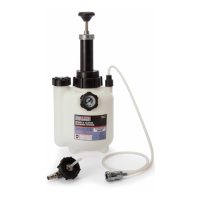
One man brake and clutch bleeding the professional way. Bleeding requires no external power source - simply fill and pump. The reservoir holds
2.5ltr of hydraulic fluid - flush the entire system flush in one fill without running the risk of running the reservoir dry. Pressure range makes the unit
suitable for use with ABS systems. Fitted with a Ø45mm cap with 90° angled connector which is suitable for most European models. For other
applications order optional Ø45mm Straight Connector - Model No. VS820SA, Universal Adaptor - Model No. VS820UA and Bleeder Cap Set -
Model No. VS0204B.
3. OPERATION
Use your bleeder only as directed. Read these directions completely before starting. The apparatus is intended for use only by individuals
experienced with bleeding and servicing hydraulic systems. If you are unsure about your ability or experience, consult a trained professional.
Always follow vehicle manufacturer’s directions when bleeding hydraulic systems.
3.1. Ensure that the bleeder is clean and free from debris and old hydraulic uid.
3.2. Remove hydraulic uid reservoir cap from the vehicle. If old uid is contaminated, syphon it off and rell reservoir with fresh uid.
8 DO NOT pump contaminated uid through the hydraulic system.
3.3. Firmly attach the bleeder cap to the vehicle uid reservoir, ensuring that the gasket seats properly and is not worn or cracked.
3.4. Tighten pump cap onto empty bleeder and pressurise to 10 psi (0.7bar). Check for leaks at the uid reservoir and at the bleeder uid
hose connections. If reservoir cap or hose connections are leaking, release accumulated pressure in the bleeder reservoir by gently
unscrewing the pump cap. DO NOT remove the cap before de-pressurising the bleeder reservoir. Reattach the bleeder reservoir cap
or tighten hose connections and once again pump the tank to 10 psi (0.7bar) and check for leaks.
3.5. If no leaks are found, gently unscrew pump cap and add up to 1.25 litre of new hydraulic uid from a sealed container. Use only the
type of hydraulic uid recommended for your vehicle.
3.6. Tighten the pump cap and pressurise the bleeder to the level recommended in the vehicle service manual. DO NOT exceed 28psi
(1.9bar). Higher pressures may damage your vehicles hydraulic system and could result in serious injury.
Original Language Version
© Jack Sealey Limited
Refer to
instructions
Wear eye
protection
VS820.V4 Issue 3 (2) 17/09/18

Question and Answer IconNeed help?

Do you have a question about the Sealey VS820 and is the answer not in the manual?

Summary

Safety Precautions

General Safety Warnings

Follow all safety instructions and general workshop practice when using the equipment.

Brake Fluid Safety

Handle brake fluid with care, avoid skin contact, and keep away from hot surfaces.

Introduction

Operation

Preparation and Connection

Ensure bleeder is clean, remove reservoir cap, and attach bleeder cap securely.

Bleeding Procedure

Pump reservoir, press pedal, monitor fluid level, and refill as needed.

Completion and Checks

Tighten bleeder valve, clean reservoir, replace cap, and check for leaks.

Parts and Environment

Parts Support

Contact sales or telephone for parts support and inquiries.

Environmental Protection

Recycle waste materials and packaging responsibly according to local regulations.

Summary

Safety Precautions

General Safety Warnings

Follow all safety instructions and general workshop practice when using the equipment.

Brake Fluid Safety

Handle brake fluid with care, avoid skin contact, and keep away from hot surfaces.

Introduction

Operation

Preparation and Connection

Ensure bleeder is clean, remove reservoir cap, and attach bleeder cap securely.

Bleeding Procedure

Pump reservoir, press pedal, monitor fluid level, and refill as needed.

Completion and Checks

Tighten bleeder valve, clean reservoir, replace cap, and check for leaks.

Parts and Environment

Parts Support

Contact sales or telephone for parts support and inquiries.

Environmental Protection

Recycle waste materials and packaging responsibly according to local regulations.

Overview

The Sealey Brake and Clutch Bleeding System, Model No. VS820.V4, is a professional tool designed for one-person brake and clutch bleeding. It operates without the need for an external power source, relying instead on a simple fill and pump mechanism.

Function Description:

This system facilitates the efficient and thorough bleeding of hydraulic brake and clutch systems. Its primary function is to maintain a constant pressure and supply of fresh hydraulic fluid to the vehicle's reservoir, ensuring that air and old, contaminated fluid are expelled from the system. The reservoir capacity of 2.5 liters allows for a complete system flush in a single fill, minimizing the risk of the reservoir running dry during the process. The unit is suitable for use with ABS systems due to its appropriate pressure range. It comes fitted with a Ø45mm cap and a 90° angled connector, making it compatible with most European vehicle models. Optional adaptors, such as the Ø45mm Straight Connector (Model No. VS820SA) and the Universal Adaptor (Model No. VS820UA), along with a Bleeder Cap Set (Model No. VS0204B), are available for broader application.

Important Technical Specifications:

  • Model Number: VS820.V4
  • Reservoir Capacity: 2.5 liters of hydraulic fluid
  • Maximum Recommended Pressure: 28 psi (1.9 bar)
  • Initial Pressurization for Leak Check: 10 psi (0.7 bar)
  • Standard Cap: Ø45mm with 90° angled connector
  • Optional Accessories:
    • Ø45mm Straight Connector (Model No. VS820SA)
    • Universal Adaptor (Model No. VS820UA)
    • Bleeder Cap Set (Model No. VS0204B)

Usage Features:

The VS820.V4 is designed for ease of use by individuals experienced with bleeding and servicing hydraulic systems.

  1. Preparation: Before use, ensure the bleeder is clean and free from debris and old hydraulic fluid. Remove the vehicle's hydraulic fluid reservoir cap. If the existing fluid is contaminated, it should be siphoned off and the reservoir refilled with fresh fluid. It is crucial not to pump contaminated fluid through the hydraulic system.
  2. Connection and Initial Pressurization: Firmly attach the bleeder cap to the vehicle's fluid reservoir, ensuring the gasket is properly seated and not worn or cracked. Tighten the pump cap onto the empty bleeder and pressurize it to 10 psi (0.7 bar). This initial pressurization is vital for checking leaks at the fluid reservoir and hose connections. If leaks are detected, release the accumulated pressure by gently unscrewing the pump cap, reattach the cap or tighten hose connections, and re-pressurize to 10 psi (0.7 bar) to re-check. It is imperative not to remove the cap before de-pressurizing the bleeder reservoir.
  3. Fluid Addition: Once no leaks are found, gently unscrew the pump cap and add up to 1.25 liters of new hydraulic fluid from a sealed container. Only the type of hydraulic fluid recommended by the vehicle manufacturer should be used.
  4. System Pressurization: Tighten the pump cap and pressurize the bleeder to the level recommended in the vehicle service manual, but never exceed 28 psi (1.9 bar). Exceeding this pressure can damage the vehicle's hydraulic system and pose a serious injury risk.
  5. Bleeding Procedure: Determine the correct brake bleeding sequence from the vehicle's service manual. Attach a bleed tube to the bleed valve at the first cylinder to be bled, with the open end in a suitable fluid receptacle. Open the bleed valve and allow fluid to run until it is clear and free of bubbles. Tighten the bleed valve to the specified torque. Repeat this process for each bleed valve, pumping additional pressure into the bleeder as necessary.
  6. Post-Bleeding: If fluid remains in the bleeder reservoir, tip the tank away from the fluid pick-up tube and open the bleed valve closest to the master cylinder. Allow air to flow into the fluid reservoir until the fluid level falls to the maximum fill level on the vehicle's reservoir. Close the bleed valve and tighten to the specified torque.
  7. Depressurization and Disconnection: Once complete, release pressure by slowly loosening the pump cap. Remove the cap from the fluid reservoir, taking care to avoid spilling any fluid remaining in the tube. Replace the fluid reservoir cap on the vehicle, ensuring the fluid level is at the maximum indicated level.
  8. Final Checks: Before driving the vehicle, carefully check for leaks and test for proper brake operation.

Maintenance Features:

  • Cleanliness: Maintain the bleeder in a good and clean condition for optimal performance and safety. Ensure it is clean and free from debris and old hydraulic fluid before each use.
  • Storage: After use, clean the equipment thoroughly and store it in a cool, dry, childproof area.
  • Fluid Disposal: DO NOT store hydraulic fluid in the bleeder after use. Always dispose of excess fluid properly in accordance with local authority regulations. Hydraulic fluid is flammable and can damage paintwork, so spills should be flushed with water immediately.
  • Environmental Protection: Recycle unwanted materials. Tools, accessories, and packaging should be sorted and taken to a recycling center. When the product becomes unserviceable, drain any fluids into approved containers and dispose of the product and fluids according to local regulations.
  • Warranty: The product comes with a 12-month warranty from the purchase date, requiring proof of purchase for any claim.

Sealey VS820 Specifications

General IconGeneral
BrandSealey
ModelVS820
CategoryService Equipment
LanguageEnglish

Related product manuals