Practical tips
Tyre life
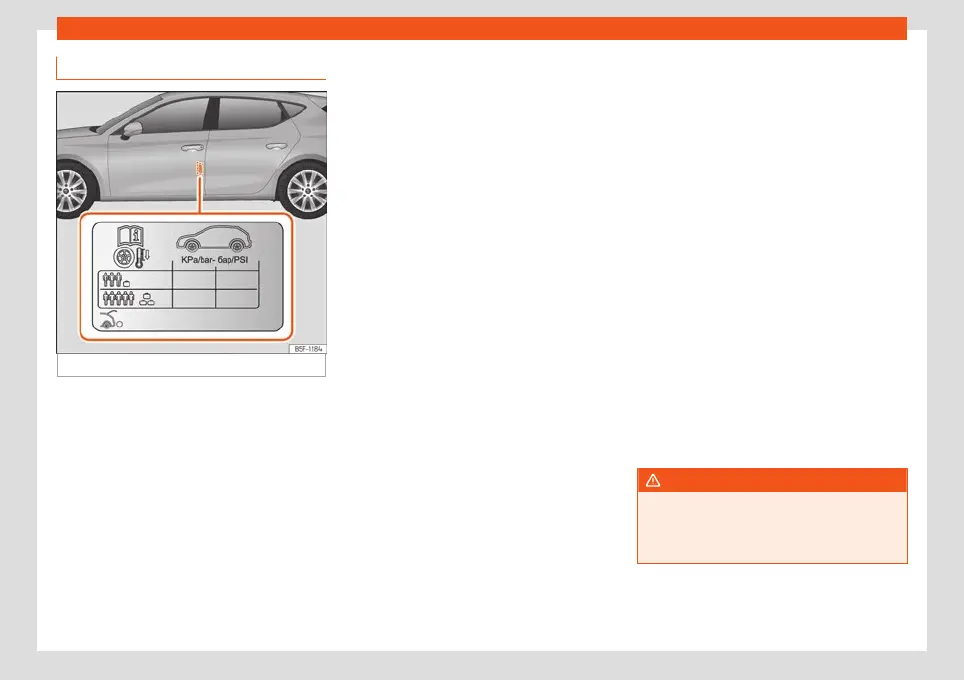
Fig. 209 Location of the tyre pressure sticker.
Correct inflation pressures and sensible driv-
ing habits will incr
ease the useful lif
e of your
t
yres.
●
Check tyre pressure at least once a month,
and also prior to any long trip.
●
The tyre pressure should only be checked
when the tyres are cold. Do not reduce the
pressure of warm tyres.
●
Adjust tyre pressure to the load being car-
ried by the vehicle
›››
Fig. 209.
●
In vehicles with a tyre pressure indicator,
save the modified tyre pressure
›››
page 314.
●
Avoid fast cornering and hard acceleration.
●
Inspect the tyres for irregular wear from
time to time.
Tyre pressure
The tyre inflation pressures are listed on a
sticker on the rear of the front left door frame
›››
Fig. 209.
Insufficient or excessive pressure greatly re-
duces the useful life of the tyres and adverse-
ly affects vehicle performance and ride. Cor-
rect inflation pressures are very important,
especially at high speeds.
The tyre pressure must be adjusted accord-
ing to the load the vehicle is carrying. If the
vehicle is going to carry the maximum load,
the tyre pressure should be increased to the
maximum value indicated on the sticker
›››
Fig. 209.
Do not forget the spare wheel when checking
the tyre pressures: Keep this spare wheel in-
flated to the highest pressure required for the
road wheels.
In the case of a minimised temporary spare
wheel (125/70 R16 or 125/70 R18), inflate to a
pressure of 4.2 bar as indicated on the tyre
pressure label
›››
Fig. 209.
Driving style
Fast cornering, heavy acceleration and hard
braking (squealing tyres) all increase tyre
wear.
Wheel balance
The wheels on new vehicles are balanced.
However, certain circumstances may lead to
imbalance (run-out), which is detected as vi-
brations in the steering wheel.
Unbalanced wheels should be rebalanced,
as they otherwise cause excessive wear on
steering, suspension and tyres. A wheel must
also be rebalanced when a new tyre is fitted
or if a tyre is repaired.
Incorrect wheel alignment
Incorrect running gear alignment causes ex-
cessive tyre wear, impairing the safety of the
vehicle. If you notice excessive tyre wear, you
should check wheel alignment at a SEAT Of-
ficial Service.
WARNING
Unsuitable handling of the wheels and
tyres may l
ead to sudden tyre pressure los-
ses, to tread separation or even to a blow-
out.
310



 To Next Page