Need help?
Do you have a question about the Sencor SWK 1810WH and is the answer not in the manual?
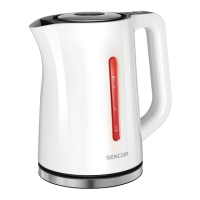
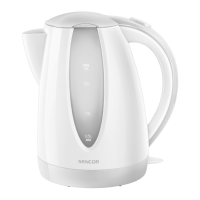
This document describes the SENCOR Electric Kettle, models SWK 1810WH, SWK 1811GR, SWK 1812BL, SWK 1813OR, SWK 1814RD, SWK 1815VT, SWK 1816YL, and SWK 1817TQ. It serves as a user's manual, providing essential information for safe and effective operation, maintenance, and disposal of the appliance.
The SENCOR Electric Kettle is designed primarily for heating water for domestic use. It is suitable for various applications such as preparing warm beverages, cooking, and other tasks requiring boiled water. The kettle operates by heating water through an internal heating element, automatically switching off once the water reaches boiling point. Its design caters to household environments and similar settings, including kitchens in stores, offices, other workplaces, agricultural settings, and accommodations like hotels and motels.
The kettle operates within a Nominal voltage range of 220-240 V and a Nominal frequency of 50 Hz. Its Rated power input is between 1850-2200 W, indicating efficient heating capabilities. The Capacity of the kettle is 1.8 liters, allowing for a substantial volume of water to be boiled at once. The manufacturer reserves the right to change text and technical specifications, as noted in the manual.
Before First Use: Before initial use, users are instructed to remove all packaging materials from the kettle and its base. To ensure cleanliness and remove any manufacturing residues, the kettle should be filled to the maximum water mark with clean water, boiled, and then emptied. This process should be repeated 2 to 3 times. After these initial cycles, the kettle is ready for regular use.
Operating the Kettle:
Safety Warnings:
Cleaning the Filters: The kettle includes a removable filter designed to capture scale deposits and prevent them from entering beverages. Regular cleaning of the filter is recommended. This can be done by rinsing it under running water with a fine nylon brush or by submerging it for several hours in a vinegar-water solution (1:2 dilution ratio). After soaking, rinse the filter thoroughly under clean running water.
Cleaning the Kettle: Regular removal of water scale deposits from inside the kettle is crucial for its longevity and performance. The frequency of descaling depends on usage and water hardness:
Methods for Removing Water Scale Deposits:
Exterior Cleaning: To clean the exterior of the kettle, use a dry cloth or a cloth dampened with a weak solution of neutral kitchen detergent. After applying the detergent, wipe the surface with a lightly damp cloth, then dry it.
Base Cleaning: The base should only be cleaned with a dry cloth.
General Cleaning Precaution: Never use abrasive cleaning agents, petrol, or solvents to clean the kettle or its base, as these can damage the appliance.
Packaging Materials: Packaging materials should be disposed of at a public waste disposal site.
Used Electrical and Electronic Equipment: The symbol on the product (a crossed-out wheeled bin) indicates that the product should not be treated as household waste. It must be disposed of at an applicable collection point for the recycling of electrical and electronic equipment waste. In the European Union and other European states, users may return products to their local retailer when purchasing an equivalent new product. Proper disposal helps conserve natural resources and prevents negative environmental and health impacts from improper waste liquidation. For more details, contact local authorities or the nearest waste collection center. Improper disposal may incur fines under national regulations.
For Business Entities in the European Union: Businesses wishing to dispose of electrical or electronic devices should request necessary information from their seller or supplier.
For Other Countries Outside the European Union: For disposal in other countries, request information on the correct disposal method from local government departments or the seller.
CE Marking: The product bears the CE mark, indicating that it meets all basic EU regulation requirements.

 To Next Page
 General