
 Need help?
Do you have a question about the Serpent CENTAX TRUE MOTION and is the answer not in the manual?
Set clutch gap between 0.5 and 0.6 mm using shims.
Use small shims to remove excess end play, leaving a small amount.
The Centax True Motion Clutch 1/8 is a high-performance component designed for remote-controlled vehicles, specifically 1/8 scale models. Its primary function is to transmit power from the engine to the drivetrain, allowing for smooth acceleration and efficient power delivery. The "True Motion" aspect suggests a design focused on minimizing friction and maximizing the direct transfer of power, which is crucial for competitive racing and optimal vehicle performance.
The clutch system is an integral part of the vehicle's powertrain, acting as an interface between the engine's crankshaft and the transmission. When the engine revs up, the clutch engages, transferring rotational energy to the gears, which then drive the wheels. This engagement needs to be precise and controllable to prevent stalling the engine at low speeds and to ensure a smooth power curve during acceleration. The Centax design is known for its adjustability, allowing users to fine-tune the clutch's engagement characteristics to match different track conditions, engine power bands, and driving styles.
One of the key usage features of this clutch is its adjustability for aligning the clutch gears with the 2-speed gears. The manual notes that shims (specifically 7x13x0.5mm) might be needed behind the cone to achieve proper alignment. This adjustment is critical for ensuring smooth gear changes and preventing premature wear on the gears. The need for this adjustment can only be determined after the initial assembly of the clutch, highlighting the importance of a trial-and-error approach during setup. Proper alignment minimizes friction and maximizes the efficiency of power transfer through the gearbox.
Another important usage feature relates to tightening or loosening the pre-load on the clutch spring. The design incorporates holes on the side of the flywheel, which can be used to block the flywheel with a short Allen tool. This is particularly useful when the engine and clutch are already mounted in the car, making it easier to access and adjust the spring's pre-load. The pre-load setting directly influences when the clutch engages and how aggressively it does so. A higher pre-load means the clutch will engage at higher engine RPMs, providing a more aggressive launch, while a lower pre-load allows for earlier engagement, potentially offering smoother acceleration. This adjustability allows drivers to tailor the clutch response to their specific needs, whether it's for maximum acceleration off the line or for smoother power delivery in technical sections of a track.
The assembly process, as illustrated in the manual, involves several steps that emphasize precision. For instance, the adjusting nut needs to be screwed in all the way initially, and then unscrewed by 1 1/2 turns. This specific instruction provides a baseline setting for the clutch, from which further fine-tuning can be made. The orientation of the gears (1st and 2nd gear) is also highlighted as crucial, indicating that incorrect installation could lead to malfunction or damage. This attention to detail during assembly ensures the clutch operates as intended and maximizes its lifespan.
Maintenance features are also implicitly covered through the design and instructions. The ability to easily block the flywheel for pre-load adjustment simplifies a common maintenance task. The exploded view of the clutch provides a comprehensive breakdown of all individual components, which is invaluable for troubleshooting, repair, and replacement of worn parts. This detailed view allows users to identify specific components by their part numbers, facilitating ordering and replacement. For example, the various shims, springs, and bearings are clearly labeled, making it straightforward to replace them if they become worn or damaged.
A critical maintenance and setup aspect is "SETTING THE CLUTCH GAP." The manual specifies that the gap should be between 0.5 and 0.6 mm. This gap is crucial for the proper functioning of the clutch, ensuring that the clutch shoes engage the bell at the correct time and with the right amount of pressure. Shims are provided to achieve this desired gap, underscoring the importance of precise measurement and adjustment. An incorrect clutch gap can lead to premature clutch engagement, slippage, or excessive wear on the clutch components. Regular checking and adjustment of this gap are essential for maintaining optimal clutch performance and longevity.
"ADJUSTING THE END PLAY" is another important feature. The instruction to "Place small shims to remove all but a small amount of end play" indicates the need to minimize axial movement of the clutch assembly. End play refers to the small amount of axial movement allowed for a shaft or component. Too much end play can lead to excessive wear, vibration, and inefficient power transfer, while too little can cause binding and friction. By using shims to achieve a minimal amount of end play, the Centax clutch ensures smooth operation and extended component life. This adjustment contributes to the overall precision and reliability of the clutch system.
The Centax True Motion Clutch 1/8 is designed with a focus on durability, performance, and user-friendliness in terms of setup and maintenance. The use of high-quality materials, as implied by the performance-oriented nature of the product, ensures that it can withstand the rigors of competitive RC racing. The detailed instructions and exploded view facilitate both initial assembly and ongoing maintenance, empowering users to keep their vehicles in top condition. The emphasis on precise adjustments, such as clutch gap and end play, highlights the engineering behind the product, aiming to provide a highly tunable and efficient power transfer solution for 1/8 scale RC cars.
 General
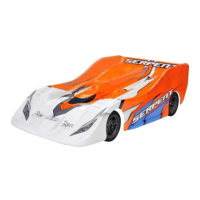
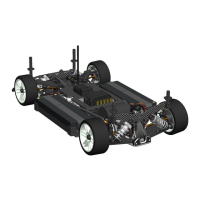
| Category | Motorized Toy Car |
|---|---|
| Manufacturer | Serpent |
| Product | CENTAX TRUE MOTION |
| Suspension | Independent |
| Shock Type | Oil-filled |
| Differential | Ball Differential |
| Tire Type | Rubber |
| Body Material | Polycarbonate |
| Scale | 1:10 |



 To Next Page