Shure Incorporated
3/8
•
•
•
•
•
•
•
•
•
•
•
•
•
•
•
•
•
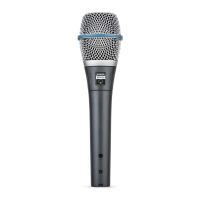
BETA87A
Vocal Microphone
General Description
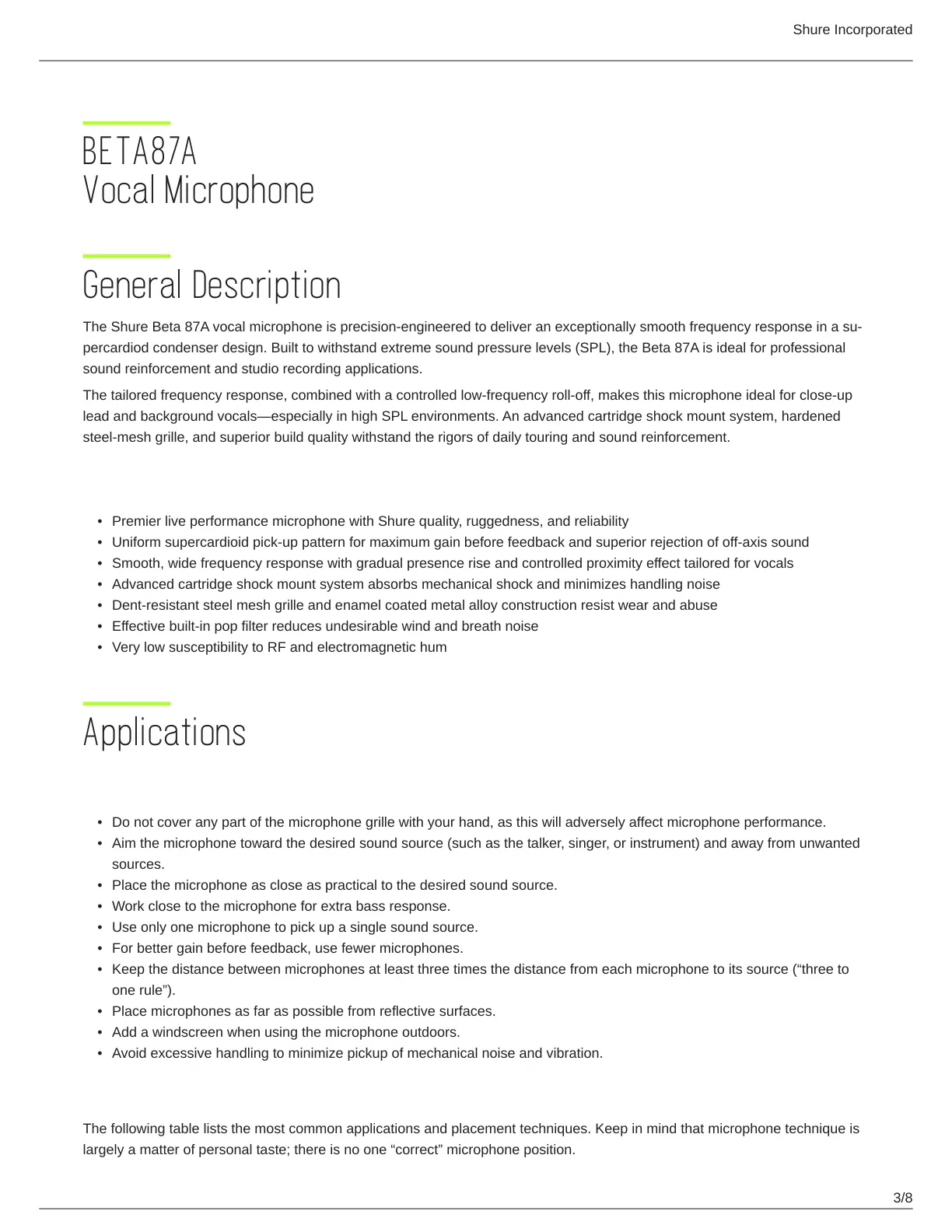
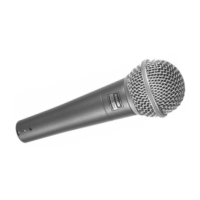
The Shure Beta 87A vocal microphone is precision-engineered to deliver an exceptionally smooth frequency response in a su-
percardiod condenser design. Built to withstand extreme sound pressure levels (SPL), the Beta 87A is ideal for professional
sound reinforcement and studio recording applications.
The tailored frequency response, combined with a controlled low-frequency roll-off, makes this microphone ideal for close-up
lead and background vocals—especially in high SPL environments. An advanced cartridge shock mount system, hardened
steel-mesh grille, and superior build quality withstand the rigors of daily touring and sound reinforcement.
Features
Premier live performance microphone with Shure quality, ruggedness, and reliability
Uniform supercardioid pick-up pattern for maximum gain before feedback and superior rejection of off-axis sound
Smooth, wide frequency response with gradual presence rise and controlled proximity effect tailored for vocals
Advanced cartridge shock mount system absorbs mechanical shock and minimizes handling noise
Dent-resistant steel mesh grille and enamel coated metal alloy construction resist wear and abuse
Effective built-in pop filter reduces undesirable wind and breath noise
Very low susceptibility to RF and electromagnetic hum
Applications
General Rules for Use
Do not cover any part of the microphone grille with your hand, as this will adversely affect microphone performance.
Aim the microphone toward the desired sound source (such as the talker, singer, or instrument) and away from unwanted
sources.
Place the microphone as close as practical to the desired sound source.
Work close to the microphone for extra bass response.
Use only one microphone to pick up a single sound source.
For better gain before feedback, use fewer microphones.
Keep the distance between microphones at least three times the distance from each microphone to its source (“three to
one rule”).
Place microphones as far as possible from reflective surfaces.
Add a windscreen when using the microphone outdoors.
Avoid excessive handling to minimize pickup of mechanical noise and vibration.
Applications And Placement
The following table lists the most common applications and placement techniques. Keep in mind that microphone technique is
largely a matter of personal taste; there is no one “correct” microphone position.


 To Next Page