EasyManua.ls Logo

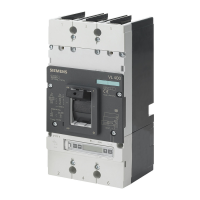
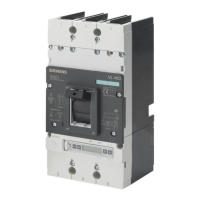
Siemens SENTRON 3VL630 - User Manual

Siemens SENTRON 3VL630
318 pages
Print Icon
To Next Page IconTo Next Page
Loading...
System Manual
SENTRON
Protection devices
3VL IEC molded case circuit breakers
11/2013Edition
Answers for Infrastructure & Cities.

Table of Contents

Questions and Answers

  • K
    Kellie GordonAug 8, 2025
    Why does my Siemens Protection Device circuit breaker keep tripping due to overload?
    • D
      Derrick BakerAug 9, 2025
      If your Siemens Protection Device circuit breaker trips due to overload, it indicates the circuit breaker is working as intended. First, verify if the operating current exceeds the thermal tripping limit. Inspect the terminals for discoloration, as cables may loosen due to vibration or cold flow. High ambient temperatures can also cause tripping; consider derating the In or IR values if temperatures in enclosures are too high. Finally, if none of the above apply, inspect the overcurrent release for discoloration and ensure tightening torque values are correct.
  • L
    lisawardAug 19, 2025
    What to do if Siemens Protection Device circuit breaker trips due to short-circuit?
    • A
      angel65Aug 19, 2025
      If the Siemens Protection Device circuit breaker trips because of a short-circuit, it could be due to excessive making current, such as from a motor. Try adjusting the magnetic trip rating to a higher setting until the breaker stops tripping when the motor starts. High current peaks, like those during star-delta starter transitions, can also cause this. In such cases, the short-circuit release "I" must be set to a higher value; however, note that this might reduce motor protection.
  • S
    Shawn CollinsNov 27, 2025
    Why are the mechanical and electrical functions of my Siemens Protection Device affected?
    • J
      John RuizNov 27, 2025
      If the mechanical and electrical functions of your Siemens Protection Device are affected, high humidity or corrosion could be the cause. The molded case circuit breakers must not be used in environments with high humidity since this can cause dielectric and insulation problems. In such environments, appropriate measures need to be taken, such as placing the circuit breaker in an enclosure. Also, the molded case circuit breakers are not designed to be used in aggressive environments and should be installed in a housing. If the issue relates to internal accessories, determine the type installed by removing the circuit breaker cover and checking the order number. Then, verify their correct function. Ensure the correct voltage is connected to the undervoltage release, and that voltage is not ...

Summary

Product description

Application overview

Presents common applications for the circuit breakers.

Configuration

Explains functional principles, current limiting, and subdivision of circuit breakers.

Functions

Protection functions

Covers overcurrent release, differential current, single-pole, and ground-fault protection.

Internal accessories

Lists complements for accessory compartments, undervoltage, shunt, and auxiliary switches.

Application planning

Use in motor protection

Explains circuit breakers for motor protection, including trip classes.

Installing;mounting

Mounting and safety clearances

Specifies permissible mounting positions and safety clearances.

Displays and operator controls

Overcurrent trip unit without LCD display

Explains setting options and functions of trip units without LCD.

Overcurrent trip unit with LCD display

Details operating features and menu structure of trip units with LCD.

Parameter assignment; addressing

Setting the parameters

Covers setting parameters on ETUs, tripping characteristics, and specific settings for motor protection.

Service and maintenance

Preventive measures

Outlines inspection intervals and general maintenance tasks.

Troubleshooting

Provides guidance on diagnosing and resolving common circuit breaker issues.

Technical data

Motor Protection

Lists characteristic values for motor protection with different trip classes.

Dimensional drawings

VL160 X (3 VL1), VL160 (3 VL2), and VL250 (3 VL3), 3- and 4-pole, to 250 A

Dimensional drawings for VL160X, VL160, and VL250 circuit breakers.

VL160 X (3 VL1), 3- and 4-pole, up to 160 A

Dimensional drawings for VL160X with plug-in bases and accessories.

VL160 (3 VL) and VL250 (3 VL3), 3- and 4-pole, up to 250 A

Dimensional drawings for VL160/VL250 with RCD modules and operating mechanisms.

VL400 (3 VL4), 3- and 4-pole, up to 400 A

Provides dimensional drawings for VL400 circuit breakers and their accessories.

VL630 (3 VL5), 3- and 4-pole, up to 630 A

Dimensional drawings for VL630 circuit breakers and their operating mechanisms.

VL800 (3 VL6), 3- and 4-pole, up to 800 A

Dimensional drawings for VL800 circuit breakers and their operating mechanisms.

VL1250 (3 VL7) and VL1600 (3 VL8), 3- and 4-pole, up to 1600 A

Dimensional drawings for VL1250/VL1600 circuit breakers and their operating mechanisms.

VL160 X (3 VL1) with RCD block, 3- and 4-pole, up to 160 A

Dimensional drawings for VL160X with RCD block.

VL160 (3 VL2) and VL250 (3 VL3) with RCD module, 3- and 4-pole, to 250 A

Dimensional drawings for VL160/VL250 with RCD modules.

VL400 (3 VL4) with RCD module, 3- and 4-pole, up to 400 A

Dimensional drawings for VL400 with RCD modules.

Circuit diagrams

Siemens SENTRON 3VL630 Specifications

General IconGeneral
Rated current630 A
Number of poles3, 4
Protection classIP20
Breaking capacity at 415 V50 kA
Protection functionOverload, short-circuit
Breaking capacity at 415 V AC50 kA
StandardsIEC 60947-2
Rated voltage690 V
Breaking capacity50 kA
Release typeThermal-magnetic
Mounting typeFixed mounting
Trip unitElectronic

Related product manuals