APPLIQUÉ
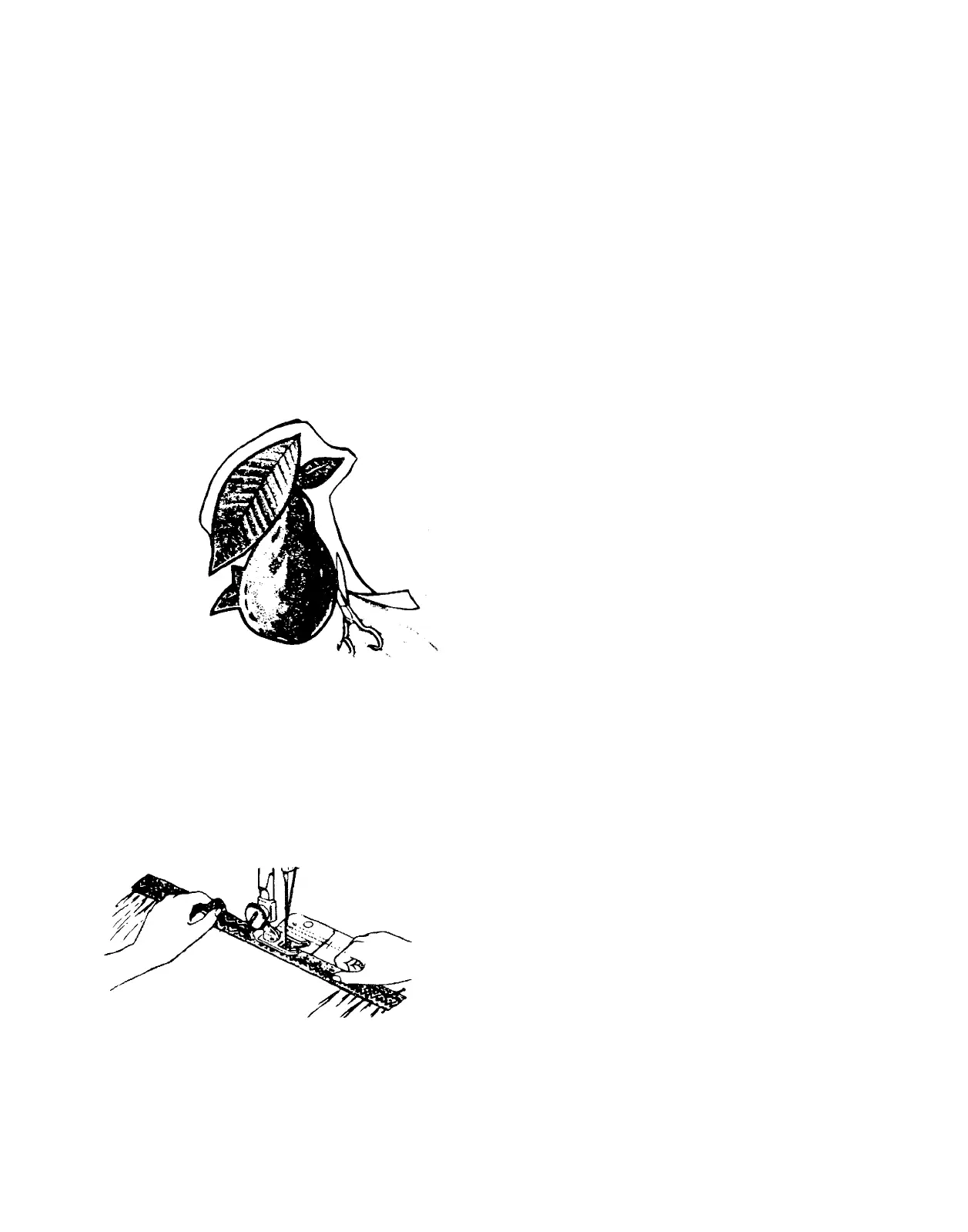
Applique adds beauty and interest to clothing and household linens. You
can create your own design, trace a simple outline from a coloring book,
or use a motif cut from a printed fabric. Fabrics of like or different texture
combine equally well.
A closely spaced zig-zag stitch is most commonly used in appliqué work.
Athough you may vary stitch width to accomodate fabric weave or tex
ture, never allow the stitch to be too wide.
Preparation
• Baste appliqué design to fabric.
• Outline design with straight stitching
(use a short stitch).
• Remove basting and press.
• Attach special purpose foot.
Appliquéing
1. Set machine for desired stitch width.
Adjust stitch length in the 0-1 area of
the stitch length dial.
2. Outline the entire design with appliqué
stitching.
3. Cut away the fabric on the outer edges
of the stitching with embroidery
scissors.
Attaching Elastic with
Plain Zig-Zag
ATTACHING ELASTIC
Elastic will remain stretchable when it is
attached with the plain zig-zag stitch.
The flexible joining produced by this
stitch allows elastic banding to be
stitched under, over, or between fabric
layers, making it particularly useful in the
construction of lingerie and swimsuits.
(maximum)
• Needle Position:
• Stitch Width:
• Stitch Length: About 1.25 mm
• General Purpose Needle Plate and Foot
36
Instrukcje obsługi maszyn do szycia firm Polskich jak i zagranicznych np. Singer Toyota Pfaff Gritzner Łucznik Arka
maszynykrawieckie.shophurt.pl



 To Next Page