liii-
IT-fSrftafl
LUBRICATION
BEFORE
STARTING
MACHINE:
FILL
TO
HIGH
MARK
CHECK
OFTEN
J
NEVER
ALLOW
OIL
TO
FALL
BELOW
LOW
MARK
OIL
RESERVOIR
HOLDS
1-3/4
PINTS
Fig. 3.
Lubrication
SATURATE
WICK
SATURATE
WICK
Fig. 4. Priming Needle Bar Bushing
Wtclcs
SHOULD
SHOW
STEADY
FLOW
OF
OIL
Fig.
5. Oil
Flow
Window
Machine
has
on automatic lubricating
system
in
which oil is
circulated
from
the
reservoir by means of
a
centrifugal
pump below
the
bed.
Before
starting
machine,
the
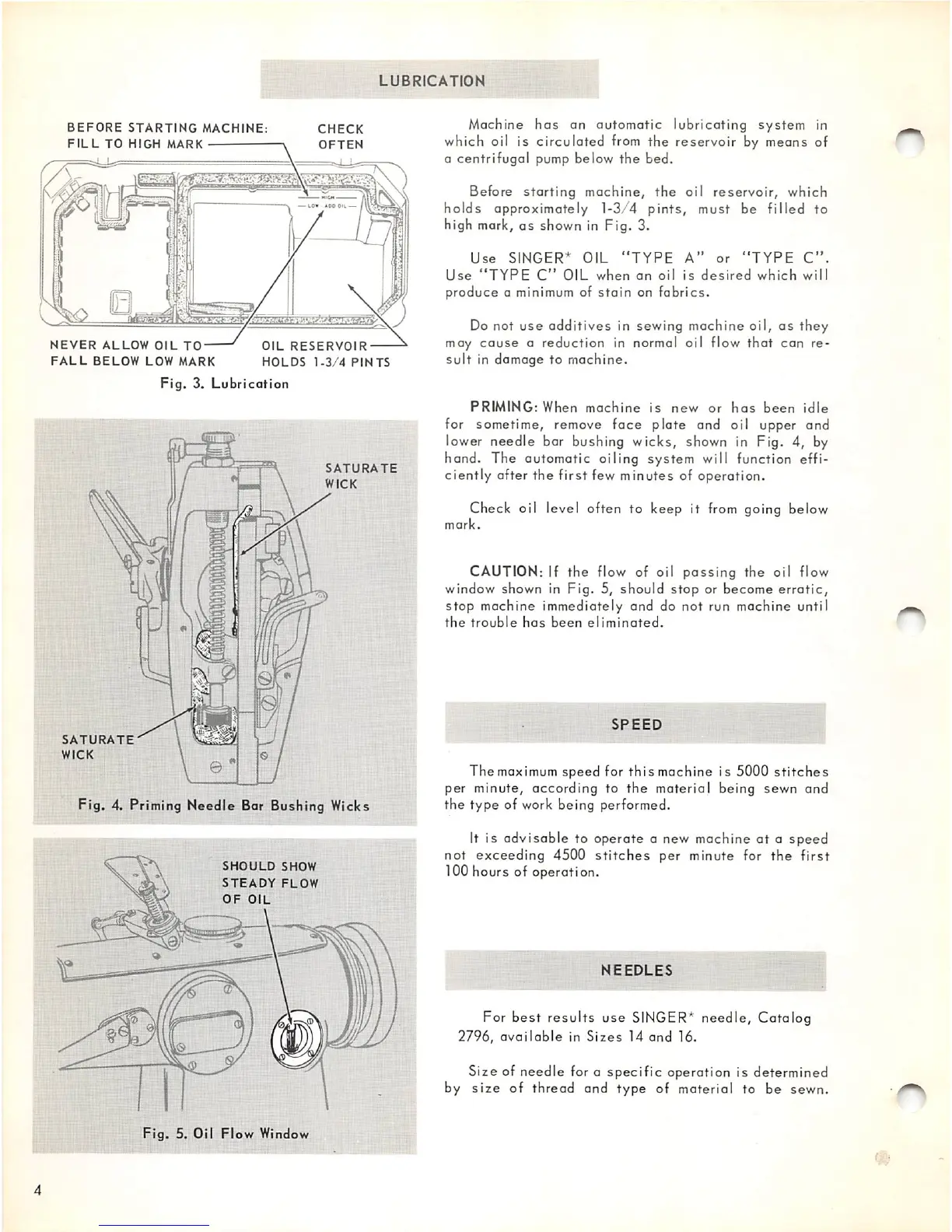
oil reservoir, which
holds
approximately
1-3/4
pints,
must be filled to
high mark, as shown in Fig. 3.
Use
SINGER*
OIL
"TYPE
A"
or
"TYPE
C".
Use
"TYPE
C"
OIL
when
on
oil
is
desired
which
will
produce
a minimum of
stain
on
fabrics.
Do not
use
additives
in sewing machine oil,
as
they
may
cause
a
reduction
in normal oil flow
that
can
re
sult
in damage to machine.
PRIMING:
When
machine
is
new
or
has
been
idle
for sometime, remove
face
plate
and oil upper and
lower needle bor bushing wicks, shown in Fig. 4, by
hand. The automatic oiling
system
will function effi
ciently
after
the
first
few minutes of operation.
Check oil level often to keep it
from
going below
mark.
CAUTION: If
the
flow of oil
passing
the oil flow
window shown in
Fig.
5,
should
stop
or
become
erratic,
stop
machine immediately and do not run machine until
the
trouble
has
been
eliminated.
SPEED
The
maximum
speed
for
this
machine is
5000
stitches
per minute, according to
the
material being sewn and
the type of work being performed.
It is
advisable
to
operate
a new machine
at
a
speed
not
exceeding
4500
stitches
per minute for
the
first
100
hours
of
operation.
NEEDLES
For
best
results
use
SINGER*
needle,
Catalog
2796,
available
in
Sizes
14
and
16.
Size
of
needle
for a
specific
operation
is
determined
by
size
of thread end type of material to be sewn.



 To Next Page