Introduction – 5
English
Introduction – 5
English
Application
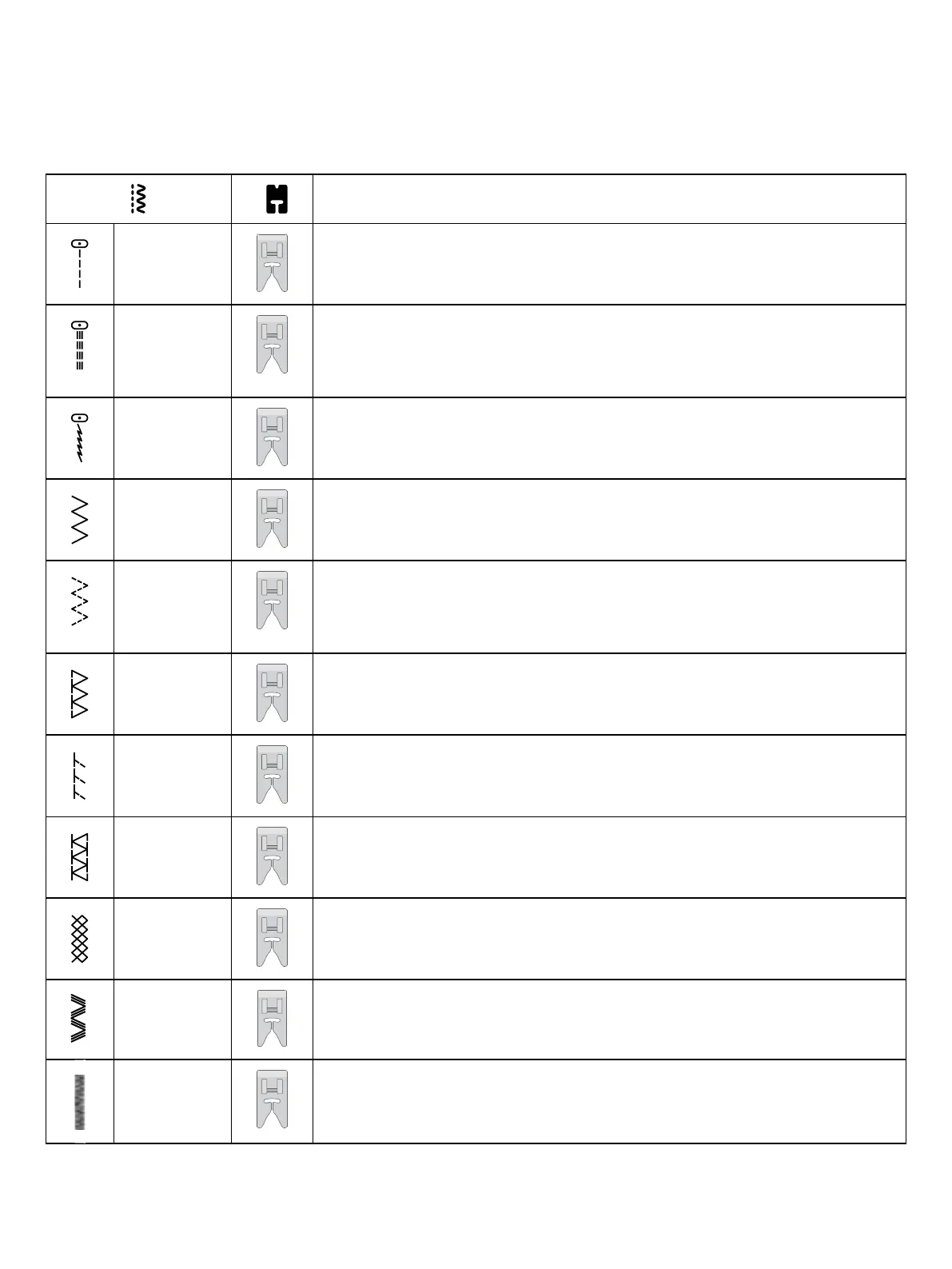
Straight Stitch
Center Position
The basic stitch used for sewing. The most common use for a straight stitch is to sew two
pieces of fabric together.
Straight Stretch
Stitch
Stronger than a regular straight stitch, on stretch knit fabrics, because it locks three times
— forward, backward and forward again. Use it to reinforce seams of sportswear and for
curved seams which take a lot of strain.
Stretch Stitch For seams in tricot and stretch fabrics.
Zigzag Stitch A very versatile stitch for decorative sewing, appliqué, attaching trims, and more.
Multi-Step
Zigzag Stitch
Finish seam allowances to prevent the fabric from unravelling. When seam nishing, the
smaller step of the stitches will help keep fabric more at than a regular zigzag. It can
also be used for mending tears and sewing elastic.
Overlock Stitch Sew seam and overcast in one step. For medium and medium/heavy stretch fabrics.
Slant Overedge
Stitch
Seam and overcast in one step. For medium and heavy stretch fabrics.
Closed Over-
lock Stitch
Sew decorative hems and overlapped seams, belts and bands. For medium/heavy stretch
fabrics.
Honeycomb
Stitch
For elastic insertion, decorative stitching, smocking, couching and hemming.
Ric-Rac Stitch The pleasing appearance of this stitch enables it to be used for decorative topstitching or
for attaching laces and trims. It is also ideal for quilting applications and edge-joining.
Satin Stitch This is a closely spaced zigzag stitch for appliqué, bar-tacking, etc. Slightly loosen the top
thread tension and manually adjust the stitch length between 0.5 and 2.0 for satin stitch-
ing. Use a backing of stabilizer or interfacing to avoid puckering.
Stitch Overview
Choosing Utility and Decorative Stitch Patterns
The stitches described in the below chart are utility stitches, used mainly for utility sewing. When sewing, use a thread tension
between 3–5. Always test sew on a piece of scrap fabric, and adjust the tension if necessary.



 To Next Page