22 – Sewing
English
22 – Sewing
English
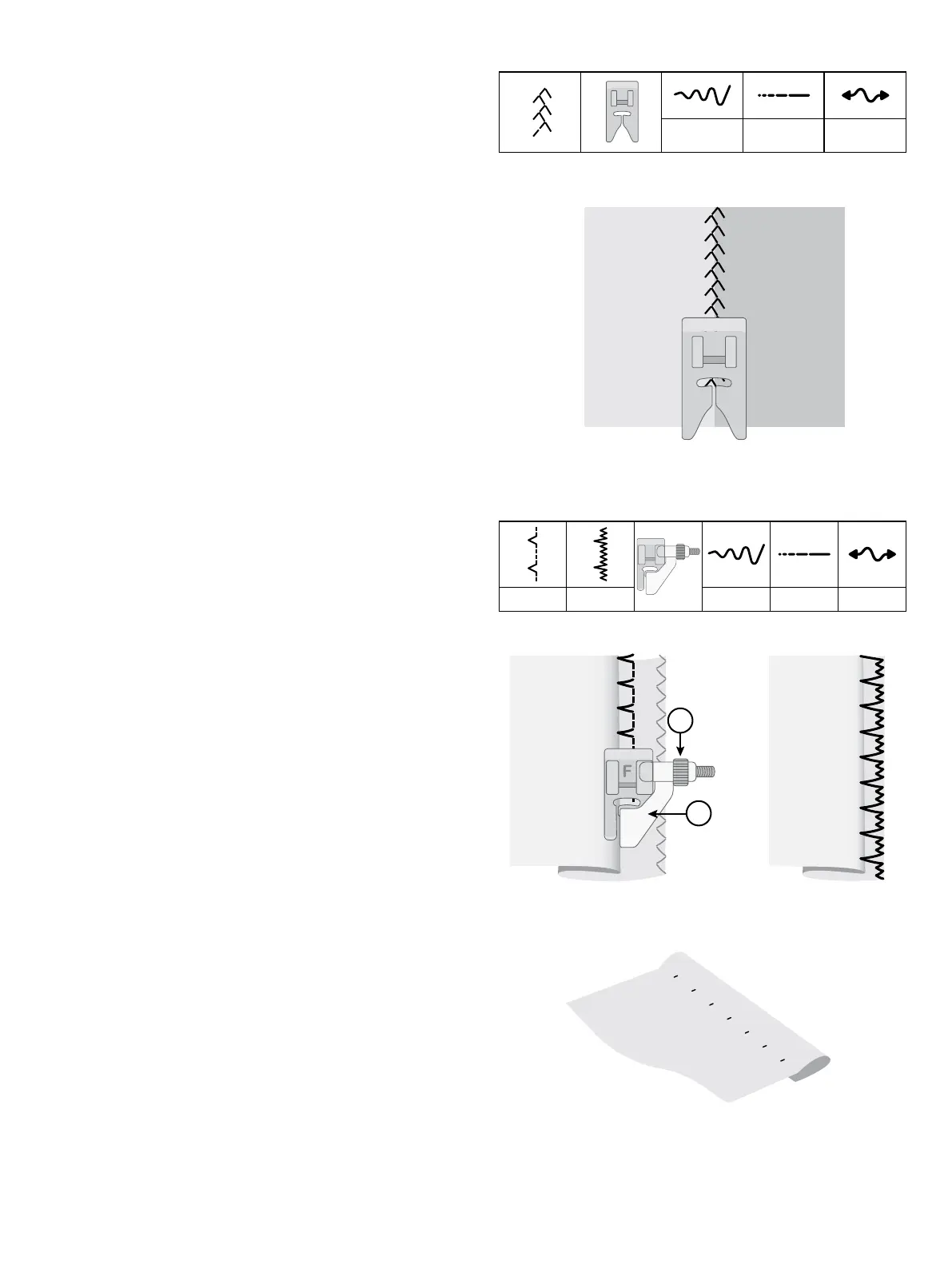
Feather Stitch
The pleasing appearance of this stitch enables it to be used for
decorative topstitching or for attaching laces and trims. It is
also ideal for quilting applications and edge-joining.
The blind hem stitch is used to make invisible hems on skirts,
trousers and home décor projects. There are two types of blind
hem; one is recommended for medium to heavy woven fabric
(1), the other for medium to heavy stretch fabric (2).
• Finish the raw edge of the hem if sewing on a woven
fabric. There is no need to nish the raw edge rst on most
knits.
• Fold and press the hem allowance to the wrong side.
• Fold the hem back on itself so approximately 3/8" (1 cm)
of the nished edge extends beyond the fold. The wrong
side of your project should now be facing up.
• Place the fabric under the presser foot so that the fold runs
along edge guide (A).
• When the needle swings into the fold it should catch a
small amount of fabric. If the stitches are visible on the
right side, adjust edge guide (A) by turning the adjusting
screw (B) until the stitch that catches the hem just barely
shows.
Blind Hem Stitches
Set up for blind hem
Right side of fabric
Woven fabric Stretch fabric
Set up for feather stitch
F
(1) (2)
3.5 1.5–2.0 3–5
5.0 2.5 3–5
B
A



 To Next Page