EasyManua.ls Logo

Sioux Tools Force 5268C - User Manual

Sioux Tools Force 5268C
33 pages
Print Icon
To Next Page IconTo Next Page
Loading...
Form ZCE879 1 Date 2023October3/A
Form ZCE879
Date 2023October3/A
Page 1 of 32
SAVE THESE INSTRUCTIONS!
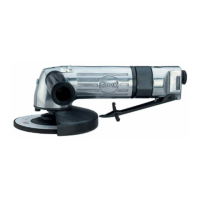
INSTRUCTIONS & PARTS LIST FOR 5268C RIGHT ANGLE WHEEL GRINDER
SERIAL “A
Original
Instructions
Read and understand these instructions before operating this tool.
WARNING
When used improperly power tools can create hazardous situations.
Everyone using, maintaining, changing accessories or working near this tool must read, understand and follow these Safety Instructions!
Improperly used power tools can cause injury or death.
250 Snap-on Drive • PO Box 1596 • Murphy, NC 28906 • USA • Phone: 828-835-9765 •www.siouxtools.com
WHEEL GRINDER SAFETY
Do not modify this grinder. Modifications can reduce the effectiveness of safety measures and increase the risks to the operator.
Grinders can cause flying particles and sparks.
Proper eye protection must be worn at all times by grinder user and bystanders. Wear a safety helmet for overhead work.
Personal protective equipment such as gloves, apron, and a helmet shall be used. Ensure sparks from grinding do not land
on clothing. Wear fire retardant clothing and have a fire extinguisher nearby when grinding. Be aware that the failure of the
workpiece or accessories, or even of the inserted tool itself, can generate high-velocity projectiles.
Flying particles can cause eye injury and fire.
Power tools generate noise. High noise levels can cause hearing damage.
Use hearing protection. Damping the workpiece may help prevent ringing. Ensure the muffler is installed. Ear protection must
be worn when tool noise level exceeds 85 dBA. We also recommend that ear protection be worn when the tool noise level is
below 85 dBA. See the tool’s information sheet for the noise level. Operate and maintain the die grinder as recommended to
prevent an unnecessary increase in the noise level. Select, maintain and replace the inserted tool as recommended to prevent
an unnecessary increase in the noise level.
Prolonged exposure to noise can cause hearing loss.
Unguarded grinders cannot protect operator from exploding grinding wheels or accidental contact with the grinding wheels.
Do not operate the grinder with out a proper guard, properly installed! Do not remove the guard for any reason! If the guard
becomes damaged, replace it immediately!
Exploding grinding wheels or accidental contact with rotating grinding wheels can cause injury.
Rotating grinding wheels can cause cuts and abrasions.
Keep hands and other body parts away from grinding wheels to prevent cutting or pinching. Wear protective clothing and gloves
to protect hands. Avoid direct contact with the grinding wheel during and after use as it can become hot or sharp.
Contact with rotating grinding wheels can cause injury.
Grinders present a risk of entanglement.
Keep loose hair away from power tools and accessories. Keep hands away from moving parts of the tool and accessories. Do not
wear jewelry, loose clothing, or neckwear around power tools. Keep work area clear of cleaning rags and all items that could become
entangled with the tool. Ensure that the workpiece is securely fixed. Ensure safe clamping of the abrasive product to the grinder.
Entanglements can cause injuries.
Grinding operations creates dust.
Do not breathe grinding dust. Use approved mask. Operate and maintain the grinder as recommended in these instructions, to
minimize dust and fume emissions. Direct the exhaust to minimize disturbance of dust. Control dust at the point of emission.
Replace the grinding wheel as recommended to prevent an increase in dust or fumes. Working with certain materials creates
emissions of dust and fumes, causing a potentially explosive environment.
Breathing grinding dust can cause injury.
This tool is not insulated for contact with electric power sources.
Do not use near live electric circuits.
Electric shock can cause injury.
This tool is not intended for use in a flammable or explosive atmosphere.
Do not use this tool in a flammable or explosive atmosphere.
Explosions and fire can cause injury.
Grinding metals creates sparks that can ignite flammable materials and vapors.
Only grind metals if the area is free of combustible or explosive materials or vapors.
Explosions and fire can cause injury.
Overspeeding wheels can explode.
Check the speed rating of the accessory or the speed printed on the wheel. This speed must be greater than the nameplate
speed of the grinder and the actual speed of the grinder as measured with a tachometer. Do not exceed rated operating air
pressure. Check regularly that the speed of the grinder is not higher than that marked on it. Speed checks shall be carried out
without the abrasive product mounted.
Exploding wheels can cause injury or death.
Power tools vibrate. Vibration exposure can cause disabling damage to the nerves and blood supply of the hands and arms.
Excessive vibration can cause injury. If numbness, tingling, pain or whitening of the skin occurs, stop using tool and consult
a physician. See the tool’s information sheet for the vibration level. Operate and maintain the die grinder as recommended to
prevent an unnecessary increase in vibration levels. Select, maintain and replace the inserted tool as recommended to prevent
an unnecessary increase in vibration levels. An improperly mounted or damaged inserted tool can cause excessive vibration
levels. Wear warm clothing when working on cold conditions. Keep your hands warm and dry. Do not allow the abrasive wheel
to chatter on workpiece. Support the grinder in a stand, tensioner, or balancer if possible. Do not hold the grinder too tightly.
Use blotters where they are provided with the bonded abrasive product.
Prolonged exposure to vibration can cause injury.
Question and Answer IconNeed help?

Do you have a question about the Sioux Tools Force 5268C and is the answer not in the manual?

Overview

This document describes the 5268C Right Angle Wheel Grinder, a pneumatic power tool designed for light grinding and weld dressing tasks. It is not intended for cutting-off operations.

Function Description

The 5268C Right Angle Wheel Grinder is a pneumatic tool that utilizes reinforced resin-bonded depressed center grinding wheels. Its primary function is to perform light grinding and dressing of welds. The tool is equipped with a locking-type lever to prevent accidental start-up, and its speed can be adjusted by turning a regulator located opposite the throttle lever. The grinder operates by using compressed air to rotate an abrasive wheel at high speeds, allowing for material removal and surface finishing. A proper guard must always be fitted to protect the operator from exploding grinding wheels or accidental contact.

Important Technical Specifications

  • Recommended Air Pressure: 90 psig (620 kPa)
  • Air Consumption: 33 cfm (23.6 scfm)
  • Air Inlet Thread Size: 1/4-18 NPT
  • Recommended Hose Size: 3/8" (10 mm)
  • Horsepower (hp/kW): 0.85 hp (0.63 kW)
  • Free Running Speed (RPM): 12,000 RPM
  • Length (in/mm): 10.0 in (254 mm)
  • Weight (lb/kg): 3.9 lb (1.7 kg)
  • Noise (ISO Standard 15744):
    • Sound Pressure: 82.2 dBA (Uncertainty K: 3.0 dBA)
    • Sound Power: 93.2 dBA (Uncertainty: 3.0 dBA)
  • Vibration (ISO Standard 28927-12:2012):
    • Vibration Level: 5.82 m/s²
    • Uncertainty: 1.92 m/s²

The grinding wheels used with this tool must have a permitted rotational speed in excess of 12,000 RPM.

Usage Features

Safety Precautions: The manual emphasizes numerous safety precautions. Operators and bystanders must wear proper eye protection (safety glasses, helmet for overhead work), hearing protection (ear protection above 85 dBA), and personal protective equipment (gloves, apron). Fire-retardant clothing is recommended, and a fire extinguisher should be nearby when grinding metals due to sparks. The tool must never be operated without a properly installed guard, which should not be removed or damaged. Hands and other body parts must be kept away from rotating grinding wheels to prevent cuts or pinching. Loose hair, jewelry, and clothing should be kept away from moving parts to avoid entanglement. The workpiece must be securely fixed, and the abrasive product safely clamped to the grinder.

Dust and Fume Control: Grinding operations generate dust and fumes. Operators must not breathe grinding dust and should wear an approved mask. The grinder should be operated and maintained as recommended to minimize dust and fume emissions, with exhaust directed to minimize disturbance. The grinding wheel should be replaced as recommended to prevent increased dust or fumes. Working with certain materials can create potentially explosive environments, so grinding metals should only occur in areas free of combustible or explosive materials or vapors.

Vibration and Noise Management: The tool generates vibrations, and prolonged exposure can cause disabling damage to nerves and blood supply in hands and arms. If numbness, tingling, pain, or skin whitening occurs, tool use should stop, and a physician consulted. The tool's information sheet provides vibration levels. To prevent unnecessary increases in vibration, the grinder should be operated and maintained as recommended, and inserted tools selected, maintained, and replaced properly. Warm clothing, keeping hands warm and dry, and supporting the grinder in a stand, tensioner, or balancer are recommended. Avoid gripping the grinder too tightly. Blotters should be used with bonded abrasive products if provided. High noise levels can cause hearing damage. Hearing protection is mandatory when noise exceeds 85 dBA and recommended below this level. The muffler must be installed and functioning correctly.

Air Supply and Lubrication: The grinder requires a supply of clean, dry air at a maximum of 90 PSI. An air line filter, pressure regulator, and lubricator are recommended. Before connecting, the air line should be blown out to remove water and dirt. The recommended air supply hose is 3/8" (10mm) I.D., with 1/2" (13mm) I.D. for extension hoses. While the tool can operate without airline lubrication, it may reduce performance and vane life. Daily oiling (2-4 drops of Sioux Air Motor Oil No. 288) before use is recommended if no airline lubricator is used. For maximum performance, an airline lubricator set to deliver 2 drops per minute is advised. The angle head assembly requires 2 shots of SIOUX #1232A grease every 8 working hours.

Wheel Installation and Removal: To install a grinding wheel, place the wheel flange and wheel onto the spindle, then thread the wheel retainer onto the spindle. Tighten the wheel retainer with the enclosed spanner wrench while holding the spindle with the enclosed open-end wrench, to a maximum of 120 in-lb. For removal, unthread the wheel retainer and remove the wheel. Always disconnect the tool from the air supply before installing, removing, or adjusting the wheel.

Maintenance Features

General Maintenance: Water, dust, and other airline contaminants can cause rust and vane sticking. For long periods between uses, the tool should be flushed with a few drops of oil and run for 10 seconds to remove contaminants and reduce rust formation. Periodically, the grinder's speed and vibration should be checked. If the speed exceeds the nameplate speed, the grinder must be repaired. All safety markings must remain legible. Spindle threads, clamping devices, and abrasive location features should be inspected for wear and replaced if necessary.

Tool Condition and Operation: The tool should be kept properly lubricated and in good repair at all times. Do not modify the grinder or perform temporary repairs. Do not operate a modified or damaged grinder. If the normal sound of the grinder changes or it vibrates excessively, it must be shut off immediately, the wheel removed, and the speed checked with a tachometer. This could indicate overspeeding or improper wheel mounting.

Work Area and Personnel: The work area should be well lit and free of trip hazards caused by the air line. Children and visitors must be kept at a safe distance. Idle tools should be stored in a dry, high, or locked-up place, out of reach of children. Operators experiencing persistent or recurring discomfort, pain, tingling, numbness, burning sensations, or stiffness should consult a qualified health professional.

Unexpected Air Pressure Loss: If an unexpected loss of air pressure occurs, the actuator must be released. If the actuator is left in the "ON" position, the tool can start unexpectedly when air pressure is restored. Ensure the actuator is "OFF" before hooking up to the air supply. The grinder may coast for a short time after the trigger is released, so ensure it has come to a complete stop before setting it aside.

Sioux Tools Force 5268C Specifications

General IconGeneral
BrandSioux Tools
ModelForce 5268C
CategoryGrinder
LanguageEnglish

Related product manuals