EasyManua.ls Logo

Skywalk BREEZE - User Manual

Default Icon
17 pages
Print Icon
To Next Page IconTo Next Page
Loading...
Introduction 3332 Description
Modular Harness-LTF91/09 | EN 1651/1999
BREEZE
Question and Answer IconNeed help?

Do you have a question about the Skywalk BREEZE and is the answer not in the manual?

Summary

Product Description

Key Features Overview

Safety and Location Features

Includes Recco reflector, rescue chute kit, and radio mount for enhanced safety.

Comfort and Storage Features

Features hydration system, seat-cover connection, and ample rear/front pockets.

Protection and Durability Features

Incorporates PERMAIR protector, abrasion-resistant material, and V-line channel.

In-flight Adjustments

Back and Lumbar Support

Adjust pilot position, angle, and lumbar support for optimal comfort.

Shoulder and Chest Straps

Adjust torso length and chest strap for roll stability.

Harness Functionality

Get Up Locking System

Provides a secure connection using Austri Alpin frame buckles.

Storage Compartments

Includes a back compartment and front pocket for gear and instruments.

Speed Bar and Inflation Bag

Details on speed bar use and inflation bag for the protector.

Safety Notice

Initial Setup and Harness Adjustments

Basic Harness Setup

Steps for putting on the harness and initial fitting.

Chest Strap Adjustment

Adjusts harness stability and flight dynamics.

Shoulder Strap Adjustment

Adjusts harness to the pilot's torso length.

Back Angle and Lumbar Support

Fine-tunes position and provides ergonomic lumbar support.

Reserve Parachute Installation

Connecting Reserve Chute

Procedure for connecting the reserve chute via V-lines.

Reserve Chute Placement

Detailed steps for placing the reserve chute in the compartment.

Front Container and Compatibility

Front Container Mounting

Instructions for attaching the front container and guiding V-lines.

Reserve Chute Compatibility Test

Procedure to verify correct reserve chute installation and deployment.

Harness Adjustments and Protector

Front Pocket Attachment

Steps to attach or remove the front pocket and adjust cockpit angle.

Separating Cover and Seat

Procedure for disconnecting the harness cover from the seat shell.

PERMAIR Protector Information

Details on the permanent-airbag protector and its benefits.

Protector Inflation

Instructions for inflating the protector using the provided bag.

Protector Sealing and Packing

Protector Inflation Process

Detailed steps for inflating the PERMAIR protector.

Protector Sealing and Packing

Procedure for sealing the protector and packing the harness.

Replacing the Protector

Steps for removing and reinstalling the protector for checks.

Flying Safety

Pre-flight Checklist

Essential checks to perform before every flight for safety.

Reserve Chute Deployment

Guidance on handling a reserve chute deployment event.

Emergency and Extreme Flight

Actions for emergency situations and turbulence.

Speed Bar Usage

Instructions and cautions for using the speed bar.

Miscellaneous Information

Winch-Towing and Tandem Flight

Suitability for winch-towing; not suitable for tandem flights.

Water Safety

Precautions regarding flying over water and potential water landings.

Maintenance and Care

General Care Guidelines

Tips for maintaining the harness to ensure longevity and airworthiness.

Material Quality

Information on the high-quality materials used in the harness.

Maintenance Checks and Repairs

Maintenance Checklist

Regular checks required for the harness, including after pack/install.

Leak Test Procedure

Steps for testing the protector for leaks after impact.

Storage Recommendations

Ideal conditions for storing the harness to prevent moisture damage.

Repair Guidelines

Instructions and warnings regarding harness repairs.

Disposal and Homologation

Harness Disposal

Environmental considerations for retiring and recycling the harness.

Homologation Standards

Details on LTF 91/09 and EN 1651/1999 certifications.

Technical Data and Maintenance

Maintenance Check Schedule

Requirement for a maintenance check after 24 months.

Technical Specifications

Pilot height, harness weight, load capacity, and material details.

Environmental Behavior

Guidance on eco-friendly practices during paragliding.

Closing Words and Happy Landings

Test Protocol

Overview

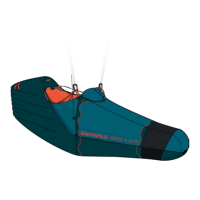
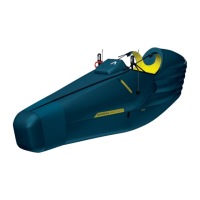
The SKYWALK BREEZE is a recreational paragliding harness designed for comfort, safety, and modularity. It features a simple design with a shell that perfectly encloses the body, ensuring maximum comfort during flight. The harness's geometry, with moderately high suspension points, allows for intuitive transmission of control pulses and weight shifting.

Function Description

The BREEZE integrates PERMAIR technology, originally developed for the Red Bull X-Alps, into a recreational harness. This permanent air protector combines the advantages of foam and ram air protectors, offering maximum damping with minimal weight and space requirements. The modular design allows for easy separation of the cover from the seat shell.

Important Technical Specifications

  • Certification: EN 1651/1999 certified harness, LTF 91/09 certified PERMAIR protector.
  • Pilot Height (cm): S (155-172), M (170-181), L (177-190), XL (186-198).
  • Suspension Points Height (cm): S (41), M (43), L (46), XL (49).
  • Harness Weight (g) (complete): S (2100), M (2200), L (2300), XL (2450).
  • Weight Main Seat (g) (excl. cover): S (1100), M (1170), L (1240), XL (1340).
  • Maximum Load (kg): 120.
  • Volume of Reserve Container (cm³): 2500-4200 (S), 2500-5600 (M, L), 2500-7400 (XL).
  • Materials:
    • Cloth of the harness: Diamond Ripstop 100D Nylon, Dynagin 210D Nylon, Oxford 300D Polyester, Twill 100D Nylon, Lining 75D Polyester.
    • Webbing: 25 mm Nylon webbing, 15 mm Nylon webbing, 10mm Nylon webbing.
    • Ropes: Liros DC500, D-PRO 5mm, D-PRO 2.5mm.
  • Other Components: Ronstan Orbit 20 BB pulleys, brummel hook Finsterwalder Titanal, carabiner Edelrid Foras, webbing buckle Edelrid SB, Mega Duckbill.

Usage Features

  • Recco Reflector: Offers emergency personnel an additional chance to locate a missing person.
  • Hydration System Provision: Includes a pocket for a drinking bladder, a drinking tube outlet, and an elastic loop for the mouthpiece.
  • Rescue Chute Deployment Kit: Features a rescue handle with an included deployment bag compatible with various reserve chutes.
  • Mounting Place for Radio or Solario: Equipped with a loop for securing and extra reinforcement for easy installation with Velcro and a radio clip.
  • Abrasion-Resistant Bottom Material: Oxford fabric structure enhances abrasion resistance.
  • Seat-Cover Connection: A zipper and four buckles allow for easy detachment of the seat and cover.
  • PERMAIR Connection Pocket: Ensures trouble-free inflation of the protector.
  • Rear Storage Compartment: A large compartment provides ample space for gear.
  • Front Pocket: Subdivided for items like battery packs, removable, and adjustable cockpit angle.
  • V-Line Channel: Guides the reserve chute connecting lines.
  • In-Flight Adjustments:
    • Back Adjustment: Adjusts pilot position and angle in flight.
    • Lumbar Support: Provides optimal ergonomic support in the lower lumbar region.
    • Shoulder Strap: Adjusts to the upper body length.
    • Chest Strap: Adjusts roll stability.
  • Get Up Locking System: Uses Austri Alpin frame buckles for a solid, secure connection.
  • Pure Back Storage Compartment: Small compartment for clothing and packsack if no cover is used.
  • Speed Bar: Features extra tube reinforcement and a triangle connector for easier reach.
  • Inflation Bag: Serves as a bellows for filling the protector and for packing the harness.
  • Reserve Chute Installation: Compatible with most compact reserve chutes. Requires careful arrangement of lines and secure connection using a screw shackle (at least 2400 daN strength) or softlinks. A compatibility test and test release in a harness simulator are crucial for proper deployment.
  • Front Container Mounting: Attaches statically to the harness in at least three places. V-lines are guided through specific Velcro openings and channels.
  • Harness Adjustments: Four adjustment options for flight behavior, position, and support.
    • Chest Strap: Adjusts flight dynamics; tighter strap increases stability but reduces yaw stability.
    • Shoulder Strap: Adjusts harness to pilot's torso length, ensuring light contact with shoulders.
    • Back Angle: Initial preset in a simulator, fine-tuned during flight. Edelrid adjusters tighten automatically; release for adjustment.
    • Lumbar Support: Adapts the back part to spine shape, preventing fatigue.
  • PERMAIR Protector Inflation: Inflated using the included inflation bag or by blowing. The protector must be sealed within 3 seconds after inflation to ensure functionality. It is crucial to fill the protector to its maximum volume.
  • Speed System Adjustment: The speed bar travel must be set individually on the paraglider. Optimal length allows full leg extension with pulleys on risers touching.

Maintenance Features

  • Preflight Check: Thorough inspection of all paragliding equipment before every flight, including harness, carabiners, reserve parachute container, splints, rescue handle, buckles, straps, zippers, paraglider hook-up, speedbar, pockets, protector fill, and leg/chest straps.
  • Maintenance Checklist (every 6-12 months):
    • Check all straps and buckles for wear and damage.
    • Inspect stitching of all seams; repair if needed.
    • Pay special attention to rescue parachute installation, especially splints.
    • Renew aluminum carabiners after no more than five years or 500 flight hours.
    • Perform a leak test.
  • Leak Test: After a hard landing or fall from height, remove the protector, inflate it, store at constant temperature for 12 hours in a shady room, then check air pressure. Reinstall if full, otherwise repair or replace.
  • Cleaning: Use mild soap and a damp cloth. Remove other parts like the reserve parachute first.
  • Drying: Dry equipment in a well-ventilated, shady place if wet. If the reserve parachute gets wet, open it up, let it dry, and pack it again.
  • Storage: Store in a dry, dark place with constant temperature. Ensure equipment is dry before storage to prevent moisture damage.
  • Repairs: Should only be carried out by the manufacturer or an authorized skywalk service center, except for small cuts (up to 5 cm) that don't affect a seam. Unauthorized changes invalidate type approval and liability claims.
  • Disposal: Remove all metal parts for recycling. Skywalk offers to recycle retired harnesses directly.

Skywalk BREEZE Specifications

General IconGeneral
BrandSkywalk
ModelBREEZE
CategoryAccessories
LanguageEnglish

Related product manuals