8
2687
16 2 0 21
-
SE80 & SE100 & SE120 & SE130 & SE150
MG_0004
Min
Pos. B
Pos. A
1
1
2
3
4 65
MG_0048
Increase tunnel length to protect
the propeller from water forces
when high-speed cruising.
Water
Forces
Increase tunnel length to
prevent a circular water vacuum
cavity between the propeller and
the hull of the boat.
STANDARD USE FLAT BOTTOM HULL HIGH-SPEED OPERATION
Do not allow the variable length of the tunnel walls to vary in length
excessively.
EG. the top tunnel wall is x 4 longer than the bottom wall.
Cavitation
Water flow must have
space to "straighten"
itself for best
performance.
The gear leg/ propeller(s) must
never extend out of the tunnel
Tunnel installation in sailboats
EN
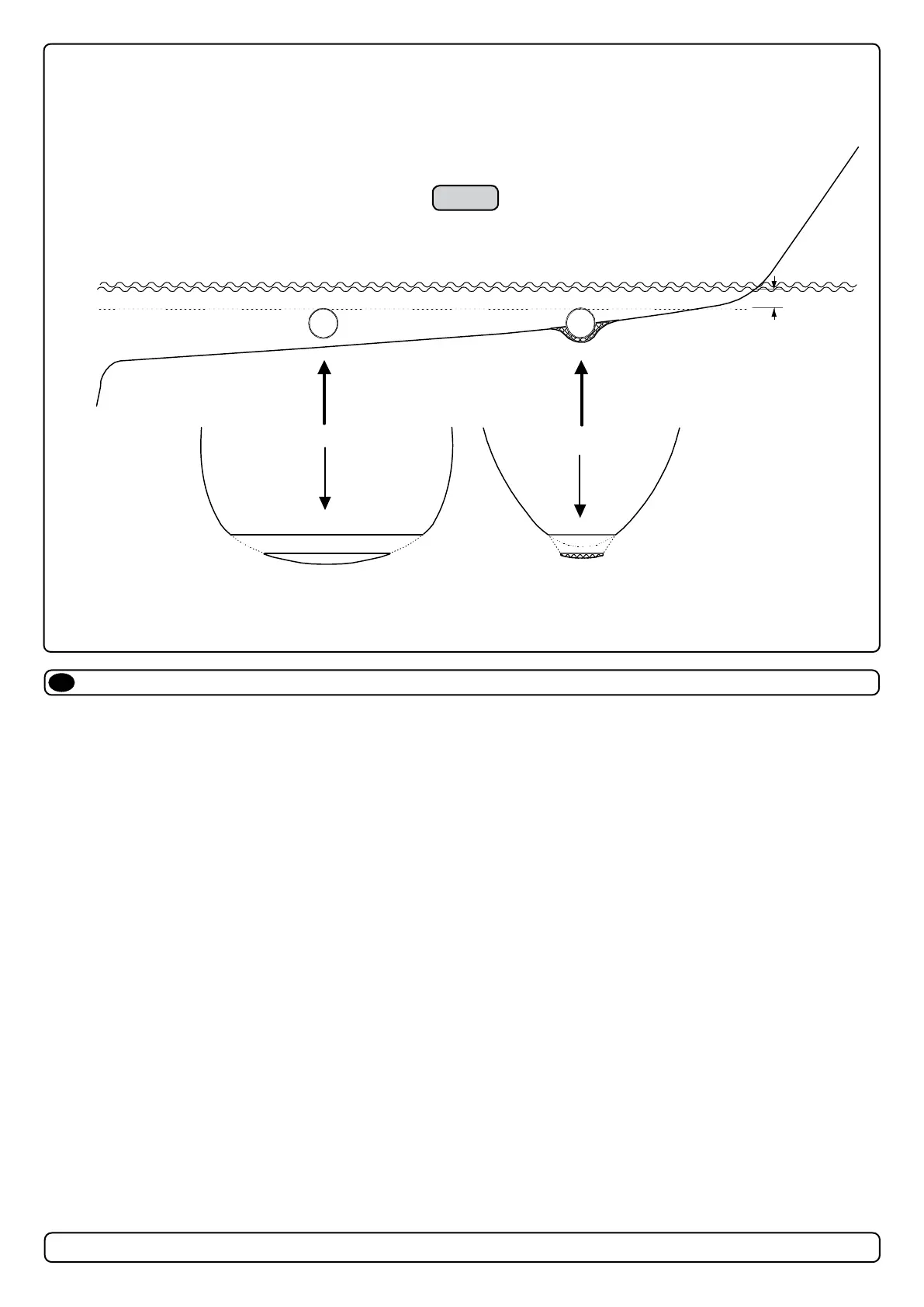
Some sail boats have a flat bottom and shallow draft in the bow section. This can make installing the thruster as far forward from the boats main pivot
point dif cult. (Fig. 1).
However, it is possible to install a tunnel thruster in most sail boats, even when the hull does not directly support the tting of a tunnel.
Instead t the tunnel halfway into the underneath section of the existing hull. Strengthen it with a deflector/ spoiler directing the water flow around
the tunnel. This will allow installation of the thruster in the proper position on the boat, maintaining the reliability and space advantages of the tunnel
thruster.
This installation is being used by some of the world’s largest sail boat builders and has proven to give little to no speed loss during normal cruising.
This can also be an installation method for flat bottomed barges to avoid extremely long tunnels and large oval tunnel openings in the hull.
MC_0003


 To Next Page