• Never allow anybody to stand between the tractor and the trailer while the tractor is moving- your foot could
slip of the brakes/clutch
• When in position raise the Pick Up Hitch and lock. If using a swinging draw bar stop the tractor (SAFE
STOP) and fit the drop pin and clip
• Connect all hydraulic hoses (clean ends to ensure a secure fit and to prevent leaks or dirt entering the
system) and cables
• Raise and jacks or skids to the travel position
• Attach any lights, reflectors or guards which may be necessary
• It may be necessary on some occasions to add weights to the front of the tractor to aid traction, steering
and stability (check handbook)
• If using a conventional draw bar always ensure that a purpose made tow pin is used and a safety
clip is fitted to prevent the tow pin coming out during travel
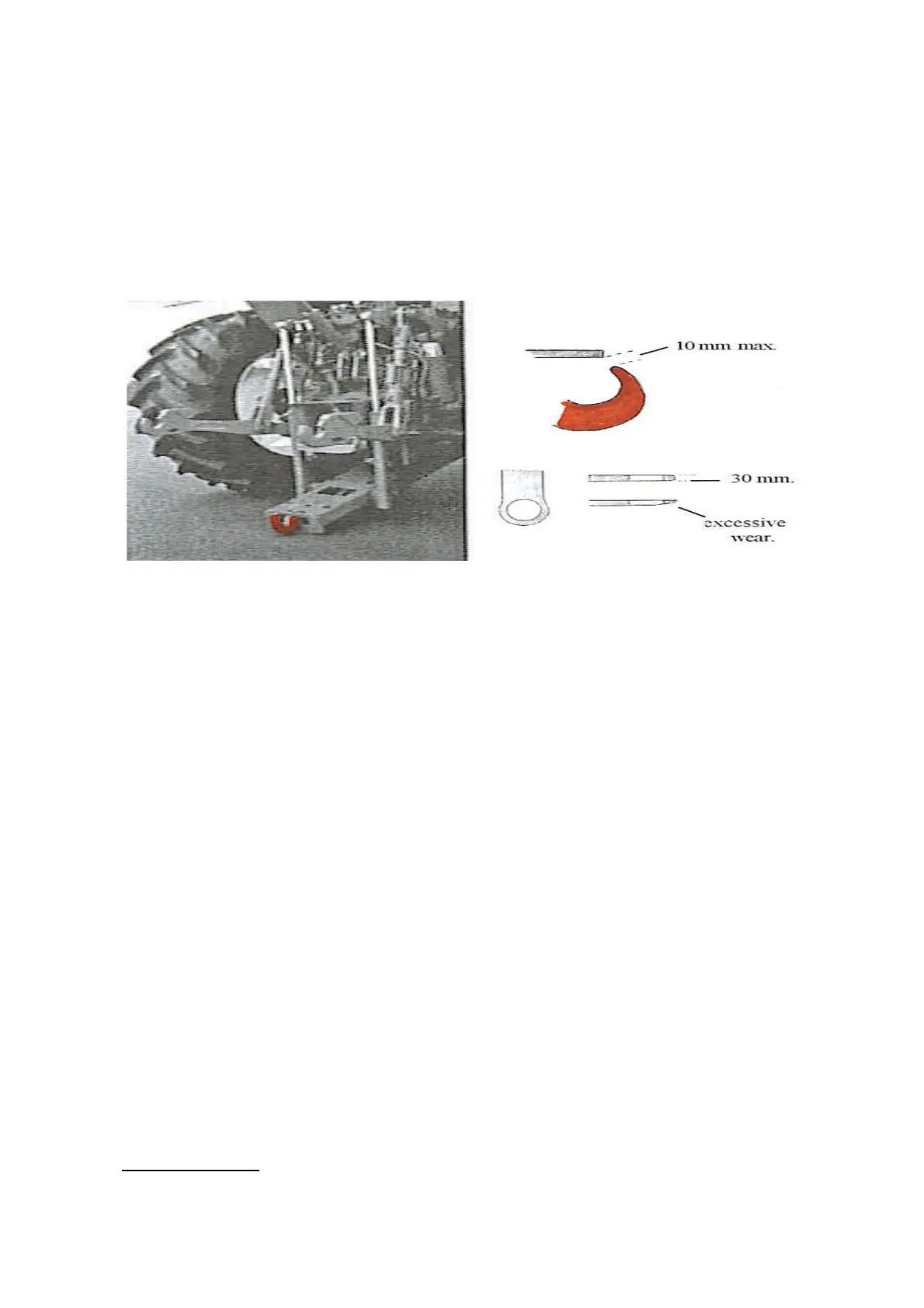
Hydraulic Pick up Hitch-
• Used mostly for towing trailers. Allows quick changes of trailers with out the operator leaving the seat.
Trailers must be secure and all hoses and cables detached before dropping them off. The max gap at the
top of the hitch must be no more than 10mm
Potential Hazards when using Trailed Equipment-
• Trailers which are too heavy can cause rearward rollover on steep inclines
• Heavy loads can affect steering and increase stopping distances
• High or awkward loads can affect the tractors stability
• Greatly reduce visibility to the rear
• Large trailers require more room to maneuver
• Ground needs to hold the combined weights of the tractor and trailer
Loading the Tractor and Trailer-
• Position the Trailer where the machine driver indicates ensuring that it is on level ground
• Handbrake on and switch off
• Do not allow the machine Driver to overload the Trailer
• Do not allow the machine driver to load over the tractor
• Dismount the Tractor maintaining three points of contact if the tractor is not fitted with a FOPs cab
What you need to know about the load-
• The weight of the material to prevent overloading
• Is the material contaminated- ensuring you wear correct PPE
• Type of material- ensuring you tip onto the correct stockpile
• Is it liquid- might slosh around when moving and affect stability
• Is it sharp edged- spillage might cause tyre damage
• Loose or dusty might require eye protection or respiratory protection
Travelling with a Tractor-
• Don’t drive too fast for the situation or task
• Select the correct gear for each job
• Drive slowly when – on rough or soft ground, or slippery ground, when cornering, or using independent
braking, CORNERING, travelling on slopes or near ditches or in adverse weather conditions and towing
trailed equipment,
5
SLL PLANT AND QUARRY TRAINING SERVICES LIMITED



 To Next Page
 Loading...