EasyManua.ls Logo

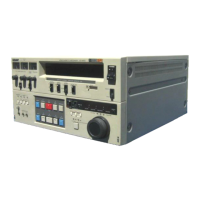
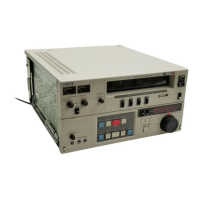
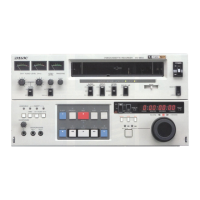
Sony VO-9600P - User Manual

Sony VO-9600P
88 pages
Go to English
Print Icon
To Next Page IconTo Next Page
Loading...
©
1987
by
Sony
Corporation
Question and Answer IconNeed help?

Do you have a question about the Sony VO-9600P and is the answer not in the manual?

Summary

General Information

Recording and Playback Systems

Details SP system, three-mode operation, Hi-Fi sound, and U-matic compatibility for clear pictures.

Control and Interface Features

Covers remote control, dubbing, RS-232C interface, and search functions.

Operational Features and Settings

Explains time counter, programmed operation, time base corrector, and auto recording level.

Precautions and Safety

Safety and Handling Guidelines

Covers power, liquid, cord safety, installation, operation, and cleaning.

Transportation and Storage

Advice on moving the unit and storing cassettes.

Recording and Playback Modes

SP System Overview

Explains the SP system for high-quality pictures and its compatibility with U-matic VTRs.

Mode Compatibility and Cassettes

Details interchangeability of SP, high-band, and low-band modes with cassette types.

Three Mode Difference and Compatibility

Compares carrier frequencies and cassette types for SP, high-band, and low-band modes.

Unit Controls and Indicators

Front Panel Layout and Buttons

Overview of front panel components including buttons, meters, and displays.

Key Function Buttons

Details the operation of EJECT, REC, PLAY, DUB, STOP, REW, F FWD, PAUSE buttons.

Memory Counter Section

Explains the memory counter and its associated buttons for programmed operations.

Unit Controls and Indicators (Continued)

Audio, Tracking, and Input Selection

Covers audio level controls, limiter, tracking, input select, and REC mode switches.

System Status Indicators

Explains indicators like AUTO OFF, STANDBY, FRAME CODE, DOLBY NR, and SP/HIGH.

Unit Controls and Indicators (Continued)

Advanced Control Buttons

Details buttons for SEARCH, programmed operation switch, and MARK IN A/B buttons.

Unit Controls and Indicators (Continued)

Memory Management and Time Counter Settings

Covers memory functions, resetting, and time counter display selection.

Rear Panel Connections

Rear Panel Layout

Illustrates the arrangement of connectors and ports on the rear panel.

Rear Panel Connections (Continued)

Video and Audio I;O Connectors

Describes connectors for TV, VIDEO IN, DUB IN/OUT, RF OUT, and audio line in/out.

Control and Interface Connectors

Explains SYNC IN, TBC switch, RX DATA, REMOTE, and RF modulator compartment.

Connecting External Devices

Camera Recording Setup

Details connecting a video camera via BNC for recording.

Tape Dubbing (No DUB Connector)

Explains tape dubbing using VIDEO IN and AUDIO IN connectors.

Connecting External Devices (Continued)

Tape Dubbing (With DUB Connector)

Describes connecting for tape dubbing using the 7-pin DUB IN connector.

Video Monitor Connection (8-pin)

Details connecting a video monitor using the 8-pin VTR connector.

Connecting External Devices (Continued)

Video Monitor Connection (Non-8-pin)

Explains connecting a video monitor without an 8-pin VTR connector.

TV Receiver Connection via RF OUT

Details connecting to a TV receiver using the RF OUT connector.

Connecting External Devices (Continued)

Stereo System and Microphone Connections

Explains connections for stereo systems and microphones.

Connecting External Devices (Continued)

Headphone Monitoring and Power Connection

Details connecting headphones and the unit to AC power.

Video Cassette Handling

Inserting and Removing Cassettes

Instructions for inserting and removing standard and small-size cassettes.

Cassette Insertion Notes and Troubleshooting

Provides tips on correct insertion and what to do if the STANDBY lamp remains lit.

Cassette Handling and Storage

Guidelines for handling, storage, and the function of the red button on cassettes.

Recording Procedures

Recording Preparations

Outlines necessary connections, monitor setup, timer, and tracking control settings.

Recording Finishes and Pauses

Explains how to stop recording, use pause mode, and notes on automatic level adjustment.

Recording Procedures (Continued)

Recording Operation Steps

Details powering on, inserting cassette, input/mode selection, and pressing REC.

Adjusting Audio Levels and Monitoring

Covers adjusting audio levels, using the AUDIO LIMITER, and monitoring sound during recording.

Recording Procedures (Continued)

Monitoring Recorded Sound

Explains how to monitor recorded sound via headphones or monitor speakers.

Audio Dubbing Operations

Adding Sound to Existing Video

Instructions for adding new audio (music, commentary) on channel 1, overwriting previous sound.

Audio Dubbing Steps

Covers connecting sound sources, inserting tape, setting switches, and starting dubbing.

Recording Procedures (Continued)

Recording Sound Mid-Tape

Steps to record sound on a tape at a specific point using pause and dubbing functions.

Erasing Recorded Material

Instructions for erasing tape content by recording blank material or running the tape to the end.

Playback Procedures

Playback Preparations

Outlines necessary connections, monitor setup, timer, and switch settings for playback.

Playback Control and Pausing

Explains how to stop playback, use pause mode, and resume playback.

Playback Procedures (Continued)

Playback Operation Steps

Details powering on, inserting cassette, setting audio monitor, and pressing PLAY.

Playback Indicators and Notes

Explains indicators like DOLBY NR, SP/HIGH, FRAME CODE, and conditions for frame code reading.

Playback Procedures (Continued)

Correcting Hooking Distortion

Instructions for adjusting the SKEW lever to fix picture distortion.

Correcting Snow or Streaks

Instructions for adjusting the TRACKING control to resolve snow or streaks.

Advanced Playback Functions

Search Operation Guide

Details using the search dial to locate desired portions at various speeds.

Search Operation Notes

Provides notes on guardband noise and TBC interaction during search.

Advanced Playback Functions (Continued)

Locating a Desired Point

Steps to use MARK IN A and PROGRAMMED OPERATION switch to locate specific points.

Programmed Operation Notes

Notes on using the search dial and limitations for repeat playback.

Advanced Playback Functions (Continued)

Repeating a Specific Tape Portion

Instructions for setting MARK IN A and B points to repeatedly play a segment.

Checking and Stopping Repeat Playback

How to check memorized points and stop repeat playback operations.

Advanced Playback Functions (Continued)

Repeat Playback (Start to Point)

Steps to set MARK IN B and MARK IN A for repeating playback from tape start to a specific point.

Advanced Playback Functions (Continued)

Repeat Playback (Point to End)

Steps to set MARK IN A and MARK IN B for repeating playback from a point to the tape end.

Advanced Operation Modes

Frame Code Programmed Operation

Explains conditions and use of frame codes for programmed operations.

Time Base Corrector Playback

Details connecting a time base corrector for optimal picture quality during playback.

Timer-Controlled Operations

Timer Recording;Playback Setup

Explains connecting a timer and setting times for unattended recording or playback.

Timer Operation Completion

Notes on returning the TIMER switch to OFF and function button behavior.

TV Viewing Setup

RF Modulator Installation

Steps for installing the optional RF modulator into the unit's compartment.

TV Viewing Setup (Continued)

TV Viewing Operation

Steps for setting the antenna selector, TV receiver, and recorder for playback on a TV.

Remote Control Functionality

RM-690 Remote Control Unit

Details using the RM-690 remote control unit and its corresponding functions.

Remote Control Functionality (Continued)

RX-353 CE;RX-303 CE Auto Search Control

Explains using optional auto search control units for locating points via CTL signals.

Address and Segment Search

Describes address search by time and segment search using the RX-353CE.

Remote Control Functionality (Continued)

RX-707 Auto Search Control Unit

Details using the RX-707 with frame codes for precise locating and programmed operations.

Remote Control Functionality (Continued)

Computer Connection via RS-232 C

Explains connecting a computer using the BKU-701 and RS-232C interface for control.

Rack Mounting Information

Provides dimensions and guidance for mounting the unit in a standard 19-inch rack.

Technical Specifications

System and Video Specifications

Details recording system, video signal, inputs, outputs, and resolution.

Audio and Tape Transport Specifications

Covers audio inputs/outputs, S/N, tape speed, and tape compatibility.

General and Power Requirements

Lists power requirements, consumption, operating conditions, dimensions, and weight.

Optional Accessories

Lists optional accessories available for the VO-9600P.

Troubleshooting Guide

Initial Checks (Check 1)

Basic checks for power cord, power switch, and connections.

Common Symptoms and Causes (Check 2)

Addresses issues like AUTO OFF lamp, tape stopping, STANDBY lamp, and cassette ejection.

Specific Problem Resolutions (Check 3)

Provides solutions for cassette insertion, tape not running, recording issues, and picture problems.

Troubleshooting Guide (Continued)

Moisture Condensation Issues

Explains moisture detection, AUTO OFF lamp, and recommended actions.

Video Head Cleaning Procedure

Steps for cleaning the video head using a cleaning cassette to resolve picture issues.

Troubleshooting Guide (Continued)

Video Head Replacement Guidance

Information on checking head life and when to consider replacement.

Summary

General Information

Recording and Playback Systems

Details SP system, three-mode operation, Hi-Fi sound, and U-matic compatibility for clear pictures.

Control and Interface Features

Covers remote control, dubbing, RS-232C interface, and search functions.

Operational Features and Settings

Explains time counter, programmed operation, time base corrector, and auto recording level.

Precautions and Safety

Safety and Handling Guidelines

Covers power, liquid, cord safety, installation, operation, and cleaning.

Transportation and Storage

Advice on moving the unit and storing cassettes.

Recording and Playback Modes

SP System Overview

Explains the SP system for high-quality pictures and its compatibility with U-matic VTRs.

Mode Compatibility and Cassettes

Details interchangeability of SP, high-band, and low-band modes with cassette types.

Three Mode Difference and Compatibility

Compares carrier frequencies and cassette types for SP, high-band, and low-band modes.

Unit Controls and Indicators

Front Panel Layout and Buttons

Overview of front panel components including buttons, meters, and displays.

Key Function Buttons

Details the operation of EJECT, REC, PLAY, DUB, STOP, REW, F FWD, PAUSE buttons.

Memory Counter Section

Explains the memory counter and its associated buttons for programmed operations.

Unit Controls and Indicators (Continued)

Audio, Tracking, and Input Selection

Covers audio level controls, limiter, tracking, input select, and REC mode switches.

System Status Indicators

Explains indicators like AUTO OFF, STANDBY, FRAME CODE, DOLBY NR, and SP/HIGH.

Unit Controls and Indicators (Continued)

Advanced Control Buttons

Details buttons for SEARCH, programmed operation switch, and MARK IN A/B buttons.

Unit Controls and Indicators (Continued)

Memory Management and Time Counter Settings

Covers memory functions, resetting, and time counter display selection.

Rear Panel Connections

Rear Panel Layout

Illustrates the arrangement of connectors and ports on the rear panel.

Rear Panel Connections (Continued)

Video and Audio I;O Connectors

Describes connectors for TV, VIDEO IN, DUB IN/OUT, RF OUT, and audio line in/out.

Control and Interface Connectors

Explains SYNC IN, TBC switch, RX DATA, REMOTE, and RF modulator compartment.

Connecting External Devices

Camera Recording Setup

Details connecting a video camera via BNC for recording.

Tape Dubbing (No DUB Connector)

Explains tape dubbing using VIDEO IN and AUDIO IN connectors.

Connecting External Devices (Continued)

Tape Dubbing (With DUB Connector)

Describes connecting for tape dubbing using the 7-pin DUB IN connector.

Video Monitor Connection (8-pin)

Details connecting a video monitor using the 8-pin VTR connector.

Connecting External Devices (Continued)

Video Monitor Connection (Non-8-pin)

Explains connecting a video monitor without an 8-pin VTR connector.

TV Receiver Connection via RF OUT

Details connecting to a TV receiver using the RF OUT connector.

Connecting External Devices (Continued)

Stereo System and Microphone Connections

Explains connections for stereo systems and microphones.

Connecting External Devices (Continued)

Headphone Monitoring and Power Connection

Details connecting headphones and the unit to AC power.

Video Cassette Handling

Inserting and Removing Cassettes

Instructions for inserting and removing standard and small-size cassettes.

Cassette Insertion Notes and Troubleshooting

Provides tips on correct insertion and what to do if the STANDBY lamp remains lit.

Cassette Handling and Storage

Guidelines for handling, storage, and the function of the red button on cassettes.

Recording Procedures

Recording Preparations

Outlines necessary connections, monitor setup, timer, and tracking control settings.

Recording Finishes and Pauses

Explains how to stop recording, use pause mode, and notes on automatic level adjustment.

Recording Procedures (Continued)

Recording Operation Steps

Details powering on, inserting cassette, input/mode selection, and pressing REC.

Adjusting Audio Levels and Monitoring

Covers adjusting audio levels, using the AUDIO LIMITER, and monitoring sound during recording.

Recording Procedures (Continued)

Monitoring Recorded Sound

Explains how to monitor recorded sound via headphones or monitor speakers.

Audio Dubbing Operations

Adding Sound to Existing Video

Instructions for adding new audio (music, commentary) on channel 1, overwriting previous sound.

Audio Dubbing Steps

Covers connecting sound sources, inserting tape, setting switches, and starting dubbing.

Recording Procedures (Continued)

Recording Sound Mid-Tape

Steps to record sound on a tape at a specific point using pause and dubbing functions.

Erasing Recorded Material

Instructions for erasing tape content by recording blank material or running the tape to the end.

Playback Procedures

Playback Preparations

Outlines necessary connections, monitor setup, timer, and switch settings for playback.

Playback Control and Pausing

Explains how to stop playback, use pause mode, and resume playback.

Playback Procedures (Continued)

Playback Operation Steps

Details powering on, inserting cassette, setting audio monitor, and pressing PLAY.

Playback Indicators and Notes

Explains indicators like DOLBY NR, SP/HIGH, FRAME CODE, and conditions for frame code reading.

Playback Procedures (Continued)

Correcting Hooking Distortion

Instructions for adjusting the SKEW lever to fix picture distortion.

Correcting Snow or Streaks

Instructions for adjusting the TRACKING control to resolve snow or streaks.

Advanced Playback Functions

Search Operation Guide

Details using the search dial to locate desired portions at various speeds.

Search Operation Notes

Provides notes on guardband noise and TBC interaction during search.

Advanced Playback Functions (Continued)

Locating a Desired Point

Steps to use MARK IN A and PROGRAMMED OPERATION switch to locate specific points.

Programmed Operation Notes

Notes on using the search dial and limitations for repeat playback.

Advanced Playback Functions (Continued)

Repeating a Specific Tape Portion

Instructions for setting MARK IN A and B points to repeatedly play a segment.

Checking and Stopping Repeat Playback

How to check memorized points and stop repeat playback operations.

Advanced Playback Functions (Continued)

Repeat Playback (Start to Point)

Steps to set MARK IN B and MARK IN A for repeating playback from tape start to a specific point.

Advanced Playback Functions (Continued)

Repeat Playback (Point to End)

Steps to set MARK IN A and MARK IN B for repeating playback from a point to the tape end.

Advanced Operation Modes

Frame Code Programmed Operation

Explains conditions and use of frame codes for programmed operations.

Time Base Corrector Playback

Details connecting a time base corrector for optimal picture quality during playback.

Timer-Controlled Operations

Timer Recording;Playback Setup

Explains connecting a timer and setting times for unattended recording or playback.

Timer Operation Completion

Notes on returning the TIMER switch to OFF and function button behavior.

TV Viewing Setup

RF Modulator Installation

Steps for installing the optional RF modulator into the unit's compartment.

TV Viewing Setup (Continued)

TV Viewing Operation

Steps for setting the antenna selector, TV receiver, and recorder for playback on a TV.

Remote Control Functionality

RM-690 Remote Control Unit

Details using the RM-690 remote control unit and its corresponding functions.

Remote Control Functionality (Continued)

RX-353 CE;RX-303 CE Auto Search Control

Explains using optional auto search control units for locating points via CTL signals.

Address and Segment Search

Describes address search by time and segment search using the RX-353CE.

Remote Control Functionality (Continued)

RX-707 Auto Search Control Unit

Details using the RX-707 with frame codes for precise locating and programmed operations.

Remote Control Functionality (Continued)

Computer Connection via RS-232 C

Explains connecting a computer using the BKU-701 and RS-232C interface for control.

Rack Mounting Information

Provides dimensions and guidance for mounting the unit in a standard 19-inch rack.

Technical Specifications

System and Video Specifications

Details recording system, video signal, inputs, outputs, and resolution.

Audio and Tape Transport Specifications

Covers audio inputs/outputs, S/N, tape speed, and tape compatibility.

General and Power Requirements

Lists power requirements, consumption, operating conditions, dimensions, and weight.

Optional Accessories

Lists optional accessories available for the VO-9600P.

Troubleshooting Guide

Initial Checks (Check 1)

Basic checks for power cord, power switch, and connections.

Common Symptoms and Causes (Check 2)

Addresses issues like AUTO OFF lamp, tape stopping, STANDBY lamp, and cassette ejection.

Specific Problem Resolutions (Check 3)

Provides solutions for cassette insertion, tape not running, recording issues, and picture problems.

Troubleshooting Guide (Continued)

Moisture Condensation Issues

Explains moisture detection, AUTO OFF lamp, and recommended actions.

Video Head Cleaning Procedure

Steps for cleaning the video head using a cleaning cassette to resolve picture issues.

Troubleshooting Guide (Continued)

Video Head Replacement Guidance

Information on checking head life and when to consider replacement.

Sony VO-9600P Specifications

General IconGeneral
Video SystemPAL
Tape FormatU-matic
Tape Speed9.53 cm/s
Recording TimeUp to 60 min with KCA-60 tape
Input/Output ConnectorsBNC
Operating Temperature5°C to 40°C (41°F to 104°F)

Related product manuals