27/04/04 © Söring Users manual RF-units
1
not valid for MBC600
-17-
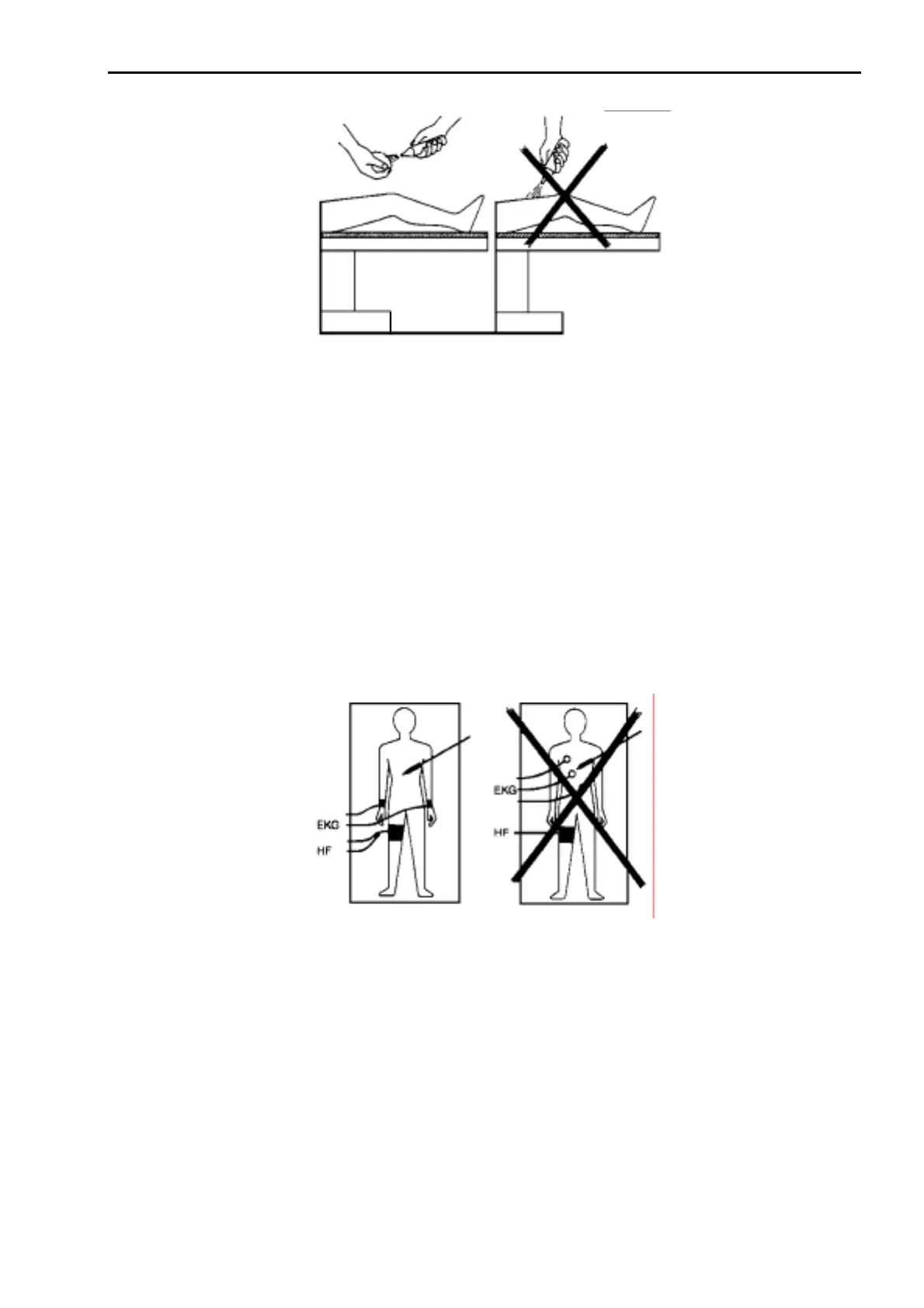
Fig 4.3 Moistening of body parts for fastening of patient electrode
- According to manufacturer’s specification the patient electrode must have a clean
surface free of corrosion and oxides in order to keep the transfer resistance as small as
possible.
- Furthermore the surface area of the patient electrode must be sufficiently large so that
no unacceptable heat will develop.
- In case of insufficient blood circulation the skin shall be massaged or brushed at the
contact area before applying the patient electrode. It should be mentioned that for long
lasting operations disturbed blood supply around the patient electrode might come up
again which leads to an increased transfer resistance.
- If the transfer resistance at the patient electrode increases during an operation, the
contact area heats up. Thereby, the skin dries out, the transfer resistance is further
increased, and burns may result.
Fig 4.5 Position of EKG electrodes for use in connection with RF surgery
- These recommendations are valid for normal EKG cables. Special EKG cables for RF
use are excepted.
In case RF surgery is applied at the thorax or at body parts above the thorax, the use of
unipolar electrodes for extremities according to “Goldberge” are recommended.
- In order to reduce possible fault currents, special EKG cables for RF use with current
limiting resistors of
≈
10 k
Ω
and a built-in RF choke should be used (see Fig. 4.6).


 To Next Page