PL
USER MANUAL
and the radiation of the arc can react with
the solvent vapors, which can result in
the formation of FOSGEN - a highly toxic
and poisonous gas.
• The shielding gas used in arc welding
can displace air in the room. As a
result, health or life may be
endangered. Always provide adequate
ventilation, especially in confined
areas, to ensure that there is enough
air for safe breathing.
1.6 FIRE HAZARD
OR EXPLOSION
Arc welding and related processes can
cause fire or explosions. Appropriate
precautions should be taken to prevent
these dangers.
1.6.1 Fire hazard
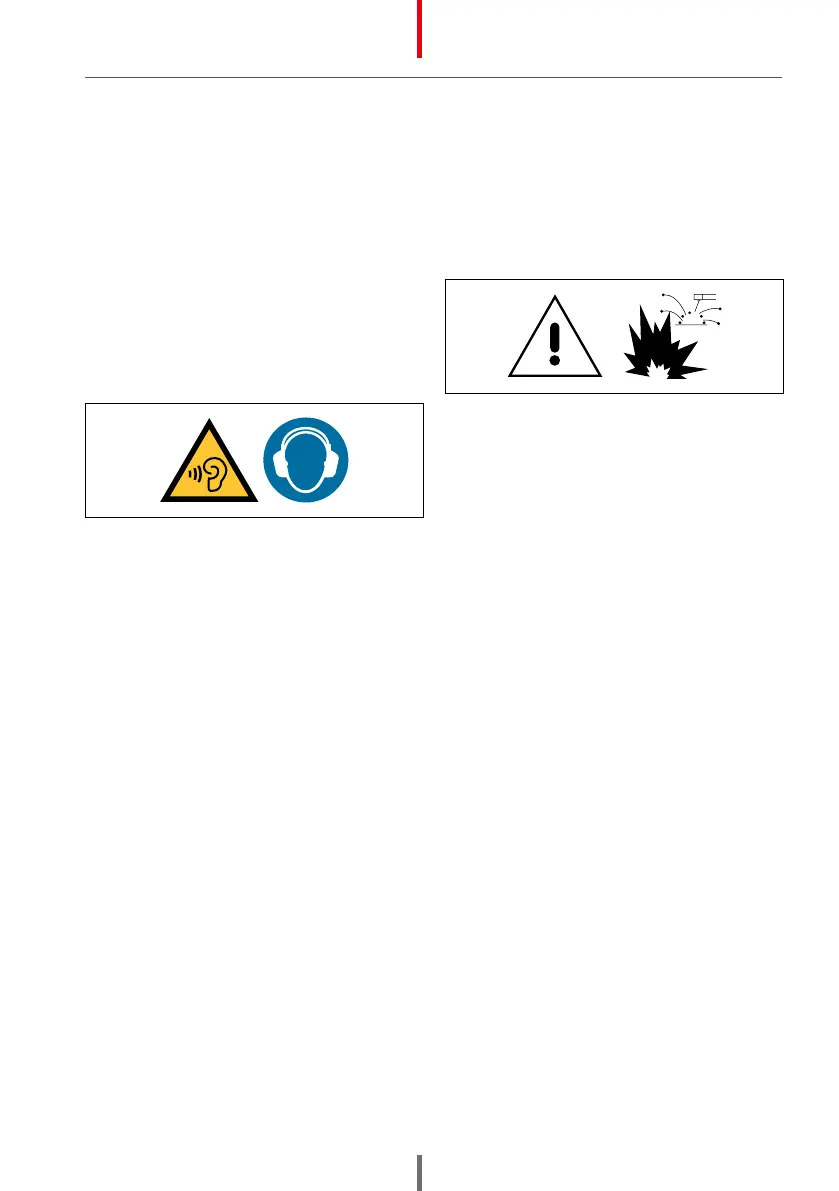
1.5 NOISE CAN BE HARMFUL
• To avoid the risk of fire, remove all
flammable materials from the welding
environment. If this is not possible,
protect flammable elements against
sparks with a fire-resistant material.
Remember that sparks and hot metal
can enter the adjacent area through
small gaps and openings.
• Avoid welding in close proximity to
hydraulic lines.
• Sparks and spatter are ejected from the
welding arc. Wear clean, dry protective
clothing (in particular, avoid oil
contamination), such as: welding
gloves, welding apron, welding pants,
welding boots, welding hood / cap, etc.
• When welding is not being performed,
make sure that no part of the electrode
system is in contact with the weld
material or ground. Accidental contact
can cause overheating and create a fire
hazard.
• The fire extinguisher should be in an
easily accessible place, ready for use.
• The work environment should be observed for
an appropriate time after completion of
welding and allied processes.
• The "hot spots" and their immediate
vicinity should be observed until their
temperature is reduced to normal
levels.
Under conditions of welding and related
processes, harmful noise levels may be
present. This can damage your hearing.
Noise levels should be reduced to the
lowest possible level. High noise levels
can be tolerated for a very short time by
wearing appropriate ear protection in
accordance with relevant national or local
ordinances. When in doubt, an expert
check should be performed to establish
the noise level in the workplace. If they
exceed the permissible limits, one of the
following options can be used:
a) isolation of the noise source by using
silencers or a soundproof housing,
b) operator isolation from the noise source,
c) use of sound protection devices,
d) an indication of 'hearing protection
areas' as appropriate,
e) restriction of entry to "hearing protection
areas" for entitled persons,
f) protect your hearing by wearing appropriate
personal protective equipment, e.g. earplugs
or ear muffs.
5


 To Next Page