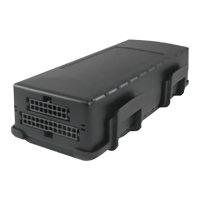
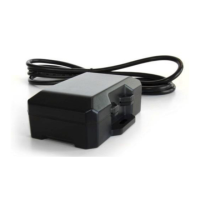
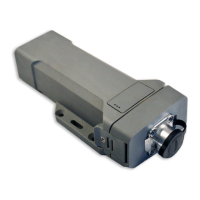
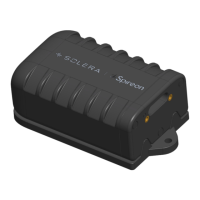
The JKS3 is a self-contained GPS tracking device designed for various applications, offering robust location tracking and communication capabilities. It integrates GPS location with LTE Cat. M1 network connectivity, allowing it to respond to user or server requests and transmit data reports containing location information and system status. The device is pre-configured from the factory for immediate use and supports updates and configuration via serial connection, over-the-air (OTA) IP connection, or SMS messaging.
Key Features and Specifications:
Function Description:
The JKS3 serves as a GPS tracking device, providing real-time location data and system status updates. Its primary function is to monitor and report the geographical position of assets or vehicles. The device's LTE Cat. M1 connectivity ensures reliable data transmission, making it suitable for a wide range of tracking applications.
Important Technical Specifications:
- WAN Module: IMQ3, supporting LTE CATM1 (B4/13/25/26). This ensures broad network compatibility and efficient data communication.
- Positioning: GPS/GLONASS/aGPS for accurate and reliable global positioning.
- USIM: 3FF, indicating the type of SIM card supported for network access.
- Microcontroller: STM32 F030, which manages the device's operations and data processing.
- Interfaces: ADC/UART/SPI/I2C/GPIO, providing versatile connectivity options for various sensors and peripherals.
- Power Management: Features 5 power mode control, optimizing energy consumption for extended battery life.
- Backup Battery: Li-ion battery with a specification of 170 mAh/3.7 V. It has a maximum discharge current of 5 C and an operation temperature range of -10°C to +60°C, ensuring functionality in diverse environments.
- Buzzer: Electro-magnetic buzzer with an operating voltage of 3 V to 6.5 V. It has a resonant frequency of 2700 ± 300 Hz and a sound output of ≥ 83 dBm at 10 cm, providing audible alerts.
- Dimensions: Compact size of 92.8 mm × 60 mm × 16.5 mm, making it easy to install in various locations.
- Operating Temperature: -20°C to +70°C, indicating its suitability for a wide range of environmental conditions.
Usage Features:
- Ports:
- 8 Wire Port: This port provides multiple functionalities including Vin (voltage input), GND (ground), Open drain output, GPIO6, GPI (General Purpose Input), GPIO4, GPIO5, and an additional GND. These connections allow for integration with external systems, power supply, and control signals.
- Micro-USB: Primarily used for manufacturing and debugging purposes, facilitating device configuration and troubleshooting.
- LED Indicators: The device features two main LED indicators: WWAN and GPS, each with distinct flashing patterns to convey device status:
- WWAN LED:
- Flashing slowly: System is powering up and initializing.
- Solid: WWAN data connection acquired.
- Flashing quickly: WWAN data connection temporarily lost.
- Off: Device is off or in hibernation mode.
- Blip once every 30 seconds (keep 'off'): Device is in monitoring or standby mode.
- Intermittent blips (keep 'off'): FOTA (Firmware Over-The-Air) session is ongoing.
- GPS LED:
- Flashing slowly: System is powering up and initializing.
- Solid: GPS signal acquired.
- Flashing quickly: GPS signal temporarily lost.
- Off: Device is off or in hibernation mode.
- Blip once every 30 seconds (blip): Device is in monitoring or standby mode.
- Intermittent blips (blip): FOTA session is ongoing.
- Installation: The device is designed for straightforward installation, typically involving connections to a constant 12V power source, ground, ignition sense, and an optional starter disable relay and socket for vehicle integration. The provided diagram illustrates a typical wiring setup for connecting to a vehicle's electrical system, including an ignition switch and starter.
Maintenance Features:
- Battery Replacement: Only authorized service providers are permitted to replace the battery. This ensures safety and proper functioning of the device.
- Battery Safety: Users are advised not to disassemble, open, crush, bend, deform, puncture, or shred the battery. Modifying or remanufacturing the battery, inserting foreign objects, or exposing it to water, fire, or explosions are strictly prohibited.
- Charging System: The battery must only be charged using a system qualified per CTIA Certification Requirements for Battery System Compliance to IEEE 1725. Using an unqualified battery or charger can pose risks of fire, explosion, leakage, or other hazards.
- Disposal: Used batteries should be disposed of promptly and in accordance with local regulations.
- Damage Inspection: If the device or battery is dropped, especially on a hard surface, and damage is suspected, it should be taken to a service center for inspection.
- USB Port Charging: For host devices utilizing a USB port for charging, the device should only be connected to CTIA certified adapters, products bearing the USB-IF logo, or other approved products.
The JKS3 is a reliable and versatile GPS tracking device, suitable for various applications requiring accurate location monitoring and robust communication, while adhering to strict safety and regulatory standards.

 Need help?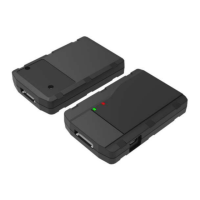

 To Next Page
 General