INSTALLATION, OPERATION and MAINTENANCE MANUAL | 25
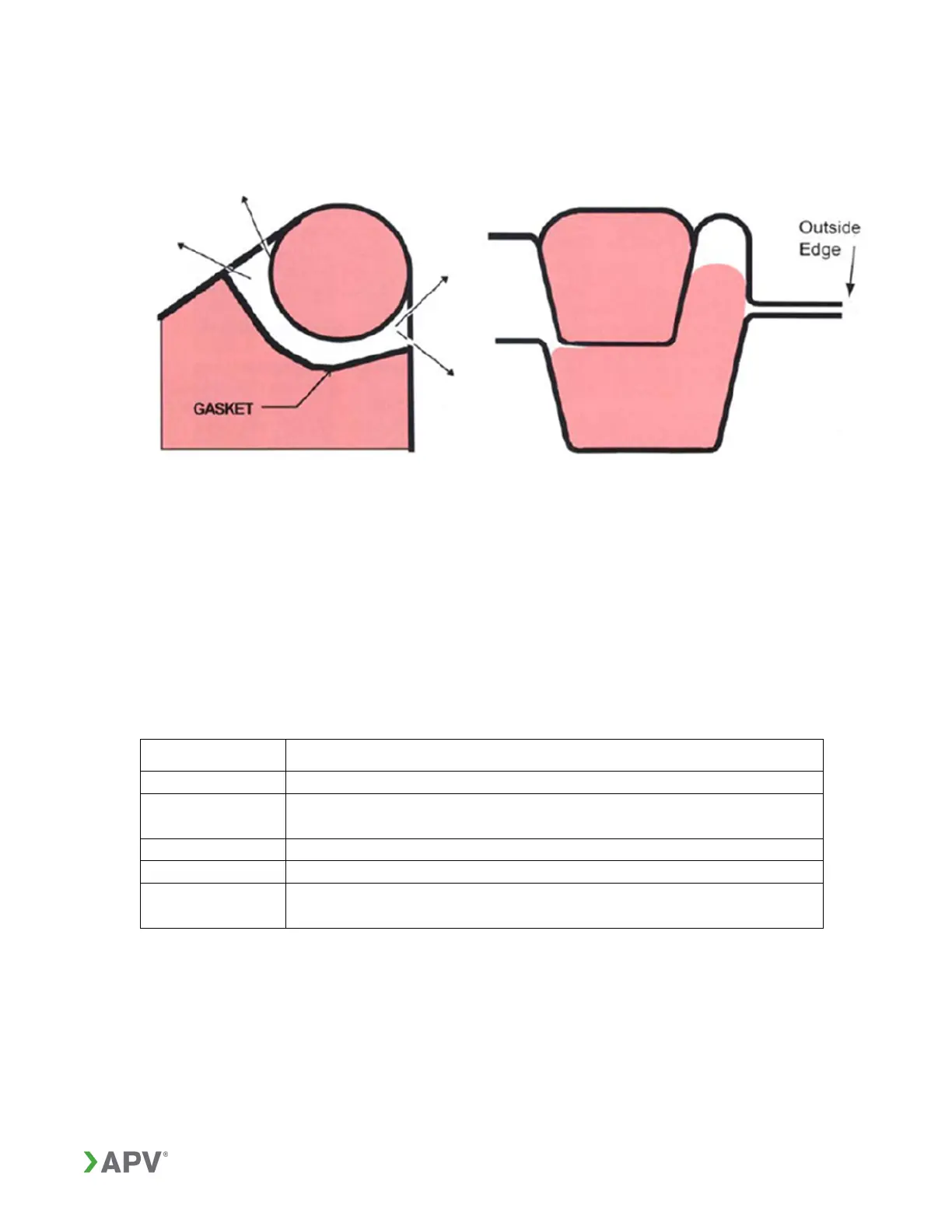
The upstanding lugs (Figure 14) maintain plate alignment in the plate during plate pack
closure and operation. The groove form provides 100% peripheral support of the
gasket, leaving none of the material exposed to the outside. In addition, the gasket
exposure to the process liquid is minimized by the full depth plate gasket groove.
Figure 13: Bridge / Port gasket Figure 14: Interlocking gasket
Gasket Materials
Various gasket materials (Table 1) are available as standard which provide chemical
and temperature resistance coupled with excellent sealing properties. Other gasket
materials are available for special applications. Gasket material selection must take into
consideration the chemical composition of the fluids involved as well as the operating
conditions.
MATERIALS APPLICATION
NBR General purpose material for aqueous and fatty duties
EPDM
High temperature general purpose material for chemical and
steam applications
Paraflor (FKM) Mineral oils, acids, steam, and hot water at high temperatures
Paradur (FKM) Organic solvents, chemicals, and sulfuric acid
Paraprene
(Neoprene)
Refrigeration duties with ammonia and freon
Table 1: Gasket materials and applications
Gasket Attachment
APV Plate Heat Exchanger gaskets are attached to individual plates by one of two
methods, glued or clip in. The glued in gaskets are attached by a thermoplastic
adhesive which is heat cured for maximum strength.



 To Next Page