Need help?
Do you have a question about the Stancor SV-200 and is the answer not in the manual?
Alerts users to potential fatal electrical shock hazards associated with improper grounding and handling.
Provides instructions for connecting the pump according to electrical codes and diagrams.
Offers safety precautions and guidelines for handling the power cable and explains the critical importance of proper grounding.
Presents visual schematics for single-phase and three-phase pump wiring configurations.
This document outlines the installation, operation, and maintenance procedures for Stancor™ SE, SV, SS, and SC Series Pumps. It serves as a comprehensive guide for ensuring safe and reliable performance of these submersible pumps.
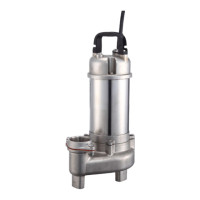
The Stancor™ SE, SV, SS, and SC Series Pumps are designed for various liquid transfer applications, primarily in submerged environments. These pumps are equipped with motors that may feature automatic resetting thermal protectors, indicating their capability to handle potential overloading conditions by temporarily shutting down to prevent damage. They are designed to operate effectively when fully immersed in water, with specific considerations for installation in basins or sumps. The pumps are intended for use with appropriate electrical connections, including grounding, to ensure safe operation and prevent electrical shock hazards. Depending on the model, they can be configured for single-phase or three-phase power supplies and may incorporate capacitors for starting. The design includes components such as impellers for fluid movement, mechanical seals to prevent leakage, and robust housings to withstand the operating environment. Some models are designed to handle solids, requiring specific check valve installation practices to ensure optimal performance and prevent clogging.
The Stancor™ pumps offer several usage features designed for convenience and efficiency. For automatic operation, the pumps must be connected to a remote float switch or liquid level controller, which automates starting and stopping based on liquid levels. Direct plugging into an electrical outlet will result in continuous operation, emphasizing the need for proper control mechanisms to prevent dry running. Installation requires placing the pump on a hard, level surface, avoiding direct contact with clay, earth, or gravel, to ensure stability and prevent damage. The discharge line should be as short as possible with minimal turns to reduce friction head loss, optimizing pump efficiency. For sewage and effluent applications, a separate sump vent is required, piped to an existing building vent or extended outside with its own standpipe.
A crucial aspect of usage is the prevention of dry operation, which can lead to motor overheating and premature wear. For non-automatic pumps, an automatic operating system and a safe continuous water level (C.W.L.) are recommended. Automatic pumps require careful installation of float switches to ensure they do not touch the tank walls or piping, which could interfere with their operation. The pumps are not designed for pumping flammable or explosive fluids such as gasoline, fuel oil, or kerosene, and using them for such purposes can result in severe personal injury or property damage. It is also important to avoid running the pump in a dry basin, as the resulting high surface temperature can cause skin burns and serious damage to the pump itself.
Maintenance of the Stancor™ pumps is critical for prolonging their service life and ensuring reliable operation. The manual outlines a schedule for daily, monthly, and annual inspections, as well as overhauls at 3-5 year intervals. Daily inspections involve checking current and ammeter fluctuations; significant fluctuations or a sudden drop in discharge volume may indicate clogging by foreign matter. Monthly inspections require measuring the insulation resistance, which should ideally be more than 1M ohm. A rapid fall in resistance, even if initially above 1M ohm, can signal an impending problem requiring repair.
Annual inspections focus on the mechanical seal and lubricating oil. The oil in the mechanical seal chamber should be replaced once a year to extend the seal's service life. Water mixed with the oil or cloudy oil textures are indicators of a defective mechanical seal that requires replacement. When replacing the oil, the pump should be laid on its side with the filler plug on top, and suitable turbine oil (ISO VG-32) should be used. Overhauls, recommended every 3-5 years, involve a thorough inspection and servicing of the pump to prevent future failures.
Disassembly and assembly procedures are detailed for repair and part replacement. When disassembling, it is advised to lay out parts neatly on cardboard or a wooden board, as "O" rings and gaskets cannot be reused and require replacement. Key steps include removing pump casing bolts, the shaft head bolt and impeller, draining lubricating oil, and carefully removing the mechanical seal to avoid scratching the motor shaft. During re-assembly, the impeller should be rotated by hand to check for smooth rotation, ensuring it does not touch the suction cover. Replacement parts, including "O" rings, packing, and shaft seals, should be ordered from an authorized dealer. Troubleshooting guidance is provided for common issues such as the pump not starting, stopping after a while, inadequate volume, overcurrent, and excessive operating noise, offering specific causes and remedies for each problem.
 General
| Brand | Stancor |
|---|---|
| Model | SV-200 |
| Category | Water Pump |
| Language | English |


 To Next Page