EasyManua.ls Logo

Summit Professional FFBF245SS - User Manual

Summit Professional FFBF245SS
18 pages
Print Icon
To Next Page IconTo Next Page
Loading...
FELIX STORCH, INC.
770 Garrison Avenue
Bronx, New York 10474
www.summitappliance.com
TWO-DOOR REFRIGERATOR
with BOTTOM FREEZER
Models FFBF240W FFBF245SS
FFBF280W FFBF285SS
User's Manual
IMPORTANT SAFEGUARDS
Thank you for purchasing our SUMMIT
product. This easy-to-use manual will
guide you in getting the best use of your
refrigerator.
Please record the model and serial
numbers, which are found on a label
inside the refrigerator.
Staple your receipt to this manual. You will need it to obtain warranty service.
_
____________________________
Model number
_
____________________________
Serial number
_
____________________________
Date of purchase
Question and Answer IconNeed help?

Do you have a question about the Summit Professional FFBF245SS and is the answer not in the manual?

Summary

Important Safeguards

Installation

Transporting Your Appliance

Instructions for safely moving the refrigerator before setup.

Setting Up the Appliance

Guidance on placing the refrigerator correctly in its operating environment.

Location

Recommendations for choosing the optimal placement for the appliance.

Electrical Requirements

Specifications and safety guidelines for connecting the appliance to power.

Reversing the Door Swing

Step-by-step instructions for changing the direction of the appliance doors.

Before Starting Up the Appliance

Pre-operation checks to ensure safety and proper functioning before plugging in.

Operation

Setting the Operating Temperature

How to adjust the thermostat to achieve desired cooling levels.

Refrigerator Compartment

Information and guidelines for storing food in the main refrigerator section.

Freezer Compartment

Information and guidelines for storing food in the freezer section.

Food Storage Information

Fresh Food

Proper methods for storing various types of fresh food items.

Frozen Food

Best practices for storing pre-frozen and home-frozen food items.

Examples of Proper Food Storage

Specific advice on storing common food items like dairy, produce, and meats.

Cleaning and Care

Interior and Exterior Surfaces

Procedures for cleaning the inside and outside of the refrigerator.

Cleaning the Accessories

Instructions for cleaning removable parts like shelves, drawers, and door bins.

Replacing the Interior Light Bulb

Guide on how to safely replace a burnt-out interior light bulb.

If There Is a Power Failure

Normal Operating Noises

Troubleshooting

Limited Warranty

Parts and Labor Warranty Information

Details on the standard warranty coverage for parts and labor.

General Parts and Labor Warranty

General terms for cabinet and parts warranty coverage.

Compressor Warranty

Specific warranty details for the sealed compressor unit.

Warranty Claims

Procedure for submitting and processing warranty claims.

Things Not Covered by This Warranty

Exclusions and limitations of the appliance warranty coverage.

Requesting Service

Summary

Important Safeguards

Installation

Transporting Your Appliance

Instructions for safely moving the refrigerator before setup.

Setting Up the Appliance

Guidance on placing the refrigerator correctly in its operating environment.

Location

Recommendations for choosing the optimal placement for the appliance.

Electrical Requirements

Specifications and safety guidelines for connecting the appliance to power.

Reversing the Door Swing

Step-by-step instructions for changing the direction of the appliance doors.

Before Starting Up the Appliance

Pre-operation checks to ensure safety and proper functioning before plugging in.

Operation

Setting the Operating Temperature

How to adjust the thermostat to achieve desired cooling levels.

Refrigerator Compartment

Information and guidelines for storing food in the main refrigerator section.

Freezer Compartment

Information and guidelines for storing food in the freezer section.

Food Storage Information

Fresh Food

Proper methods for storing various types of fresh food items.

Frozen Food

Best practices for storing pre-frozen and home-frozen food items.

Examples of Proper Food Storage

Specific advice on storing common food items like dairy, produce, and meats.

Cleaning and Care

Interior and Exterior Surfaces

Procedures for cleaning the inside and outside of the refrigerator.

Cleaning the Accessories

Instructions for cleaning removable parts like shelves, drawers, and door bins.

Replacing the Interior Light Bulb

Guide on how to safely replace a burnt-out interior light bulb.

If There Is a Power Failure

Normal Operating Noises

Troubleshooting

Limited Warranty

Parts and Labor Warranty Information

Details on the standard warranty coverage for parts and labor.

General Parts and Labor Warranty

General terms for cabinet and parts warranty coverage.

Compressor Warranty

Specific warranty details for the sealed compressor unit.

Warranty Claims

Procedure for submitting and processing warranty claims.

Things Not Covered by This Warranty

Exclusions and limitations of the appliance warranty coverage.

Requesting Service

Overview

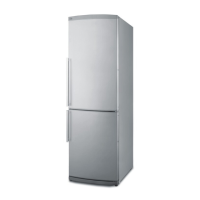
This document is a user manual for a SUMMIT two-door refrigerator with a bottom freezer, covering models FFBF240W, FFBF245SS, FFBF280W, and FFBF285SS. It provides essential information for safe operation, installation, maintenance, and troubleshooting of the appliance.

Function Description

The SUMMIT two-door refrigerator with a bottom freezer is designed for the storage and freezing of edible foodstuffs. It features separate compartments for fresh food (refrigerator) and frozen food (freezer), each with specific temperature control and storage recommendations. The refrigerator compartment automatically defrosts, with thawing water draining into a collection container at the rear. The freezer compartment also defrosts automatically and utilizes a fan to circulate cold air for efficient freezing. The appliance is intended for freestanding installation and is not designed for operation in enclosed spaces or in cold, unheated rooms.

Usage Features

  • Temperature Control: The operating temperature of the refrigerator is regulated by a thermostat knob, allowing users to select a desired cooling setting from 1 (warmest) to 5 (coldest), or Min (warmest) to Max (coldest). The average temperature inside the refrigerator should be around 41°F (5°C). The coldest region within the refrigerator is typically above the vegetable crisper.
  • Food Storage:
    • Refrigerator Compartment: This section is for short-term storage of fresh food and drinks. Raw meat should be wrapped or sealed and kept near the bottom. Hot foods and beverages should be cooled to room temperature before placement to prevent unnecessary energy use. Specific recommendations are provided for storing various fresh foods like chicken, ground beef, cold cuts, steaks/roasts, smoked/cured meats, fruits, and vegetables, emphasizing proper wrapping and container use to maintain shelf life and prevent odor transfer.
    • Freezer Compartment: This compartment is used for freezing fresh food and storing pre-frozen food. Users should adhere to the appliance's freezing capacity, as indicated on the rating label, to ensure rapid freezing and maintain food quality. Freshly placed food should be separated from already deep-frozen items. Carbonated beverages should not be frozen, as bottles may burst. Proper packaging, such as airtight containers, heavy-duty aluminum foil, plastic wrap, or self-sealing plastic bags, is crucial to prevent air and moisture flow, which can lead to odor transfer and drying out of food. It is recommended to mark the freezing date on packaging.
  • Door Operation: If the freezer door is difficult to open immediately after closing, this is due to a temporary pressure difference that will equalize within a few minutes, allowing normal opening.
  • Door Swing Reversal: The appliance offers the flexibility to reverse the door opening direction from left to right or vice versa, allowing users to adapt it to their kitchen layout. This involves a detailed procedure of disconnecting power, removing food and fittings, unscrewing and repositioning hinges, and reattaching doors and handles.
  • Adjustable Components: The refrigerator includes movable shelves, adjustable door shelves, and adjustable front feet for leveling the appliance. Some models may also feature a wine rack, egg tray, and sliding storage boxes.
  • Interior Light: The refrigerator compartment is equipped with an interior light for visibility.
  • Safety Features: The manual emphasizes several safety precautions, including proper grounding, avoiding damaged cords, unplugging before cleaning or repairs, and not using sharp instruments for defrosting. It also warns against child entrapment by recommending removal of doors and keeping shelves in place when disposing of an old refrigerator.

Maintenance Features

  • Cleaning:
    • Interior and Exterior Surfaces: The appliance should be cleaned with a solution of baking soda and warm water, using a sponge or soft cloth. Harsh chemicals, abrasives, ammonia, chlorine bleach, concentrated detergents, solvents, or metal scouring pads should be avoided as they can damage or discolor the refrigerator. The inside compartments should be wiped dry, and care should be taken to prevent water contact with electrical connections.
    • Accessories: Door shelves can be removed by lifting and pulling. Crispers or drawers can be removed by tilting upwards and pulling out.
    • Water-Collecting Pan: The pan at the back of the appliance, which collects defrost water, should be kept clean. It can be gently released from the compressor, lifted, cleaned, and wiped dry before reassembly.
    • Door Gaskets: Gaskets should be cleaned every three months with a baking soda solution to ensure they remain pliable and maintain a proper seal. Applying petroleum jelly lightly on the hinge side of the gaskets can help preserve their pliability.
    • Condenser Coils: The condenser coils at the back of the appliance should be cleaned once a year using a brush or vacuum cleaner to prevent dust build-up, which can lead to increased energy consumption.
  • Interior Light Bulb Replacement: If the interior light fails, the manual provides instructions for checking and replacing the 15-watt (max) appliance bulb. This involves switching off the appliance, unplugging it, removing the light bulb cover, checking the existing bulb, and replacing it if necessary.
  • Power Failure Management: In the event of a power failure, users are advised to avoid opening the doors. The manual notes that frozen food in the freezer compartment will remain unaffected for a period specified as "Conservation Time from Failure (hours)" on the rating label. If the power failure exceeds this time, food should be checked and either consumed immediately or cooked and then re-frozen.
  • Troubleshooting: The manual includes a troubleshooting section to help users resolve common issues such as the refrigerator not operating, food temperature being too warm or too cold, frequent running, moisture build-up, odors, or the light not working. It also addresses issues with the door not shutting properly.
  • Noise Management: The manual explains normal operating noises, such as gurgling, hissing, cracking, buzzing, whirring, pulsating, or humming, which are caused by the cooling system and compressor. It also provides tips to avoid disturbing vibrations and unnecessary noises, such as ensuring the refrigerator is level, not in contact with walls or furniture, and that items inside are not rattling against each other.

Summit Professional FFBF245SS Specifications

General IconGeneral
ModelFFBF245SS
CategoryRefrigerator
FinishStainless Steel
Shelves2 Glass Shelves
ReversibleYes
Adjustable ShelvesYes
Interior LightYes
Level LegsYes
Door FinishStainless Steel
Cabinet FinishStainless Steel
ColorStainless Steel
Energy Star CertifiedNo
Temperature ControlMechanical
US Electrical SafetyUL
SanitationNSF
Voltage/Frequency115 V / 60 Hz
Door SwingRight
CrisperYes
Thermostat TypeMechanical
Door HingeRight
Voltage115 V

Related product manuals