18
X11SSM(-F)/X11SSL(-F) User Manual
1.2 Processor and Chipset Overview
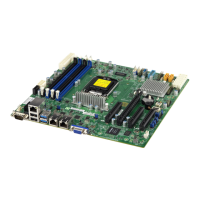
Built upon the functionality and capability of the Intel E3-1200 v5 series processors (Socket
LGA 1151) and the Intel C236/C232 PCH, the X11SSM(-F)/X11SSL(-F) motherboard offers
maximum I/O expandability, energy efciency, and data reliability in a 14-nm process
architecture, and is optimized for embedded storage solutions, networking applications, or
cloud-computing platforms.
The Intel E3-1200 V5 and PCH C236/C232 platform supports the following features:
• ACPI Power Management Logic Support, Rev. 4.0a
• Intel® Turbo Boost Technology 2.0 Power Monitoring/Power Control, Turbo Time Parameter
(TAU), and Platform Power Control
• Congurable TDP (cTDP) and Lower-Power Mode
• Adaptive Thermal Management/Monitoring
• PCI-E 3.0, SATA 3.0 w/transfer rates of up to 6 Gb/s, xHCI USB w/SuperSpeed 3.0
• System Management Bus (SMBus) Specication, Version 2.0
• Integrated Sensor Hub (ISH)
• Intel Trusted Execution Technology (Intel TXT)
• Intel Rapid Storage Technology
• Intel Virtualization Technology for Directed I/O (Intel VT-d)
Note: The Intel C236 PCH is supported by the X11SSM(-F) series. The C232 PCH is
supported by the X11SSL(-F) series.
1.3 Special Features
This section describes the health monitoring features of the X11SSM(-F)/X11SSL(-F)
motherboard. The motherboard has an onboard System Hardware Monitor chip that supports
system health monitoring.
Recovery from AC Power Loss
The Basic I/O System (BIOS) provides a setting that determines how the system will respond
when AC power is lost and then restored to the system. You can choose for the system to
remain powered off (in which case you must press the power switch to turn it back on), or
for it to automatically return to the power-on state. See the Advanced BIOS Setup section
for this setting. The default setting is Last State.


 To Next Page