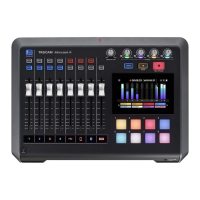
The TASCAM Mixcast 4 is a versatile audio mixer designed for podcasting, live streaming, and other audio production tasks, offering a range of features to enhance sound quality and streamline workflow. This device integrates various functionalities, from voice effects and sound pad management to advanced monitoring and input adjustments, all accessible through an intuitive interface.
Function Description
The core function of the Mixcast 4 is to mix multiple audio inputs, including microphones, USB devices, smartphones, and Bluetooth sources, into a cohesive output. It provides a comprehensive suite of tools for audio processing, such as voice effectors, noise suppression, and ducking, to ensure professional-grade sound. The device also features sound pads for triggering pre-recorded audio, making it ideal for adding jingles, sound effects, or music during live broadcasts or recordings.
A significant enhancement is the introduction of a Common Mode for the voice effector. This mode allows a single set of effect settings to be shared across multiple microphone channels, simplifying the setup process for group discussions or multi-person podcasts. Alternatively, the Channel Mode allows individual effects to be assigned and managed for each microphone, offering granular control over each speaker's sound. The device supports various voice effects, including reverb and voice changers, with adjustable parameters like pitch for creative sound manipulation.
The Mixcast 4 also incorporates a ducking effect, which automatically lowers the volume of background audio when a microphone is active. This feature has been expanded to include pad playback sounds, ensuring that spoken words are always clear and prominent, even when sound effects or music are playing. This automatic volume adjustment helps maintain a professional audio balance without manual intervention.
For monitoring and level management, the device now includes decibel meters, providing visual feedback on audio levels for all channels. This helps users prevent clipping and ensure optimal recording and streaming quality. Gain adjustments have been added for USB, smartphone, and Bluetooth inputs, allowing users to fine-tune the volume of external sources to match the overall mix.
The sound pads are a central feature, enabling users to trigger various audio clips. The device allows for individual control over effects for each pad, and the ability to turn effects on or off by tapping channel icons offers quick adjustments during live operation. The Mixcast 4 also supports the assignment of effects to sound pads, providing flexibility in how audio elements are introduced into the mix.
Usage Features
The Mixcast 4 is designed for ease of use, with many functions accessible directly from the Home Screen or through dedicated settings menus. The graphical user interface (GUI) provides clear visual indicators and controls, making it straightforward to navigate and adjust settings.
Setting up voice effects is intuitive. Users can select between Channel Mode for individual mic effects or Common Mode for shared effects. In Common Mode, shared effect settings are applied to all mics, and multiple mic effects can be enabled simultaneously. This is particularly useful for consistent sound across multiple speakers. The reverb settings, for instance, can be adjusted for size (Small, Medium, Large) and type (Manual), along with dry/wet mix controls to blend the effect with the original signal. The voice changer also offers pitch adjustments, allowing for creative vocal transformations.
Managing sound pads is equally user-friendly. Tapping a channel icon on the Home Screen can turn effects on or off, depending on the effect mode. This provides quick access to activate or deactivate effects without diving deep into menus. The ducking effect, when enabled, automatically manages background audio levels, reducing the need for constant manual adjustments during a broadcast. The "with PAD" switch for ducking ensures that pad playback sounds are also ducked, maintaining vocal clarity.
Input level adjustments are crucial for optimal audio quality. The device provides a Level Screen where users can monitor and adjust the volume of connected devices, such as USB inputs. The goal is to keep the peak levels within the orange range on the level meter, preventing distortion. If an external device's volume cannot be adjusted sufficiently, the Mixcast 4's slider offers an additional layer of control.
The Feedback Prevention function helps eliminate unwanted audio feedback, especially in live settings. When activated, it mutes output from the MONITOR OUT and LINE OUT jacks if a fader for an unmuted mic is raised. A mute icon on the Home Screen indicates when this function is actively muting output.
For quick navigation, the Mixcast 4 includes shortcut functions. Tapping channel numbers or input icons on the Home Screen directly jumps to their respective settings screens, saving time during live production. This allows for rapid adjustments to mic settings, input levels, or effect parameters without interrupting the flow of a recording or broadcast.
The decibel meters, when enabled, provide real-time visual feedback on audio levels, helping users maintain optimal gain staging. These meters can be turned on or off from the Advanced Settings Screen or by tapping the meter area on the Home Screen, offering flexibility in monitoring preferences.
Maintenance Features
While the manual does not explicitly detail "maintenance features" in the traditional sense (e.g., cleaning instructions), it does outline operational aspects that contribute to the device's reliable performance and user experience.
The firmware update process is implied through the mention of "since firmware version 1.20," indicating that the device is designed to receive updates that introduce new features and improvements. Keeping the firmware updated is a key aspect of maintaining optimal functionality and accessing the latest enhancements.
The ability to save and recall settings, though not explicitly detailed in this excerpt, is a common feature in professional audio mixers. This allows users to store preferred configurations for different projects or scenarios, streamlining setup and ensuring consistent performance.
The device's robust design, as suggested by its professional application, implies durability for sustained use in various environments, from home studios to live event settings. The clear and concise interface, with visual indicators and logical menu structures, also contributes to ease of troubleshooting and operation, minimizing potential user errors.
The "NOTE" sections throughout the manual provide important operational caveats, such as "The effects mode cannot be changed while recording" or "When recording, sound pad settings screens cannot be opened." These notes serve as guidelines to prevent operational conflicts and ensure stable performance during critical tasks like recording. Adhering to these guidelines helps maintain the integrity of recordings and the smooth operation of the device.
In summary, the TASCAM Mixcast 4 is a powerful and user-friendly audio mixer that combines advanced audio processing with intuitive controls, making it an excellent tool for content creators seeking professional sound quality and efficient workflow. Its continuous evolution through firmware updates ensures it remains a versatile and capable device for a wide range of audio production needs.


 To Next Page


 General