EasyManua.ls Logo

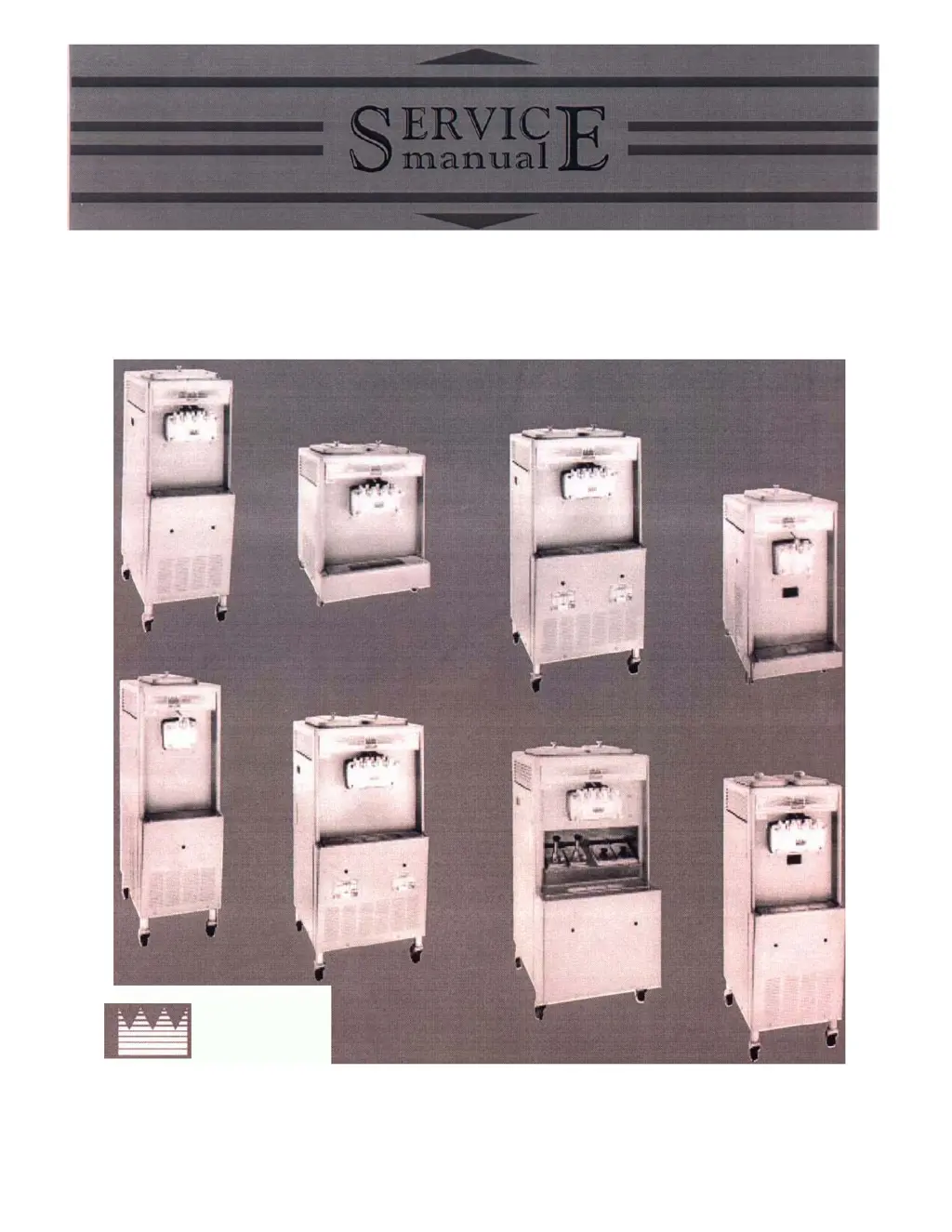
Taylor 754 - Service Manual

Taylor 754
126 pages
Print Icon
To Next Page IconTo Next Page
Loading...
Models 336, 338, 339, 750, (8)751, (8)754, 774 & 794
TAYLOR COMPANY
a Specialty Equipment company
Rockton, Illinois 61072

Table of Contents

Other manuals for Taylor 754

Questions and Answers

  • G
    Geoffrey McbrideAug 22, 2025
    How to stop excessive mix leakage from the rear of my Taylor Ice Cream Maker?
    • O
      olivia85Aug 22, 2025
      If you're experiencing excessive mix leakage from the rear of your Taylor Ice Cream Maker into the short drip pans, check the o-rings on the pump drive shaft for wear or if they're missing; install or replace them as needed. Ensure adequate lubrication of the drive shaft. Also, verify the refrigerant charge and check for a shorted freezing cylinder if the drive shaft and beater assembly work forward. Replace a worn rear shell bearing, and re-align the gear box if it's out of alignment.
  • K
    Kristine AustinAug 25, 2025
    Why is product not feeding into the freezing cylinder of my Taylor Ice Cream Maker?
    • K
      Keith DennisAug 25, 2025
      If product isn't feeding into the freezing cylinder, the mix inlet hole might be frozen; adjust the hopper temperature. Also, ensure correct usage of the mix feed tube, especially the air orifice for gravity-style freezers.
  • F
    fwigginsAug 26, 2025
    How to resolve excessive mix leakage into the long drip pan of my Taylor Ice Cream Maker?
    • A
      Angel NicholsAug 26, 2025
      If there's excessive mix leakage into the long drip pan, the seal on the drive shaft might be improperly lubricated or worn; lubricate it properly or replace the seal. Also, ensure the seal isn't installed inside-out on the drive shaft; install it correctly if it is.
  • T
    Thomas QuinnAug 27, 2025
    How to fix excessive mix leakage from the door spout of my Taylor Ice Cream Maker?
    • R
      Richard OrtizAug 28, 2025
      If you're experiencing excessive mix leakage from the bottom of the door spout, the bottom o-ring on the draw valve may be improperly lubricated or worn. Lubricate it properly or replace the o-ring.
  • I
    Isabella ElliottAug 29, 2025
    Why my Taylor Ice Cream Maker will not run in AUTO mode?
    • S
      Sandra RiceAug 30, 2025
      If your Taylor Ice Cream Maker doesn't run in AUTO mode, check these potential causes: ensure the unit is plugged into a working wall receptacle. If the beater motor is out on reset, allow it to cool, switch the power off, press the reset button, switch the power on, and press the WASH keypad, ensuring the drive shaft turns clockwise; then, press AUTO. Check the circuit breaker or fuse and replace if necessary. If the MIX OUT light is on, add mix to the hopper and press the AUTO keypad. For water-cooled units, verify the water supply is on.
  • M
    martin80Aug 31, 2025
    How to fix too soft ice cream from Taylor Ice Cream Maker?
    • B
      Benjamin KochAug 31, 2025
      If the ice cream from your Taylor Ice Cream Maker is too soft, consider these factors. Adjust the draw rate to 5 - 7-1/2 oz (142 g. - 213 g) every 10 seconds. Be mindful that the continuous draw rate is about 15 cones. Ensure at least 3" (7.6 cm) of clearance around the unit (6" (15.2 cm) for models 338 and 750). Regularly clean the condenser or air filters on air-cooled units. For water-cooled units, check the water supply and lines for leaks or kinks. Replace bad scraper blades and adjust the viscosity control. Also, ensure correct usage of the mix feed tube, especially the air orifice for gravity-style freezers.
  • S
    Shawn WellsSep 2, 2025
    What to do if the ice cream from my Taylor Ice Cream Maker is too thick?
    • B
      bellsteveSep 2, 2025
      If the product from your Taylor Ice Cream Maker is too thick, it could be due to insufficient mix in the freezing cylinder; check the air/mix pump assembly and ensure the mix inlet tube is fully submerged in mix. Improper priming can also cause this, so drain the freezing cylinder and re-prime the unit. Make sure the air/mix pump is correctly assembled by carefully following assembly procedures. Finally, the viscosity control might be set too cold, so adjust it accordingly.
  • M
    Maria HolmesSep 4, 2025
    Why is the ice cream "popping" when dispensed from my Taylor Ice Cream Maker?
    • R
      Robert RiveraSep 4, 2025
      If your Taylor Ice Cream Maker is dispensing ice cream that "pops", it may be because the draw rate is too fast; it should be set at 5 - 7-1/2 oz of product per 10 seconds. Also, the pump might be assembled incorrectly; assemble and lubricate according to the instructions in the Operator's manual.
  • D
    Debbie TranSep 6, 2025
    Why is the mix in the hopper of my Taylor Ice Cream Maker too warm?
    • D
      Deborah NealSep 6, 2025
      If the mix in the hopper of your Taylor Ice Cream Maker is too warm, make sure the hopper cover is correctly in position after cleaning it. Also, the hopper temperature might be out of adjustment; in that case, adjust the temperature control.
  • K
    Kyle RichardsSep 8, 2025
    What causes the mix in the hopper of my Taylor Ice Cream Maker to be too cold?
    • H
      hknappSep 8, 2025
      If the mix in the hopper is too cold, adjust the temperature control.

Summary

Safety

Refrigerant

Compressor Warranty Disclaimer

Model 336 Specifications

Freezing Cylinder

Details freezing cylinder capacity and volume.

Mix Hopper

Specifies mix hopper capacity for the model.

Beater Motor

States the horsepower of the beater motor.

Refrigeration Unit

Lists compressor BTU/hr and refrigerant type.

Electrical

Outlines electrical requirements, fuse size, and ampacity.

Air Cooled

Provides clearance requirements for air-cooled units.

Water Cooled

Details water inlet/drain connections for water-cooled units.

Dimensions

Lists width, depth, height, and clearances.

Approximate Weights

Provides net and crated weight specifications.

Model 338 Specifications

Freezing Cylinder

Details freezing cylinder capacity and volume.

Mix Hopper

Specifies mix hopper capacity for the model.

Beater Motor

States the horsepower of the beater motor.

Refrigeration Unit

Lists compressor BTU/hr and refrigerant type.

Electrical

Outlines electrical requirements, fuse size, and ampacity.

Air Cooled

Provides clearance requirements for air-cooled units.

Water Cooled

Details water inlet/drain connections for water-cooled units.

Dimensions

Lists width, depth, height, and clearances.

Approximate Weights

Provides net and crated weight specifications.

Model 339 Specifications

Freezing Cylinder

Details freezing cylinder capacity and volume.

Mix Hopper

Specifies mix hopper capacity for the model.

Beater Motor

States the horsepower of the beater motor.

Refrigeration Unit

Lists compressor BTU/hr and refrigerant type.

Electrical

Outlines electrical requirements, fuse size, and ampacity.

Air Cooled

Provides clearance requirements for air-cooled units.

Water Cooled

Details water inlet/drain connections for water-cooled units.

Dimensions

Lists width, depth, height, and clearances.

Approximate Weights

Provides net and crated weight specifications.

Model 750 Specifications

Freezing Cylinder

Details freezing cylinder capacity and volume.

Mix Hopper

Specifies mix hopper capacity for the model.

Beater Motor

States the horsepower of the beater motor.

Refrigeration Unit

Lists compressor BTU/hr and refrigerant type.

Electrical

Outlines electrical requirements, fuse size, and ampacity.

Air Cooled

Provides clearance requirements for air-cooled units.

Water Cooled

Details water inlet/drain connections for water-cooled units.

Dimensions

Lists width, depth, height, and clearances.

Approximate Weights

Provides net and crated weight specifications.

Models 751;8751 Specifications

Freezing Cylinder

Details freezing cylinder capacity and volume.

Mix Hopper

Specifies mix hopper capacity for the model.

Beater Motor

States the horsepower of the beater motor.

Refrigeration Unit

Lists compressor BTU/hr and refrigerant type.

Electrical

Outlines electrical requirements, fuse size, and ampacity.

Air Cooled

Provides clearance requirements for air-cooled units.

Water Cooled

Details water inlet/drain connections for water-cooled units.

Dimensions

Lists width, depth, height, and clearances.

Approximate Weights

Provides net and crated weight specifications.

Models 754;8754 Specifications

Freezing Cylinder

Details freezing cylinder capacity and volume.

Mix Hopper

Specifies mix hopper capacity for the model.

Beater Motor

States the horsepower of the beater motor.

Refrigeration Unit

Lists compressor BTU/hr and refrigerant type.

Electrical

Outlines electrical requirements, fuse size, and ampacity.

Air Cooled

Provides clearance requirements for air-cooled units.

Water Cooled

Details water inlet/drain connections for water-cooled units.

Dimensions

Lists width, depth, height, and clearances.

Approximate Weights

Provides net and crated weight specifications.

Model 774 Specifications

Freezing Cylinder

Details freezing cylinder capacity and volume.

Mix Hopper

Specifies mix hopper capacity for the model.

Beater Motor

States the horsepower of the beater motor.

Refrigeration Unit

Lists compressor BTU/hr and refrigerant type.

Electrical

Outlines electrical requirements, fuse size, and ampacity.

Air Cooled

Provides clearance requirements for air-cooled units.

Water Cooled

Details water inlet/drain connections for water-cooled units.

Dimensions

Lists width, depth, height, and clearances.

Approximate Weights

Provides net and crated weight specifications.

Model 794 Specifications

Freezing Cylinder

Details freezing cylinder capacity and volume.

Mix Hopper

Specifies mix hopper capacity for the model.

Beater Motor

States the horsepower of the beater motor.

Refrigeration Unit

Lists compressor BTU/hr and refrigerant type.

Electrical

Outlines electrical requirements, fuse size, and ampacity.

Air Cooled

Provides clearance requirements for air-cooled units.

Water Cooled

Details water inlet/drain connections for water-cooled units.

Dimensions

Lists width, depth, height, and clearances.

Approximate Weights

Provides net and crated weight specifications.

Installation Instructions

Air Cooled Units

Specifies clearance requirements for air-cooled installations.

Water Cooled Units

Details water supply, flushing, and drain line requirements.

Electrical Connections

Emphasizes dedicated power, data labels, and NEC compliance.

Beater Rotation

Explains correct beater rotation direction and how to adjust it.

Running Specifications

Pressures;Temperatures

Lists recommended settings for components and refrigerants.

Expansion Valve Adjustment

Guides on adjusting the expansion valve for proper pressure.

Low Side (Suction)

Defines suction pressure relative to expansion valve setting.

High Side (Discharge)

Notes high side pressure variation with ambient temperature.

Water Valve

States the target head pressure for water-cooled units.

Water Valve Adjustment

Explains how to adjust the water valve for pressure control.

Generation II Control Logic Board

Function

Describes the board's role in interpreting operation modes and sending commands.

Logic Board (Part Numbers)

Lists part numbers for Generation II logic boards.

Power Board (Part Numbers)

Lists part numbers for power boards.

Thermistor Probes

Details the types of thermistor probes and their function.

Approximate Probe Resistance Readings

Provides resistance values for thermistors at different temperatures.

Viscosity Function

Viscosity Control Range Selections

Lists available amperage ranges for viscosity control.

Setting Viscosity Adjustment

Step-by-step guide for setting viscosity using an amp probe.

Mix Adjustment

Defines ideal mix temperature and cut-out/cut-in points.

Setting the Mix Cabinet Temperature

Procedure for setting the mix cabinet temperature.

Setting the Mix Hopper Temperature

Standby Adjustment

Explains standby function for maintaining mix temp during idle periods.

Setting Standby Temperatures

Procedure for setting desired standby temperatures.

Thermistor Curve

Service Tips for Generation II Boards

Initial Service Tips

Basic checks for connections, pins, cables, and probe resistance.

Self-Test Program

Describes the self-test feature for diagnosing control board issues.

Self-Test - Part II

Control Overview

Pump Operation

Pump Key

Explains the function of the PUMP key.

Soft Serve Mix Pumps

Describes mix pump operation during AUTO mode and MIX OUT conditions.

Mix Pump Draw Timer

Details the mix pump's operation after each product draw.

General Troubleshooting Guide

No Product Dispensed

Troubleshooting steps for when no product is dispensed.

Product Too Thick

Troubleshooting steps for when the product consistency is too thick.

Product Consistency Troubleshooting

Product Too Soft

Troubleshooting steps for when the product consistency is too soft.

Mix in Hopper Too Warm

Troubleshooting steps for warm mix in the hopper.

Mix in Hopper Too Cold

Troubleshooting steps for cold mix in the hopper.

Product Collecting on Door

Troubleshooting for product buildup on the freezer door.

Mix Leakage from Door Spout

Troubleshooting for mix leakage from the bottom of the door spout.

Mix Leakage into Drip Pan

Troubleshooting for mix leakage into the long drip pan.

Mix Leakage from Rear

Troubleshooting for mix leakage from the rear into drip pans.

Drive Shaft Stuck

Troubleshooting for a stuck drive shaft in the coupling.

Component Failure Troubleshooting

Freezing Cylinder Walls Scored

Troubleshooting for scored freezing cylinder walls.

Pump Not Operating (PUMP Mode)

Troubleshooting for the pump not operating in PUMP mode.

Unit Not Running (AUTO Mode)

Troubleshooting steps when the unit does not run in AUTO mode.

Product Not Feeding

Troubleshooting for product not feeding into the freezing cylinder.

Product Popping

Troubleshooting for product "popping" when drawn.

MIX LOW;OUT Probes Not Functioning

Troubleshooting for malfunctioning MIX LOW/OUT probes.

Troubleshooting Pump Style Freezers

Pump Not Operating (PUMP Key)

Troubleshooting pump not operating when PUMP key is pressed.

Pump Not Operating (AUTO Mode)

Troubleshooting pump not operating when draw valve is open in AUTO mode.

Piston Travels, No Product

Troubleshooting for piston movement without product pumping.

Excessive Pump Cylinder Wear

Troubleshooting for excessive wear in the pump cylinder.

Pitting in Pump Cylinder

Troubleshooting for pitting inside the pump cylinder.

Motor Reducer Ball Crank Broken

Troubleshooting for a broken ball crank in the motor reducer.

High Pressure in Freezing Cylinder

Troubleshooting for excessive pressure in the freezing cylinder.

Low Pressure in Freezing Cylinder

Troubleshooting for insufficient pressure in the freezing cylinder.

Electrical Troubleshooting

Auto Mode Operation

Traces L-1 power flow for Auto mode operations.

Wash Mode Operation

Traces L-1 power flow for Wash mode operations.

Pump Mode Operation

Traces L-1 power flow for Pump mode operations.

Warranty Explanation

Class 103 Parts

Warranty details for Class 103 parts.

Class 212 Parts

Warranty details for Class 212 parts.

Class 512 Parts

Warranty details for Class 512 parts.

Class 000 Parts

Warranty details for Class 000 parts (Wear Items).

Model 336 Exploded View

Model 336 Panel Identification

Model 338 Exploded View

Model 338 Panel Identification

Model 339 Exploded View

Model 339 Panel Identification

Model 750 Exploded View

Model 750 Panel Identification

Model 751 Exploded View

Model 751 Panel Identification

Model 754 Exploded View

Model 754 Panel Identification

Model 774 Exploded View

Model 774 Panel Identification

Model 794 Exploded View

Model 794 Panel Identification

Control A. - X38324-27 A (Model 336)

Control A. - X42865-27 (Model 338)

Control A. - X32963-27 A (Models 339 & 754)

Control A. - X52614-27 (Model 750)

Control A. - X47194-27 A (Models 751;8751)

Control A. - X42603-27 A (Model 774)

Control A. - X48236-27 A (Model 794)

Control A. - X48237-27 (Model 794)

Box A.-Cap & Relay - X48535-27

Box A.-Cap & Relay - X51593-27 (Model 338)

Box A.-Cap & Relay - X52665-27 (Model 339)

Box A.-Cap & Relay - X50317-27 (Model 751)

Box A.-Cap & Relay - X50297-27 (Model 754)

Box A.-Cap & Relay - X50373-27 (Model 774)

Blower A. X47833-27

Switch A.-Draw X43417-SER (Model 336)

Switch A.-Draw X38547 (Models 338, 339, 754, 774, 794)

Switch A.-Draw X33322-SP (Models 750, 751)

Air;Mix Pump-Soft Serve X45316-B

Models 336;338;339 Three-Spout Door A.

Models 750;751 One-Spout Beater Door A.

Models 754;774;794 Three-Spout Beater Door A.

Pump A.-Syrup 036623 (774)

Accessories

Taylor 754 Specifications

General IconGeneral
BrandTaylor
Model754
CategoryFreezer
LanguageEnglish

Related product manuals