TX / TXH / TXB 180S - 400L (Rev. 4/23/07)TX / TXH / TXB 180S - 400L (Rev. 4/23/07)
22-1222-12
Illustration 22-17. Illustration 22-17. Detecting Detecting Hydraulic Hydraulic LeaksLeaks
Do NotDo Notuse hands to checkuse hands to check
for hydrfor hydraulic leaks. aulic leaks. Because the Because the hydraulichydraulic
system is under high pressure, leaks couldsystem is under high pressure, leaks could
develop that can not be seen, but will pene-develop that can not be seen, but will pene-
trate the skin and possibly cause other serioustrate the skin and possibly cause other serious
injuries. injuries. When checking When checking for hydraufor hydraulic leaks,lic leaks,
wear heavy gloves and safety goggles, andwear heavy gloves and safety goggles, and
use a piece of cardboard or wood to find leaksuse a piece of cardboard or wood to find leaks
(See Illustration 22-17).(See Illustration 22-17).
Manual Lowering Valve OperationManual Lowering Valve Operation
The manual lowering valve should only be openedThe manual lowering valve should only be opened
when normal lowering methods cannot be per-when normal lowering methods cannot be per-
formed.formed.
Death or serious injury couldDeath or serious injury could
result from result from being crushed. being crushed. Do not allDo not allowow
anyone near the lift truck - certainly notanyone near the lift truck - certainly not
walking, standing under, or beside the load orwalking, standing under, or beside the load or
lifting mechanism.lifting mechanism.
Death or serious injury couldDeath or serious injury could
result from result from a runaway truck. a runaway truck. Apply the parApply the parkingking
brake, block the wheels in both directions tobrake, block the wheels in both directions to
prevent movement of the truck and Lock Out &prevent movement of the truck and Lock Out &
Tag Out the truck.Tag Out the truck.
Death or serious injury couldDeath or serious injury could
result from result from being crushed. being crushed. Do not Do not operate theoperate the
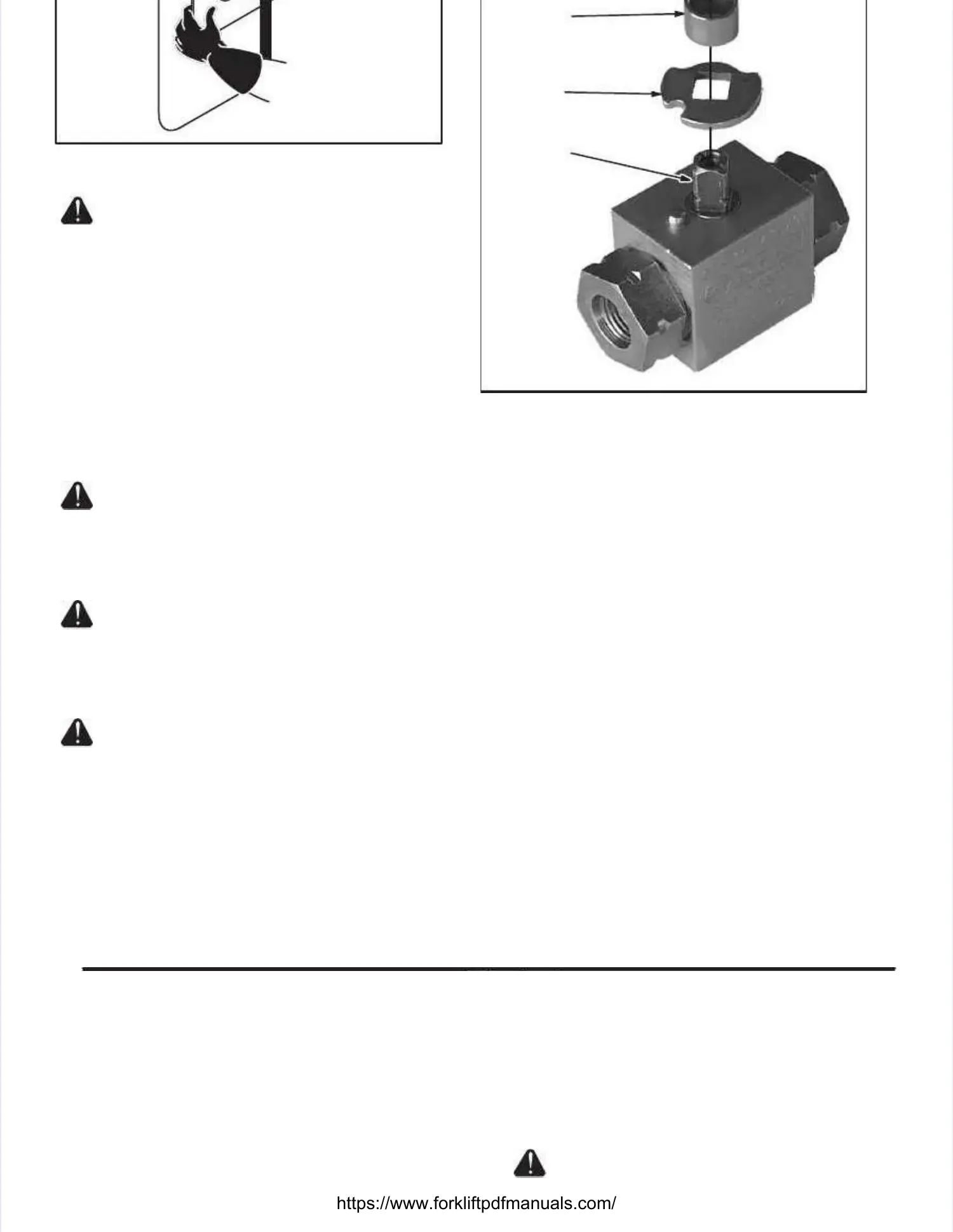
COLLARCOLLAR
LOCKLOCK
PLATEPLATE
VALVEVALVE
STEMSTEM
Illustration 22-18. Illustration 22-18. Manual Lowering Manual Lowering ValvValvee
Opening The Manual Lowering Valve (IllustrationOpening The Manual Lowering Valve (Illustration
22-18). 22-18). Perform the Perform the following procedures following procedures to opento open
the manual lowering valve:the manual lowering valve:
1.1. RemRemove tove the she stem tem scrscrew aew and cond collallarr..
2.2. ReRemomove ve ththe le locock pk plalatete..
3.3. MakMake sure sure no oe no one is ne is undunder / ner / near tear the mahe mast,st,
carriage, or load lifting mechanism.carriage, or load lifting mechanism.
4.4. TuTurn thrn the vae valve lve stem stem countcounterclocerclockwise kwise 1/4 1/4 turnturn
until the notches on top of the valve stem alignuntil the notches on top of the valve stem align
with the hydraulic fittings of the valve blockwith the hydraulic fittings of the valve block
(note position of valve stem in Illustration(note position of valve stem in Illustration
22-19)22-19)..
NOTE:NOTE: The only way The only way to stop the lowto stop the lowering of theering of the
load is by load is by closing the manual lowering closing the manual lowering valve.valve.
5.5. AftAfter ther the load he load has beeas been fuln fully loly lowerwered, ced, closlosee
the manual lowering valve (refer to Closingthe manual lowering valve (refer to Closing
The Manual Lowering Valve).The Manual Lowering Valve).
Closing The Manual Lowering Valve (IllustrationClosing The Manual Lowering Valve (Illustration
22-18)22-18).. The manual The manual lowering valve lowering valve must bemust be
closed and locked before operating the lift truck.closed and locked before operating the lift truck.
Perform the following procedures to close thePerform the following procedures to close the
manual lowering valve:manual lowering valve:
1.1. TuTurn the rn the valve valve stem stem clockclockwise wise 1/4 t1/4 turn unurn until ttil thehe
notches, located on top of the valve stem,notches, located on top of the valve stem,
point toward the sides of the valve block (notepoint toward the sides of the valve block (note
when setting pressures, allow any portion ofwhen setting pressures, allow any portion of
your body to be positioned in front of theyour body to be positioned in front of the
relief. relief. It is possiIt is possible that the ble that the relief could relief could bebe
blown loose with great force which couldblown loose with great force which could
cause severe bodily injury or death.cause severe bodily injury or death.
Fluid passing over a reliefFluid passing over a relief
generates heat; should a relief be blown loose,generates heat; should a relief be blown loose,
hot, pressurized fluid will be forced hot, pressurized fluid will be forced from thefrom the
open port.open port. This couldThis could cause severe bodicause severe bodilyly


 To Next Page
 Loading...