Section 27
Section 27
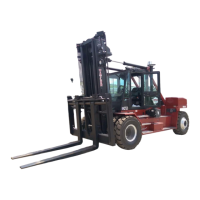
ULTRA-VU Mast AssemblyULTRA-VU Mast Assembly
Introduction.Introduction. The mast The mast assembly, assembly, in conjunctionin conjunction
with the carriage with the carriage and forks, is responsible for liftingand forks, is responsible for lifting
and lowering loads.and lowering loads.
Major Components.Major Components. The mast consists of theThe mast consists of the
inner mast, outer mast, two hydraulic lift cylinders,inner mast, outer mast, two hydraulic lift cylinders,
main rollers, slide bearing blocks, chain rollers,main rollers, slide bearing blocks, chain rollers,
and two multiple leaf lift chains.and two multiple leaf lift chains.
Structural Inspection, Reporting, and RepairStructural Inspection, Reporting, and Repair
ProcedureProcedure(Refer to(Refer to SIRRSIRRin thein the AppendicesAppendices))..
Follow the OSHA rules, 29 CFR, 1910.178 (Q)(1),Follow the OSHA rules, 29 CFR, 1910.178 (Q)(1),
(5), & (7) which require inspecting industrial trucks(5), & (7) which require inspecting industrial trucks
daily before being placed in service, removingdaily before being placed in service, removing
trucks from service if cracks are found, and mak-trucks from service if cracks are found, and mak-
ing repairs only if authorized by the manufacturer.ing repairs only if authorized by the manufacturer.
If trucks are used on a round-the-clock basis, theyIf trucks are used on a round-the-clock basis, they
shall be examined shall be examined after each safter each shift. hift. OSHA 29 CFROSHA 29 CFR
1910.178 (p)(1) requires that trucks in need of1910.178 (p)(1) requires that trucks in need of
repair be taken repair be taken out of servicout of service. e. Refer to SafetyRefer to Safety
Check 2nd Edition for OSHA rules.Check 2nd Edition for OSHA rules.
Mast Assembly Structure.Mast Assembly Structure. This is an ULTRA-VU,This is an ULTRA-VU,
nested channel type mast with two multiple leaf liftnested channel type mast with two multiple leaf lift
chains and two lift cylinders that are located behindchains and two lift cylinders that are located behind
the mthe mast ast rails. rails. The mast assembly is The mast assembly is carefulcarefullyly
engineered and ruggedly constructed, althoughengineered and ruggedly constructed, although
welded steel structures always contain undetect-welded steel structures always contain undetect-
able cracks, able cracks, especially welded especially welded joints. joints. When theseWhen these
joints are subject joints are subject to fluctuating stresses of to fluctuating stresses of signifi-signifi-
cant magnitude, these cracks cant magnitude, these cracks will growwill grow. . This isThis is
known as fatknown as fatigue crack growth. igue crack growth. No matter howNo matter how
low the stress levels are kept, some fatigue cracklow the stress levels are kept, some fatigue crack
growth will occur in all welded structures.growth will occur in all welded structures.
Periodic inspection isPeriodic inspection is
required to detect fatigue cracks that haverequired to detect fatigue cracks that have
grown to a significant size in order to avoidgrown to a significant size in order to avoid
serious failure of the structural weldmentserious failure of the structural weldment
Maintenance / Inspections.Maintenance / Inspections. There are severalThere are several
inspectional requirements which must be per-inspectional requirements which must be per-
formed dailyformed daily. . These inspections These inspections must includemust include
checking all welds and structural members forchecking all welds and structural members for
cracks. cracks. Check all mCheck all mast mounting hardwast mounting hardware and liftare and lift
chains for chains for damage or damage or loose bolts. loose bolts. HydraulicHydraulic
hoses and fittings must be checked for leaks andhoses and fittings must be checked for leaks and
signs of wear or damage.signs of wear or damage.
Do not climb on the mast ofDo not climb on the mast of
the forklift, on top of the cab, or on the forklift, on top of the cab, or on other highother high
places of the truck while performingplaces of the truck while performing
maintenance.maintenance.
Always use approved ladders,Always use approved ladders,
stands, or manlifts to reach high places on thestands, or manlifts to reach high places on the
truck.truck.
Never ride on the forks of theNever ride on the forks of the
truck.truck.
Do not use a material han-Do not use a material han-
dling forklift as a means to elevate personnel.dling forklift as a means to elevate personnel.
Main RollersMain Rollers(Illustration 27-4)(Illustration 27-4).. The mThe main ain rollersrollers
employ greaseable, shielded, tapered roller bear-employ greaseable, shielded, tapered roller bear-
ings. ings. The main rollers The main rollers must be must be greased periodi-greased periodi-
cally (refer to thecally (refer to the Preventive MaintenancePreventive Maintenancechartchart
in thein the AppendicesAppendicesfor inner mast main rollersfor inner mast main rollers
lubrication interval). lubrication interval). TTo access the grease o access the grease fittingsfittings
for the main rollers, the inner mast must be raisedfor the main rollers, the inner mast must be raised
so that the grease fitting of each main roller alignsso that the grease fitting of each main roller aligns
with the grease holes located in the outer mast.with the grease holes located in the outer mast.
The main rollers should be inspected for flat spotsThe main rollers should be inspected for flat spots
or evidence of sliding any time the inner mast isor evidence of sliding any time the inner mast is
taken apart from the outer masttaken apart from the outer mast



 To Next Page
 Loading...