EasyManua.ls Logo

TECO AEMB - User Manual

TECO AEMB
47 pages
Print Icon
To Next Page IconTo Next Page
Loading...
TECO Instruction Manual
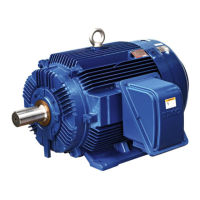
Squirrel Cage Induction Motors
Whilst Motors are installed awaiting commissioning they must be adequately
protected against the elements, all external components in particular the shaft
extension and external labyrinth seals at the drive end must be fully covered
to avoid water ingress entering the motor body whilst stationery.
Please ensure that both the non drive end and drive end antifriction bearings
are fully purged with sufficient grease at first start up/commissioning
with the recommended grade and quantity of grease.

Questions and Answers

  • P
    paul85Aug 15, 2025
    Why is my TECO Engine motor overheating?
    • S
      sanchezbaileyAug 15, 2025
      If your TECO Engine motor is overheating, it could be due to several reasons. Possible causes include overload, intermittent overload, under-voltage, over-voltage, a clogged ventilation duct, ambient temperature exceeding 450C, friction between the rotor and stator, a blown fuse (resulting in single-phase rotation), poor contact in circuit switches or the starting switch, or an unbalanced three-phase voltage. You can lighten the load, check the circuit capacity and power source, remove any foreign matter in the duct, lower the ambient temperature, repair any friction issues, install the specified fuse, and check and repair circuit switches. If there is an unbalanced three-phase voltage, check the circuit or consult the power company.
  • O
    oconnorrachelAug 18, 2025
    What to do if the fuse keeps blowing in my TECO AEMB Engine?
    • K
      Katherine WintersAug 18, 2025
      If your TECO Engine experiences a fuse blowing, circuit breaker tripping, or a slow start accompanied by electromagnetic noise, it may be due to a short circuit, incorrect wiring, poor contact in circuit switches, broken wiring, poor contact of the starting switch, or an incorrect connection of the starting switch. To address this, check the circuit and wiring, and check and repair any poor contacts or broken wiring.
  • J
    Jenna LeeAug 21, 2025
    How to troubleshoot a TECO AEMB Engine that fails to start without load?
    • O
      ohollandAug 21, 2025
      If your TECO Engine fails to start without any load, it could be due to several reasons: the power may be off, the switch may be off, there might be no fuse installed, the wires could be broken, the lead could be broken, or the winding might be faulty. To resolve this, consult the power company, switch the device on, install a fuse, and check and repair any broken wires, leads, or faulty winding.
  • G
    Gina GreenAug 25, 2025
    What to do if my TECO AEMB overloads after starting?
    • J
      James Nelson MDAug 25, 2025
      If your TECO Engine is experiencing overload after starting, it might be due to insufficient capacity of the fuse or breaker, a general overload, or a high load at low voltage. To solve this, replace the fuse or breaker with one of adequate capacity, lighten the load, and check the circuit capacity while reducing the load.
  • J
    Jason GarciaAug 27, 2025
    Why is the switch on my TECO AEMB Engine overheating?
    • S
      Sarah WhitakerAug 27, 2025
      If your TECO Engine switch is overheating, it could be due to insufficient capacity of the switch or a high load. To resolve this, replace the switch with one of adequate capacity or lighten the load.
  • V
    Vincent GriffinAug 30, 2025
    What causes bearing overheat in a TECO Engine?
    • P
      Patrick KrauseAug 30, 2025
      If your TECO Engine bearings are overheating, it could be due to misalignment between the motor and the load, not enough grease, or high bearing noise. To address this, realign the motor and load, fully purge the bearings with grease, or replace the damaged bearing.
  • H
    Heather SmithSep 2, 2025
    What causes mechanical vibration in my TECO AEMB Engine?
    • G
      Glen RhodesSep 2, 2025
      If your TECO Engine is experiencing mechanical vibration, it could be due to a broken fan blade, unsymmetrical centers between the belt sheaf, central points of couplings not lying on the same level, improper mounting installation, or a motor mounting bed that is not strong. To address this, replace the fan, align the central points, adjust the central points of couplings to the same level, lock the mounting screw, or reinforce the mounting bed.
  • A
    Angel BrownSep 5, 2025
    Why is my TECO Engine making a sudden sharp noise and smoking?
    • Z
      Zachary CampbellSep 5, 2025
      If your TECO Engine is producing sudden sharp noise and smoking, it could be due to a short circuit of windings, not enough grease, deterioration of grease, or excessive noise. To resolve this, repair the short circuit, fully purge bearings with grease, clean and re-grease the bearing, or replace the damaged bearing.
  • W
    William SanchezSep 8, 2025
    What causes electro-magnetic vibration in my TECO AEMB?
    • T
      Terry LamSep 8, 2025
      If your TECO Engine is experiencing electro-magnetic vibration, it could be due to a short circuit of windings. To address this, repair the short circuit.
  • J
    Jessica MillsSep 12, 2025
    How to fix mechanical noise caused by machinery in my TECO Engine?
    • A
      andrewfinleySep 12, 2025
      If your TECO Engine is producing mechanical noise, it could be due to a loose belt sheaf, loose coupling, loose screw, or fan rubbing. To resolve this, adjust the key and lock the screw, adjust the position of couplings and tighten them, tighten any loose screws, or adjust the fan position.

Summary

Motor Description

Safety Warnings

Critical safety instructions and hazard warnings for motor operation and handling.

Installation and Commissioning

Motor Installation and Site Conditions

Site conditions, ventilation, space, and foundation requirements for motor installation.

Coupling and Alignment

Procedures for coupling motors and ensuring proper shaft alignment.

Alignment Accuracy

Guidelines for accurate motor and rotor alignment to prevent issues.

Electrical Connections

How to make electrical connections according to nameplate and standards.

Operating Instructions

Pre-Start Checks

Checks to perform on wiring, connections, and bearings before starting the motor.

Bearing Lubrication

Information on grease lubricated bearings, initial lubrication, and maintenance.

Starting Operation

Procedures for starting the motor, including initial tests and load application.

Starting Procedures and Troubleshooting

Guidelines for multiple start attempts, cooling down periods, and troubleshooting start failures.

Bearing Temperature Monitoring

Monitoring bearing temperatures during operation and identifying issues.

Vibration and Starting Duty

Acceptable vibration levels and considerations for starting duty.

Periodic Maintenance

Regular Inspection and Maintenance

Key aspects of regular inspection and maintenance procedures.

Key Inspection Points

Core elements of routine checks, parts replacement, and service intervals.

Bearings

Rolling Bearing Maintenance

General procedures for maintaining rolling bearings for optimal performance.

Grease Lubricated Bearing Type

Importance of maintaining bearing lubricant and reasons for grease replenishment.

Grease Type Selection

Guidance on selecting the correct grease type and brand for TECO motors.

Grease Filling Procedures

Best practices for filling bearings with grease, including running the motor.

Troubleshooting

Fault Finding and Recognition

A guide to identifying common motor faults, their causes, and remedies.

TECO AEMB Specifications

General IconGeneral
Engine ModelAEMB
Engine Type4-stroke, water-cooled, in-line
Fuel SystemDirect injection
Fuel TypeDiesel
Voltage220/380V; 230/400V
Frequency50Hz
Number of poles4
Cylinders4

Related product manuals