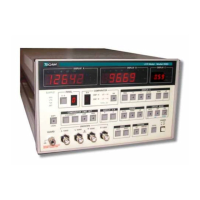
432 Bias Comp – This mode assumes that a temperature-compensated mount is
attached. The Bias Comp mode balances both channels just like the 432 Compatible
mode, the difference is the voltmeter readings from only Channel 1 are used in the simple
power equation of P=(V[OFF]
2
- V[ON]
2
)/R. This method is recommended for
standards lab use with 478, 486, 8478 series thermistor mounts, because the errors from
only one channel are transferred, while in a lab the mount environment can be stabilized
using insulation.
ReZero Unit (Write Only)
Located SETUP—Instrument menu and on the main display window. During rezero the
system changes the DAC value to equal the reference resistor value. Since the primary
reading is DAC – RV, this creates a zero voltage difference after a re-zero.
Network Options
Located SETUP—Instrument menu. Configure the 1830A remote communication via
TCP/IP. The 1830A is controlled via TCP/IP through an Ethernet cable connection.
Transmission Control Protocol/Internet Protocol (TCP/IP) is the most popular network
protocol and the basis for the Internet. Its routing capabilities provide maximum flexibility
in an enterprise-wide network. In Windows XP TCP/IP is automatically installed.
On a TCP/IP network, you must provide IP addresses to clients. Clients may also require a
naming service or a method for name resolution. This section explains IP addressing and
name resolution for Network Connections on TCP/IP networks. It also describes the FTP
and Telnet tools that are provided by TCP/IP.
Network Options menu contains 12 selections.
1. IP Address
2. Subnet Mask
3. Gateway
4. Host Name
5. Domain Name
6. DNS Server 1
7. DNS Server 2
8. MAC Address
9. Network Link Activity
10.LAN Configuration
11.Reset LAN Configuration
12.Network Enable
IP Address (Read/Write):
Located SETUP—Instrument—Network Options menu. Internet Protocol (IP) address is a
numerical label that is assigned to devices participating in a computer network, that uses
the Internet Protocol for communication between its nodes. An IP address serves two
principal functions: host or network interface identification and location addressing.


 To Next Page