Why does the Food Heat Up?
Most food contains water, whose molecules vibrate with Microwaves.
The friction between the molecules generates heat, which causes a temperature rise in the food,
defrosting it, cooking it or keeping it warm.
As the heat is formed inside the food:
- It may be cooked with little or no liquid or fat;
- Defrosting, heating or cooking in the microwave oven is quicker than in a conventional oven;
- Vitamins, minerals and nutritive substances are preserved;
- There is no change in the natural colour and smell of the food.
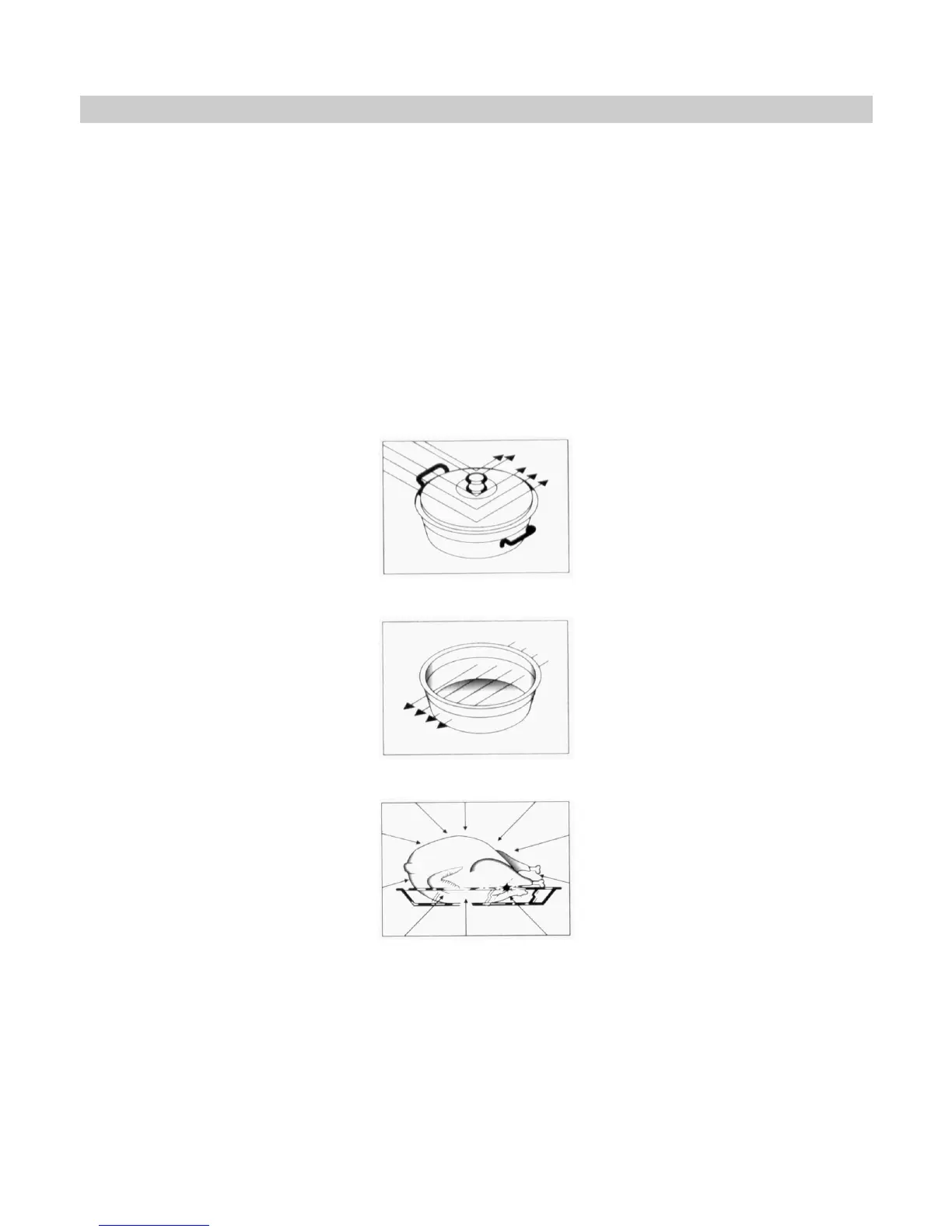
The Microwaves pass through porcelain, glass, cardboard and plastic but not through metal. Therefore,
recipients made of or containing metal should not be used in the microwave oven.
The Microwaves are reflected by the metal…
…they pass through Glass and Porcelain…
…and they are absorbed by the food.


 To Next Page
 Loading...