21
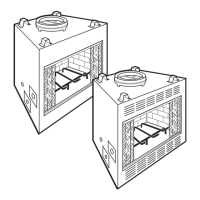
CDV Series Direct Vent Gas Fireplace
20010175
Since it is very important that the vent-
ing system maintain its balance between
the combustion air intake and the flue
gas exhaust, certain limitations as to vent
configurations apply and must be strictly
adhered to.
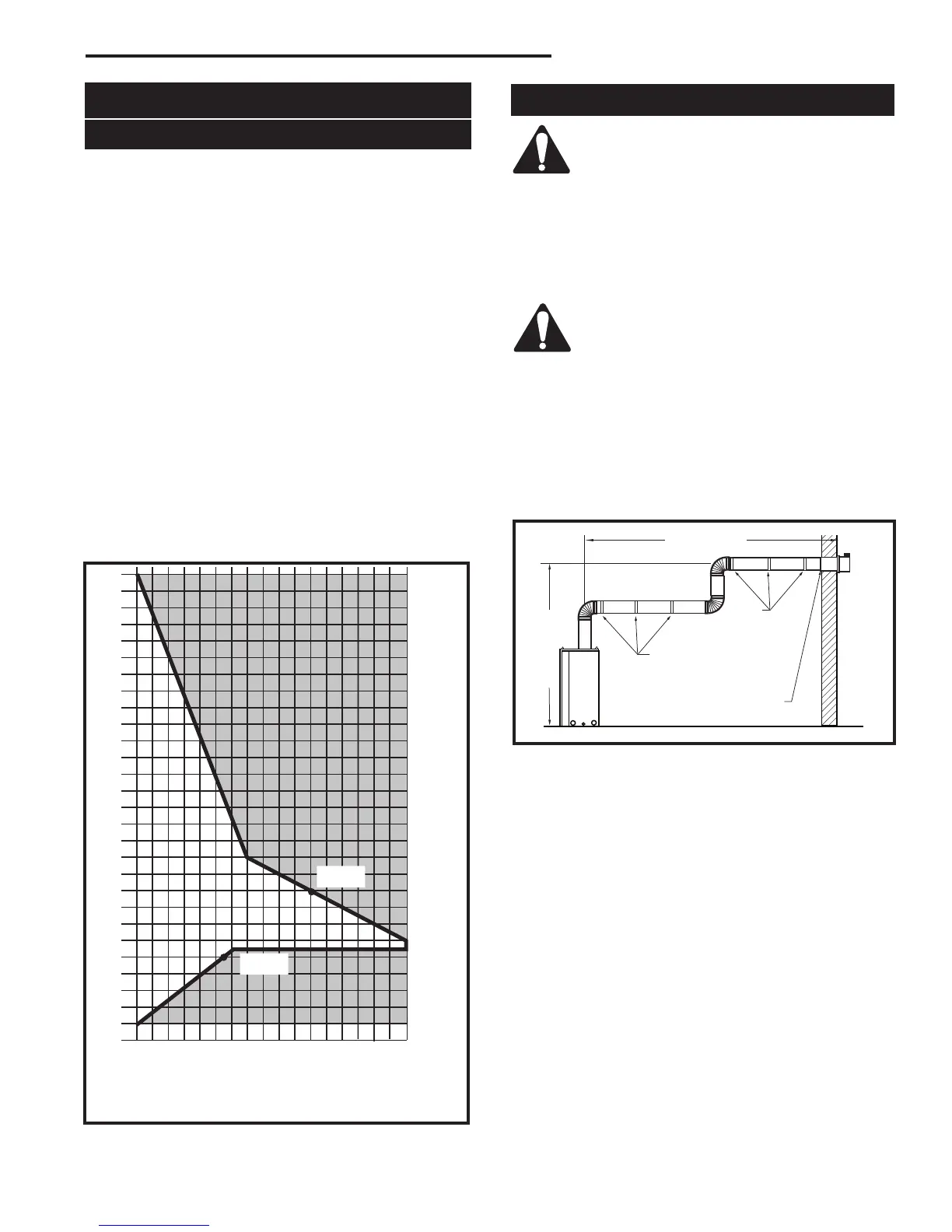
The vent graph showing the relationship between verti-
cal and horizontal side wall venting will help to deter-
mine the various dimensions allowable.
Minimum clearance between vent pipes and
combustible materials is one 1” (25 mm)
on top, bottom and sides unless otherwise
noted.
When the vent termination exits through foundations
less than 20” (508 mm) below siding outcrop, the vent
pipe must flush up with the siding.
It is always best to locate the fireplace in such a way
that minimizes the number of offsets and horizontal
vent length of vent pipe from the flue collar of the fire-
place to the face of the outer wall.
How to Use the Vent Graph
The vent chart should be read in conjunction with the
following vent installation instructions to determine the
relationship of the vertical and horizontal dimensions of
the vent system.
1. Determine the height of the center of the horizontal
vent pipe exiting through the outer wall. Using this
dimension on the Sidewall Vent Graph (Fig. 39),
locate the point intersecting with the slanted graph
line.
2. From the point of this intersection, draw a vertical
line to the bottom of the graph.
3. Select the indicated dimension, and position the
fireplace in accordance with same.
Example A:
If the vertical dimension from the floor of the fireplace
is 11’ (3.4 m) the horizontal run to the face of the outer
wall must not exceed 14’ (4.3 m).
Example B:
If the vertical dimension from the floor of the unit is 7’
(2.14 m), the horizontal run to the face of the outer wall
must not exceed 8¹⁄₂’ (2.6 m).
36CDVT Vertical Venting
Horizontal dimension from the outside face of the
wall to the center of the fireplace vent flange
Sidewall vent graph showing the relationship between vertical
and horizontal dimensions for a Direct Vent flue system.
Vertical dimension from the floor of the unit
to the center of the horizontal vent pipe
3
4
5
6
7
8
9
10
11
12
13
14
15
16
17
18
19
20
21
22
23
24
25
26
27
28
29
30
3 4 5 6 7 8 9 10 11 12 13 14 15 16 17 18 19 20
eg: A
eg: B
CFM102
DV Graphic
9/28/00 sta
Fig. 39 Sidewall venting graph. (Dimensions in feet)
Vertical Sidewall Applications
FP1012
Top vent max run
1/25/00 djt
20' (6m)
7.5' (2.3m)
Pipe Straps
Every 3’ (914mm)
Firestop/Zero
Clearance Sleeve
Pipe
Straps Every
3’ (914mm)
FP1012
Fig. 40 Support straps for horizontal runs.
Horizontal plane means no vertical rise exists on this
portion of the vent assembly.
• The maximum number of 90° elbows per side wall
installations is three (3).
• If a 90° elbow is fitted directly onto the fireplace
flange the maximum horizontal vent run before the
termination or a vertical rise is 36” (914 mm).
• If a 90° elbow is used in the horizontal vent run
(level height maintained) the maximum horizontal
vent length is reduced by 36” (914 mm). This does
not apply if the 90° elbows are used to increase or
redirect a vertical rise.
Example: According to the chart the maximum
horizontal vent length in a system with a 7.5’ (2.3 m)
vertical rise is 20’ (6 m) and if a 90° is required in
the horizontal vent it must be reduced to 17’ (5.2 m).
In Figure 42, Dimension A plus B must not be
greater than 17’ (5.2 m).



 To Next Page