SM 1667 1-99
Engine - Engine and Mounting
Section 110-0030
6
Note: before starting the engine, follow the steps
below to make sure the engine receives correct
lubrication. Lack of lubrication will damage the
engine.
a. Disconnect the electrical wire from the fuel pump
solenoid valve.
b. Switch on the ignition and rotate the crankshaft
using the starter motor, until oil pressure appears on
the pressure gauge or the warning light goes out.
c. Connect the electrical wire to the fuel pump
solenoid valve.
Start the engine and operate at idle speed to inspect
for leaks at the filters and oil drain plug. Shut off the
engine, wait approximately five minutes to let the oil
drain back to the sump and check the oil level again.
Add oil as necessary to bring the level to the high (H)
mark on the dipstick.
Crankcase Breather - Check and clean the
crankcase breather hose. Remove the breather hose
and check internally for obstructions or sludge
buildup. Clean or replace breather hose as
necessary, to prevent excess crankcase pressure
buildup.
Cooling Fan (49) - Visually check fan (49) for
cracks, loose rivets, and bent or loose blades. Check
fan mounting bolts (21) and tighten if required.
Replace fan (49) if damaged.
Note: The fan belt is maintained to the correct belt
tension by a spring loaded idler arm, therefore, there
is no need to check or adjust belt tension.
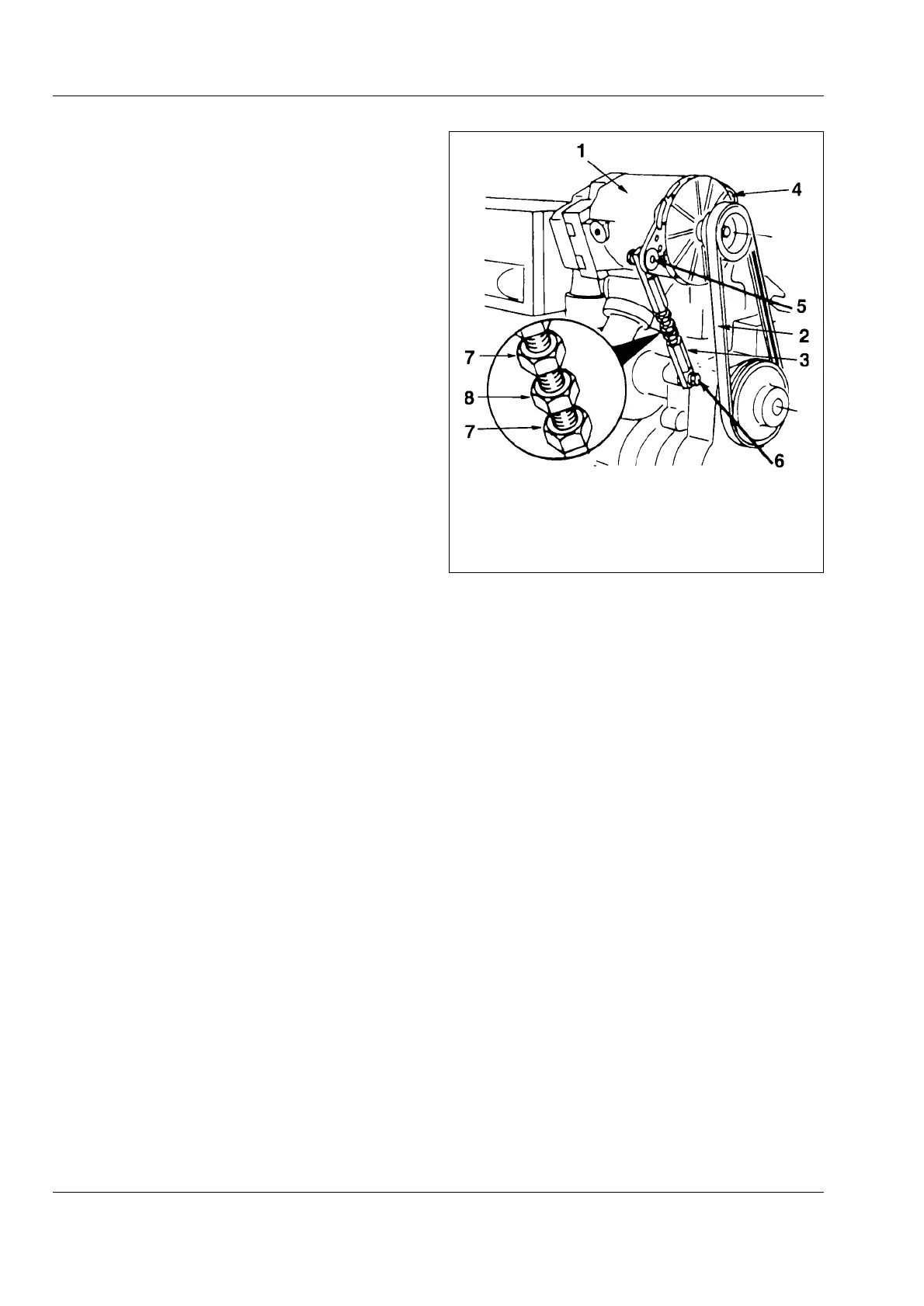
Alternator Drive Belt (2, Fig. 2) - Visually check
belt (2, Fig. 2) and replace if it is cracked or frayed.
Adjust belt if it has a glazed or shiny surface which
indicates belt slippage. A correctly installed and
tensioned belt will show even pulley and belt wear.
Check belt tension and adjust if necessary, as
described under 'Alternator Drive Belt'.
ALTERNATOR DRIVE BELT
Numbers in parentheses refer to Fig. 2.
Note: Position the vehicle in a level work area, apply
the parking brake and switch off the engine. Turn
steering wheel several times to relieve pressure in
the steering circuit. Block all road wheels.
SM - 1359
Belt Tension Check
Measure drive belt (2) tension in the centre span of
the drive pulleys using a belt tension gauge. The belt
tension should be within the following values:
Belt Tension 'New' - 670 N (150 lbf)
Belt Tension 'Used' - 270 - 530 N (60 - 120 lbf)
Note: A belt is considered 'Used' if it has been in
service for ten minutes or longer. If the used belt
tension is less than the minimum value, tighten the
belt to the maximum value.
Note: Tension specifications are based on a cold
belt. Hot shut down tension varies greatly depending
on engine speed, load and temperature, but is
approximately 30% higher.
An alternative method (deflection method) can be
used to check drive belt (2) tension by applying 110
N (25 lbf) force on drive belt (2) between the drive
pulleys. If the deflection is more than one belt
thickness per foot (305 mm) of pulley centre
distance, the belt tension must be adjusted.
Drive Belt Adjustment
Note: Lower jam nut (7) on adjusting screw (8) has
left hand threads.
Fig. 2 - Typical Alternator and Drive Belt Installation
1 - Alternator
2 - Drive Belt
3 - Adjusting Link
4 - Capscrew
5 - Capscrew
6 - Capscrew
7 - Jam Nut
8 - Adjusting Screw
Find manuals at http://best-manuals.com/search?&s=TEREX-SM1663.PDF



 To Next Page