During Charging
During charging, the charge port light (the Tesla "T"
logo) pulses green, and the touchscreen displays the
charging status. The frequency at which the charge port
light pulses slows down as the charge level approaches
full. When charging is complete, the light stops pulsing
and is solid green.
NOTE: If Model 3 is locked, the charge port light does
not light up.
If the charge port light turns red while charging, a fault
is detected. Check the touchscreen for a message
describing the fault. A fault can occur due to something
as common as a power outage. If a power outage
occurs, charging resumes automatically when power is
restored.
NOTE: When charging, particularly at high currents, the
refrigerant compressor and fan operate as needed to
keep the Battery cool. Therefore, it is normal to hear
sounds during charging.
NOTE: Air conditioning performance is generally not
aected by charging. However, under certain
circumstances (for example, you are charging at high
currents during a particularly warm day), the air coming
from the vents may not be as cool as expected and a
message displays on the
touchscreen. This is normal
behavior and ensures that the Battery stays within an
optimum temperature range while charging to support
longevity and optimum performance.
WARNING:
Never spray liquid at a high velocity
(for example, if using a pressure washer) towards
the charge port while charging. Failure to follow
these instructions can result in serious injury or
damage to the vehicle, charging equipment, or
property.
Stopping Charging
Stop charging at any time by disconnecting the charge
cable or touching Stop Charging on the touchscreen.
NOTE: To prevent unauthorized unplugging of the
charge cable, the charge cable latch remains locked and
Model 3 must be unlocked or able to recognize your
authenticated phone before you can disconnect the
charge cable. However, in cold ambient temperatures
below 41° F (5° C), the charge port remains unlocked
whenever the vehicle is not charging, even when Model
3 is locked.
To disconnect the charge cable using a connector:
1. Press and hold the button on the connector handle to
release the latch. Alternatively, unlock the vehicle by
opening a door, using a
key card or key fob, or
touching Stop Charging on the touchscreen. These
methods unlock the charge port as well.
2. Pull the connector from the charge port.
To disconnect the charge cable using an adapter at a
public charge station:
1. Ensure that Model 3 is unlocked.
2. While holding the public charging handle in one hand
and the adapter in the other hand, press and hold the
button on the public charging handle and pull both
outwards, removing the handle and adapter at the
same time.
NOTE: If the charging station handle separates from
the adapter, leaving the adapter in Model 3, use the
touchscreen to unlock the charge port (touch the
charging icon on the overhead view of the vehicle).
3. Press and hold the charging handle button again to
release the adapter from the charging handle.
NOTE: The charge port automatically closes within
approximately 10 seconds of removing the connector
from the charge port.
CAUTION:
Tesla strongly recommends leaving
Model 3 plugged in when not in use. This maintains
the Battery at the optimum level of charge.
Manually Releasing Charge Cable
If the usual methods for releasing a charge cable from
the charge port (using the charge handle release button,
touchscreen, or mobile app) do not work, carefully
follow these steps:
1.
Ensure that Model 3 is not actively charging by
displaying the charging screen on the touchscreen. If
necessary, touch Stop Charging.
2.
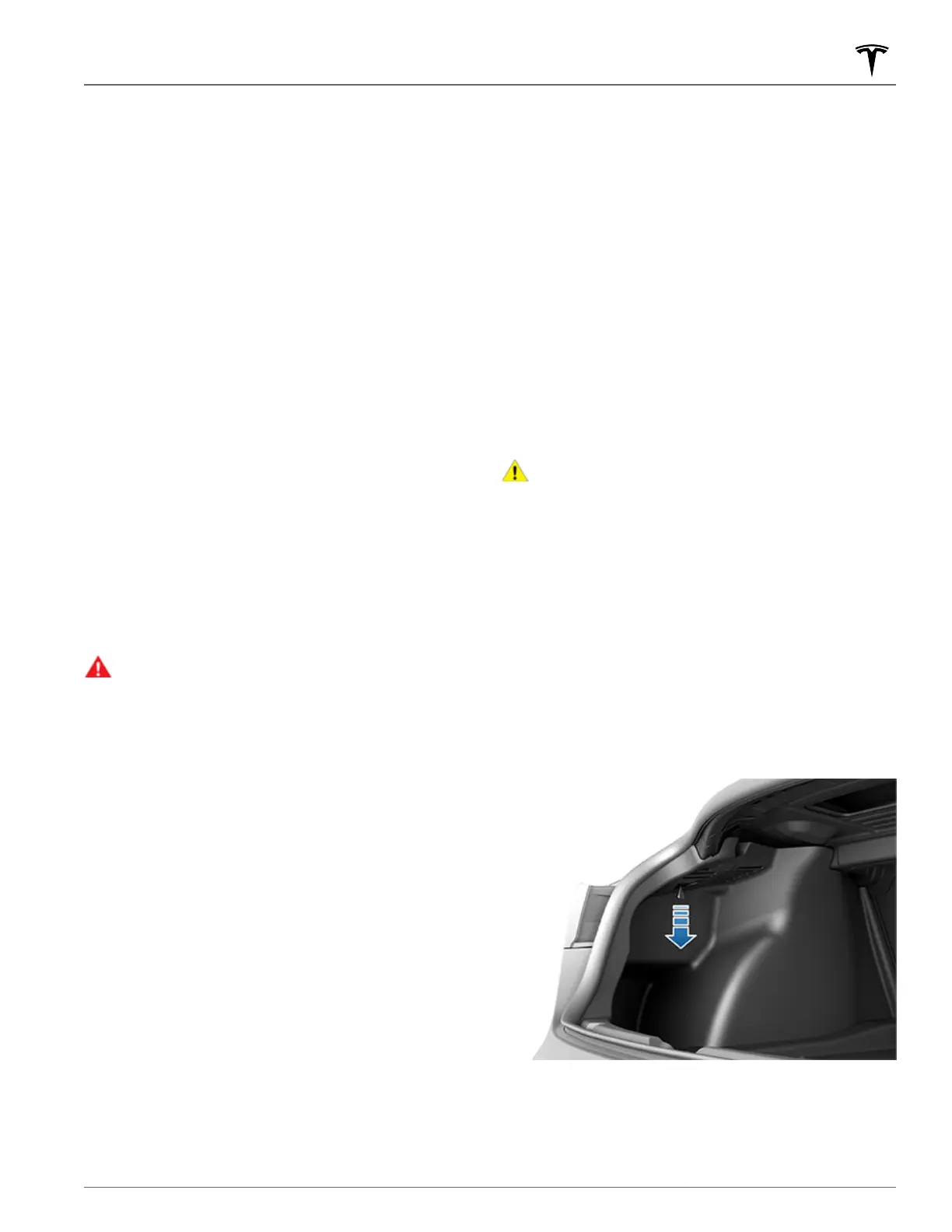
Open the rear trunk.
3.
Pull the charge port's release cable downwards to
unlatch the charge cable.
NOTE: The release cable may be recessed within the
opening of the trim.
4.
Pull the charge cable from the charge port.
Charging Instructions
157Charging















 To Next Page